


Accueil / Connaissance des produits / Why Steel Buildings Go Up in Weeks, Not Months
Every month a building sits unfinished is a month it earns nothing — while rent, loan interest and delayed operations keep running. That’s why steel building construction time is often the number that matters most, more than the price per square metre. And it’s the one area where a prefabricated steel structure has a decisive edge over concrete: on site, steel is assembled, not built. This is why steel frames go up in weeks while a concrete building of the same size takes months — and what that speed is really worth to you.
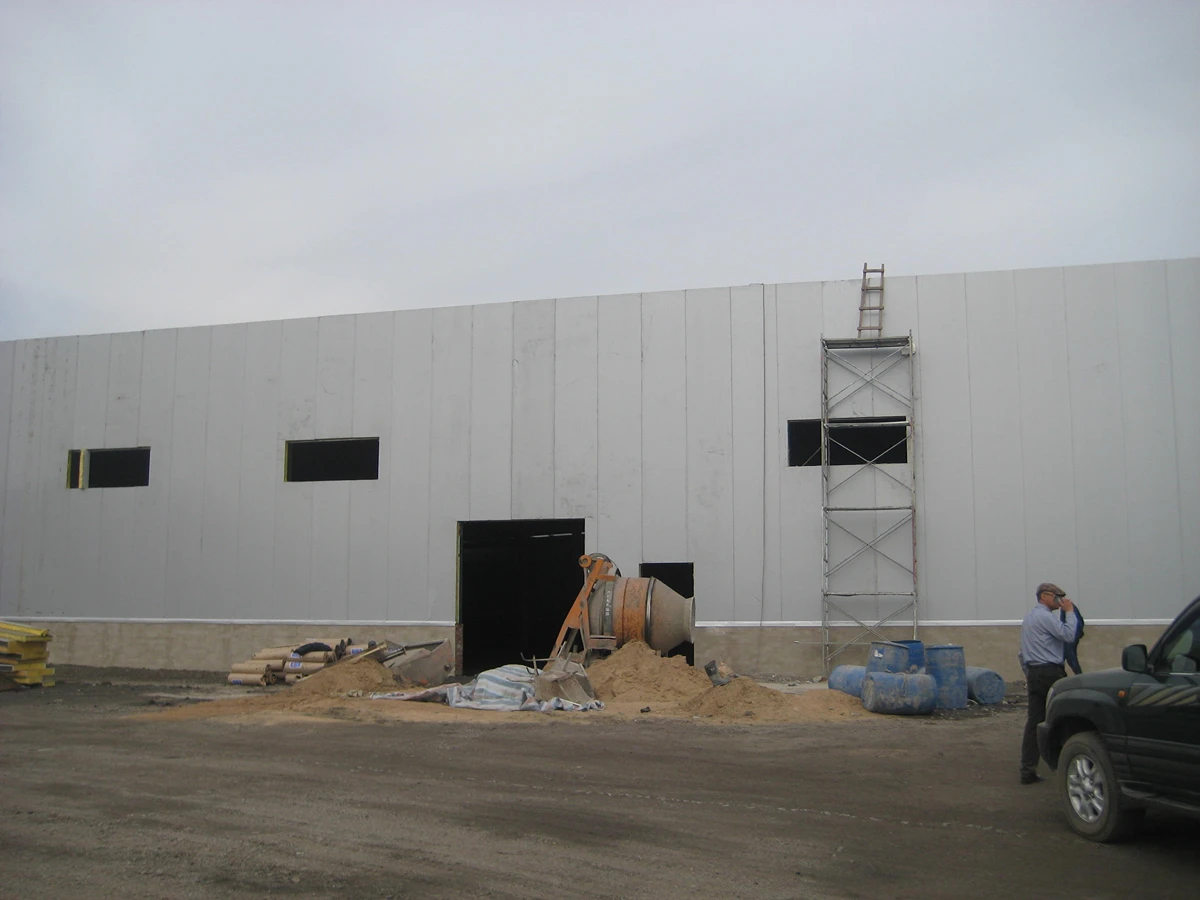
Finished and earning sooner — the real payoff of a building that assembles in weeks instead of curing for months.
Assembly, not construction — that’s the whole difference
A concrete building is largely made on site: formwork is built, concrete is poured, and then everything waits while it cures — and waits again for the next pour, level by level. A prefabricated steel building is made in the factory. It arrives as a numbered kit of columns, beams, purlins and panels, and the site work becomes bolting the pieces together in sequence. There is no pouring, no curing, no waiting for strength to develop. That single difference — assembly versus construction — is why the schedules are so far apart.
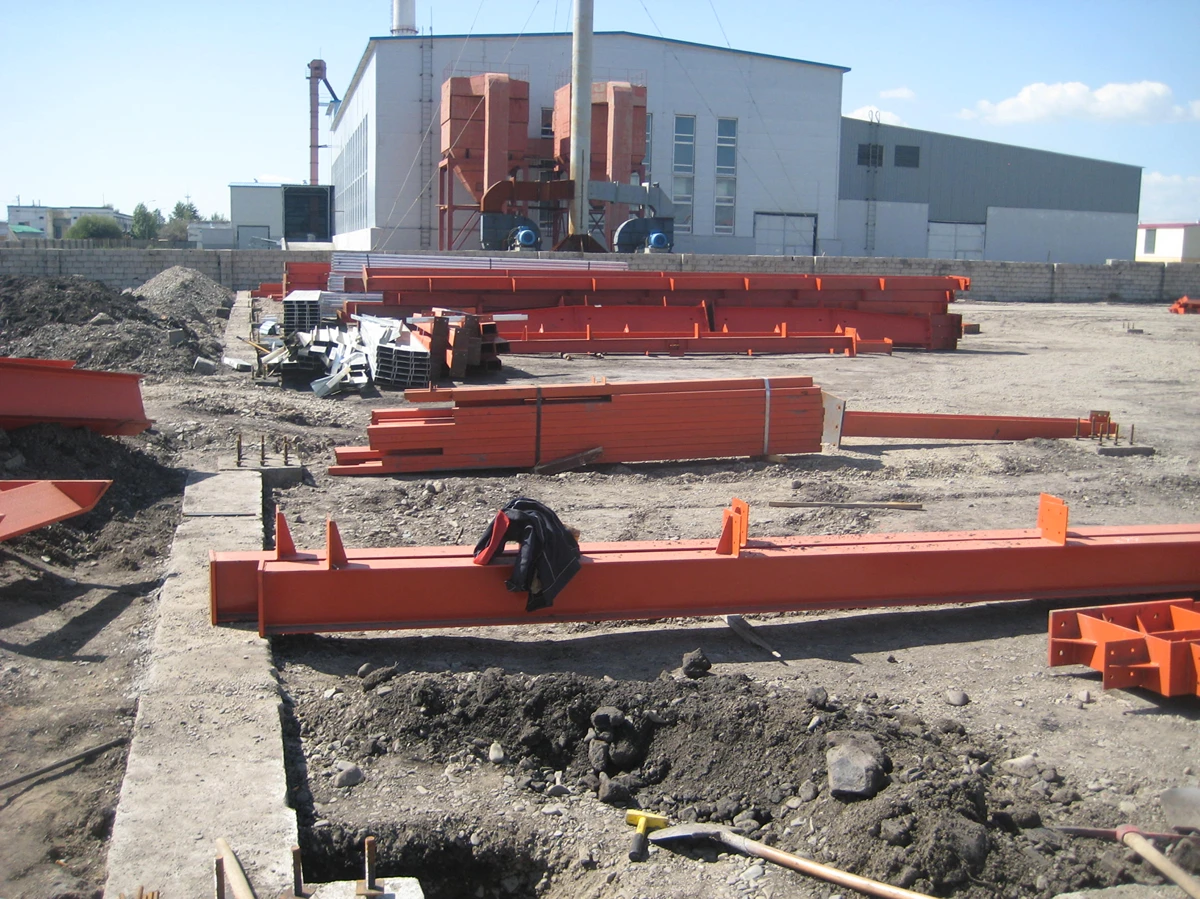
The building arrives as a labelled kit — every part pre-made, ready to bolt together.
Fabrication and site work happen at the same time
Here’s the part that saves the most time, and that buyers often miss. With concrete, the work is sequential: you can’t build the structure until the site is ready, and you can’t do the next stage until the last one cures.
With steel, the frame is being fabricated in the factory while your foundations are being poured on site. By the time the ground is ready, the building is already made and shipping. Two timelines running in parallel instead of one long line — that’s weeks or months collapsed out of the programme before anything is even lifted.
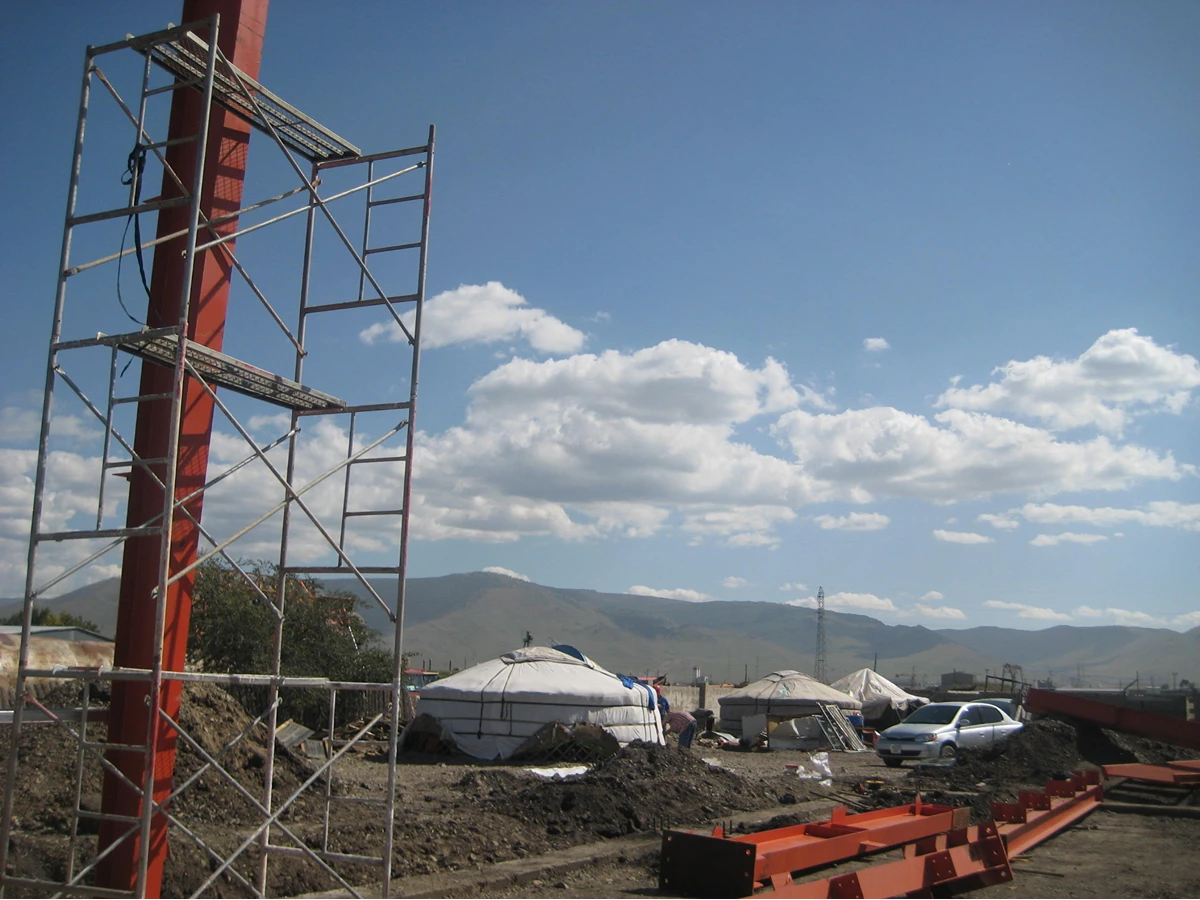
The main frame is craned into place and bolted — no forming, no pouring, no curing time.
What the speed is actually worth
Faster construction isn’t just convenient — it’s money, in several directions at once:
- You start earning sooner. A warehouse that opens two months early is two months of storage revenue, or product moving, or rent you’re no longer paying elsewhere.
- You pay less in financing and site costs. Shorter build means less loan interest accruing on an unfinished asset, and fewer weeks of site overheads, equipment hire and supervision.
- Less exposure to weather and delay. A frame that goes up in weeks spends far less time exposed to the seasons and the things that stall concrete pours.
- Predictability. A pre-engineered kit that bolts together in a known sequence is far easier to schedule than pours that depend on curing and conditions.
When you compare a steel quote against a concrete one, the price per square metre is only half the picture. The other half is how many months earlier the steel building is working for you.
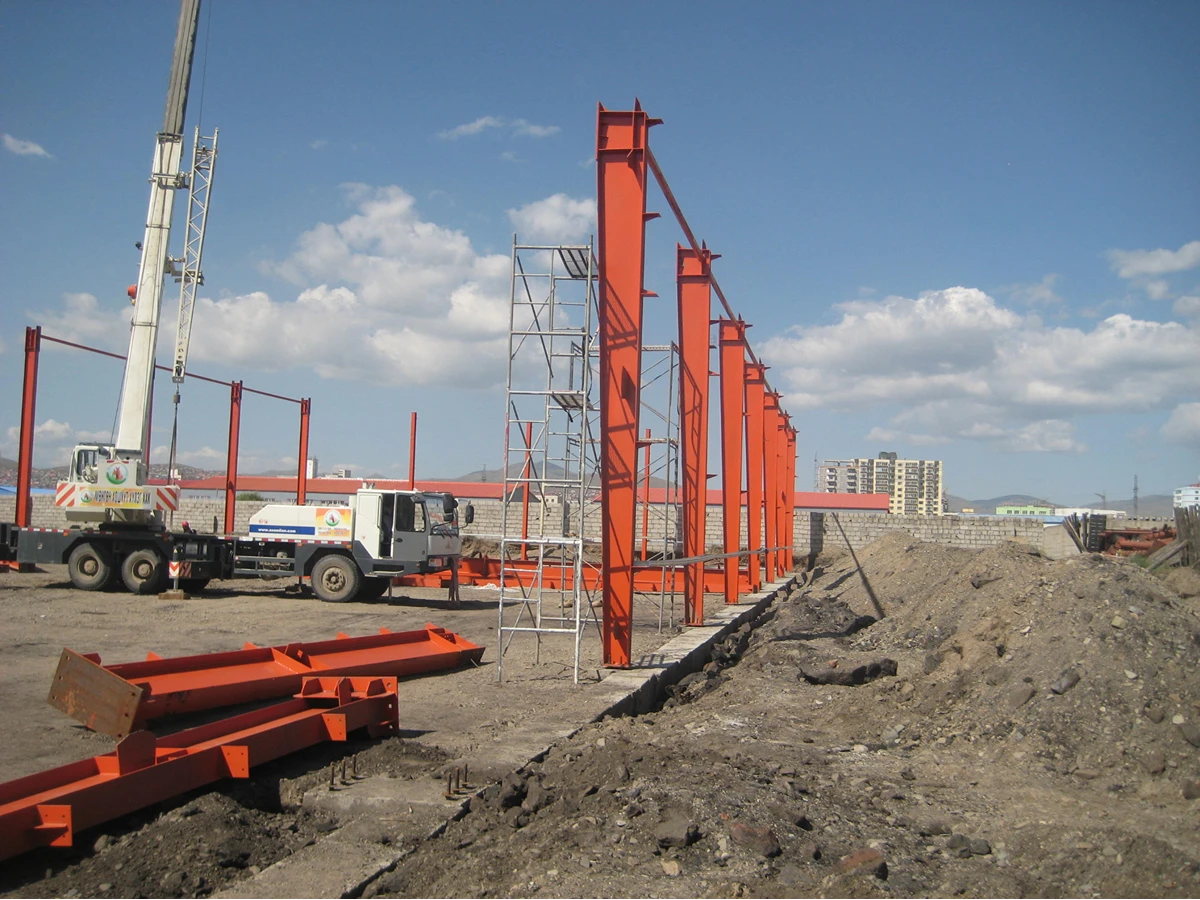
Column by column, the structure rises fast — because every part was engineered to fit before it arrived.
But “fast” only happens if the kit is made right
This is the catch buyers should know before they choose a supplier. Steel’s speed depends entirely on the parts fitting the first time. Precise fabrication, clear part numbering and complete assembly drawings mean the crew simply follows the sequence and the frame flies up. Sloppy fabrication — holes that don’t line up, missing pieces, poor labelling — erases the speed advantage and turns a two-week assembly into a month of on-site problem-solving. So the real question isn’t just “steel or concrete” — it’s whether your supplier’s kit will actually be buildable when it lands. The speed you’re paying for is decided in the factory, long before the crane arrives.
Preparing your site so the speed is real
To capture the fast schedule on your own project, a few things need to be ready when the steel arrives: foundations complete and cured with anchor bolts set to the drawings, a crane sized to your span and height, and an experienced local erection crew. On overseas projects that crew is arranged by you — and a good supplier backs it up. At VIKKINS, on overseas projects the construction is carried out by your team or a local contractor; we supply a fully pre-engineered, clearly numbered kit with complete assembly drawings, provide remote technical support during erection, and for larger projects can send a technician to site for installation guidance and supervision. Everything is engineered and manufactured in ISO 9001-certified facilities and coordinated through our Montréal office. You keep control of the build; we make sure the structure is fast to raise and goes up right.
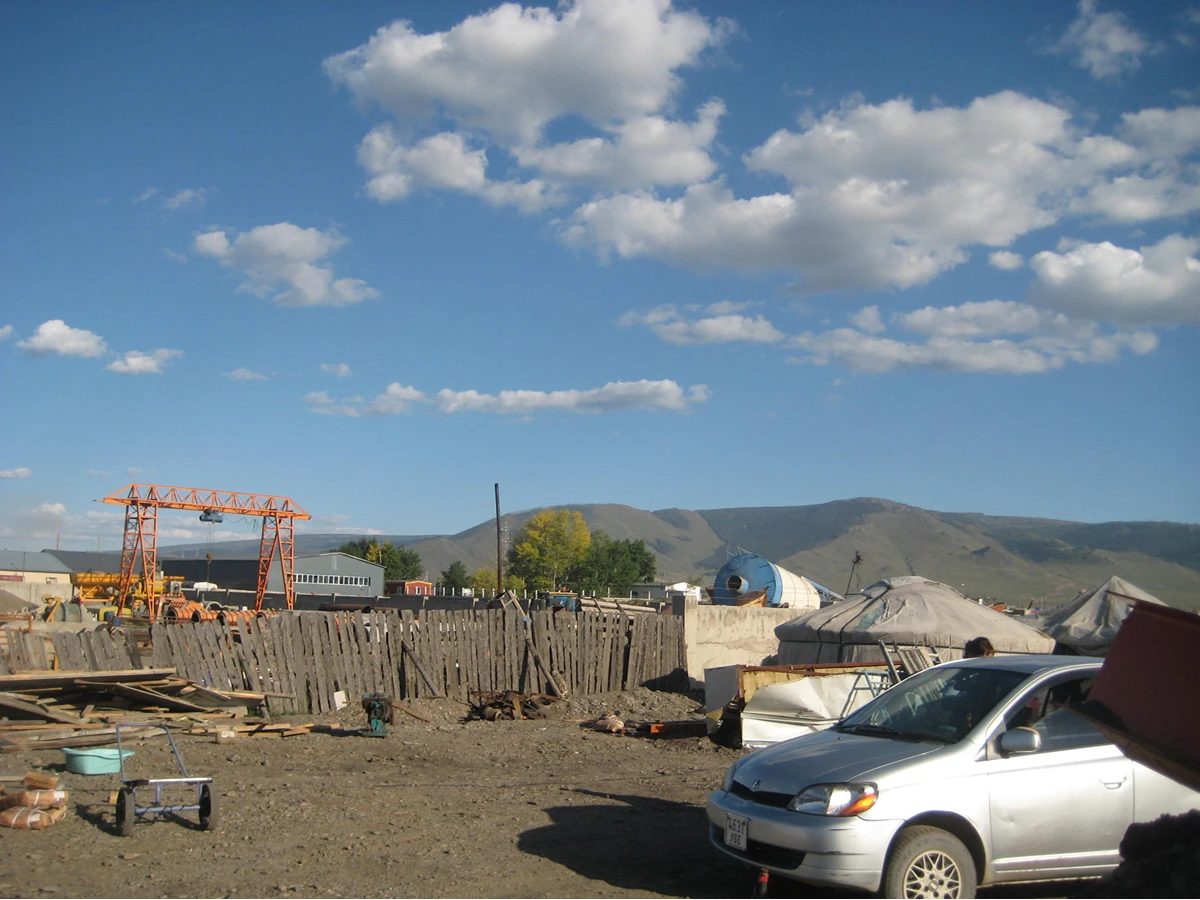
From bare ground to standing frame in weeks — when the kit is engineered to fit and the site is ready.
Questions fréquemment posées
How long does it take to build a steel structure building?
Because the parts are prefabricated in the factory and bolt together on site, a steel frame typically goes up in weeks rather than months. Fabrication also runs in parallel with the foundation work, which removes further time from the overall programme. The exact duration depends on size, complexity and how ready the site is.
Is steel really faster to build than concrete?
Yes. Concrete is made on site and must be formed, poured and cured before work continues, which is sequential and slow. Steel arrives pre-made and is assembled, with no curing time — and it’s fabricated while your foundations are being prepared, so two timelines run at once.
Why does faster construction save money?
A building that finishes earlier starts generating revenue or savings sooner, accrues less loan interest while unfinished, and carries fewer weeks of site overheads and equipment costs. Speed changes the total cost of the project, not just the schedule.
What makes one steel building go up faster than another?
Fabrication quality. Precise parts, clear numbering and complete assembly drawings let a crew build straight through the sequence. Poor fabrication causes parts that don’t fit and stalls the erection, erasing the speed advantage — which is why the supplier matters as much as the material.
Construisons quelque chose ensemble
Tell us your project — we’ll engineer and manufacture a clearly numbered steel building kit that’s fast to raise on site, with full drawings and installation support. Preliminary design and quote within 24 hours. Service in English, Spanish, or French.