




A cold store is the one building where the envelope is the product, not a detail — and cold storage solutions are not one thing but at least four. A refrigerated container, a walk-in modular cold room and a 20,000 m² turnkey warehouse all keep things cold, yet they suit completely different volumes, budgets and timelines. Choose wrong and you either tie up capital you never needed, or lose product to a system that can’t hold its temperature line. This guide is specific on purpose: the four solutions and where each fits, the temperature zones that drive every downstream decision, the insulated panels that quietly set your energy bill for twenty years, and the numbers a buyer needs before asking for a quote.
Four Ways to Get Cold Storage — Container, Modular, Turnkey, Multi-Temp
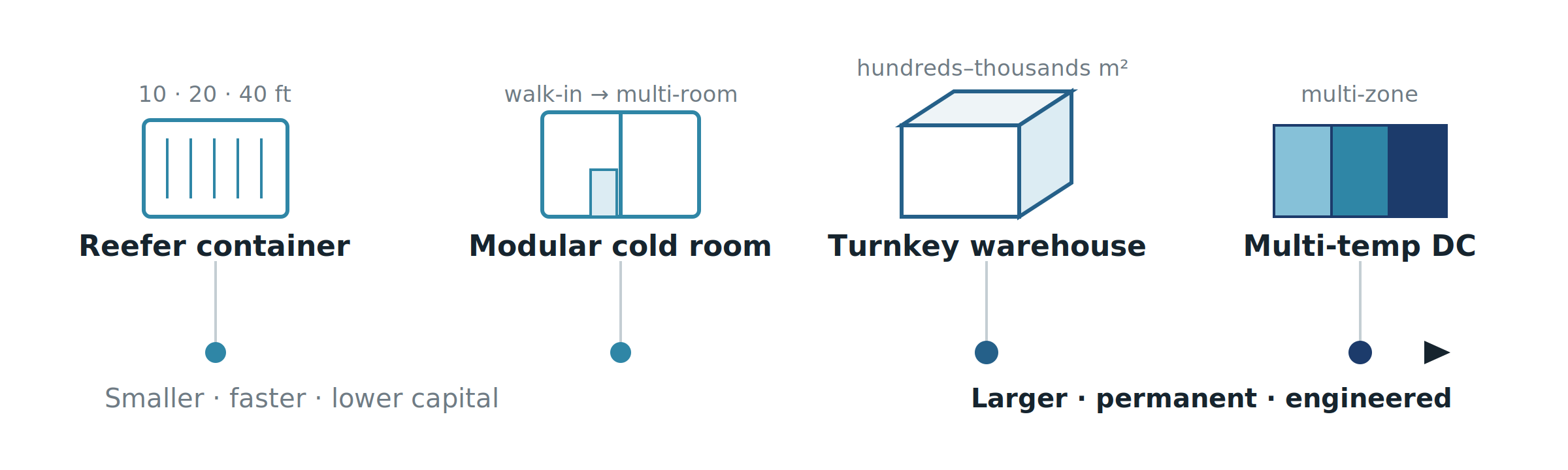
Before any panel or compressor is specified, the first decision is which type of cold storage fits the operation. Four mainstream routes cover almost every case, and they sit on a clear scale of capacity, speed and cost:
- Refrigerated (reefer) container — a 10, 20 or 40 ft container with a self-contained unit, holding roughly −30 °C to +30 °C. No foundation, usually no permit, running in days. Ideal for seasonal overflow, events, remote sites and farms that need freezer space only at harvest or slaughter.
- Chambre froide modulaire — built on-site from prefabricated panels, from a single walk-in chiller to a multi-room facility, operational in one to three weeks. Standardised panels mean it can be expanded or reconfigured as the business grows.
- Turnkey cold storage warehouse — hundreds to thousands of m² where the cold room est the building: steel structure, insulated envelope and refrigeration delivered as one project in roughly 45–90 days. The route for processors, exporters and distribution.
- Multi-temperature distribution centre — a large facility with chill, freeze and blast zones under one roof for 3PLs and retail chains; a design discipline of its own.
Temperature Zones Decide Everything
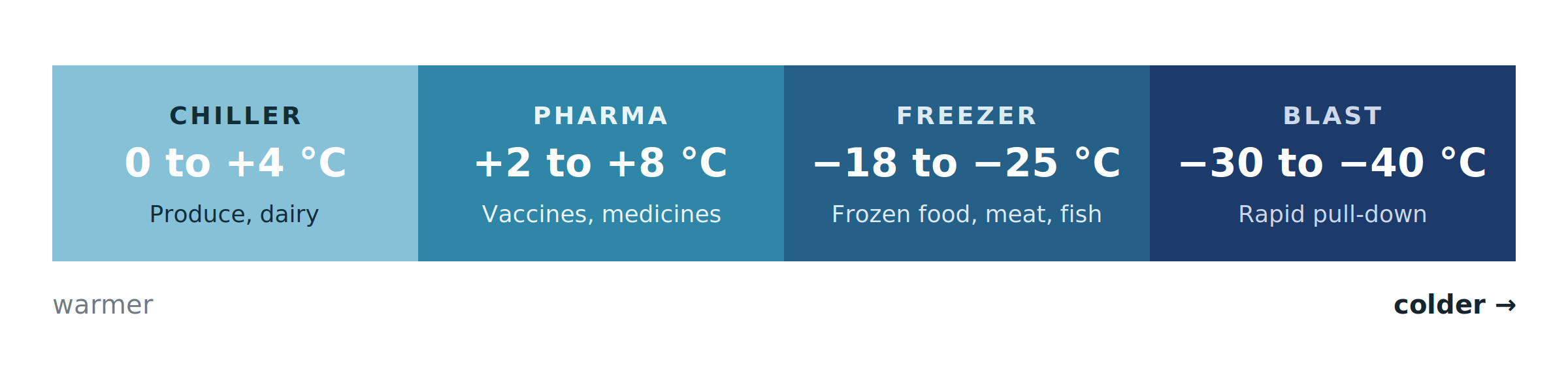
Every downstream choice — panel thickness, refrigeration capacity, door type, floor build-up — flows from one question: what temperature must you hold, and for what product? Cold storage is not a single setpoint but a set of standard zones:
- Chiller, 0 to +4 °C — fresh produce, dairy and beverages.
- Pharmaceutical, +2 to +8 °C — vaccines and medicines under controlled, validated conditions.
- Freezer, −18 to −25 °C — long-term frozen food, meat and seafood.
- Blast, −30 to −40 °C — rapid pull-down that locks in texture and shelf life before goods move into the main freezer; critical for seafood and freshly processed meat.
A facility serving an export operation often combines a blast zone, a deep-freeze store and a chill dock under one roof — which is exactly why multi-temperature design is its own discipline.
The Envelope Is the Product — Insulated Cold Room Panels
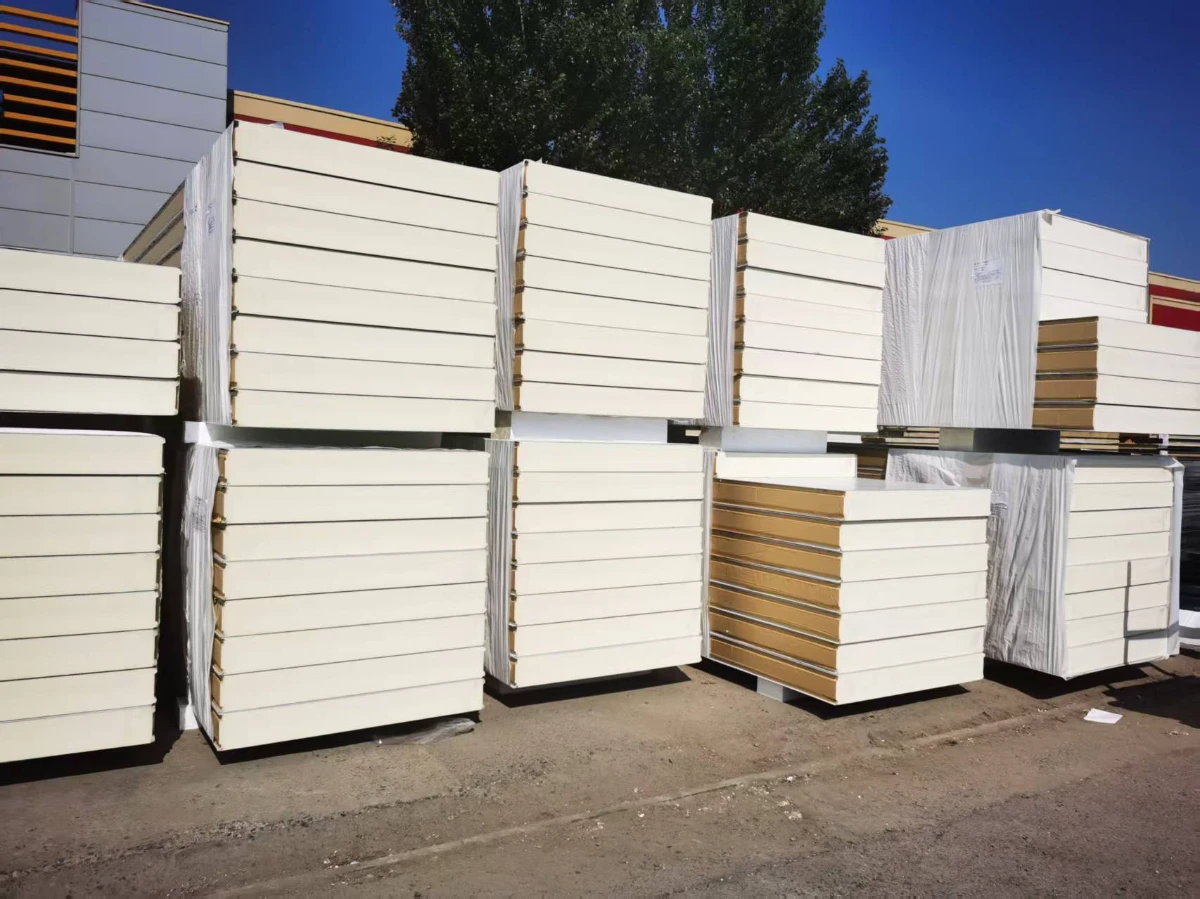
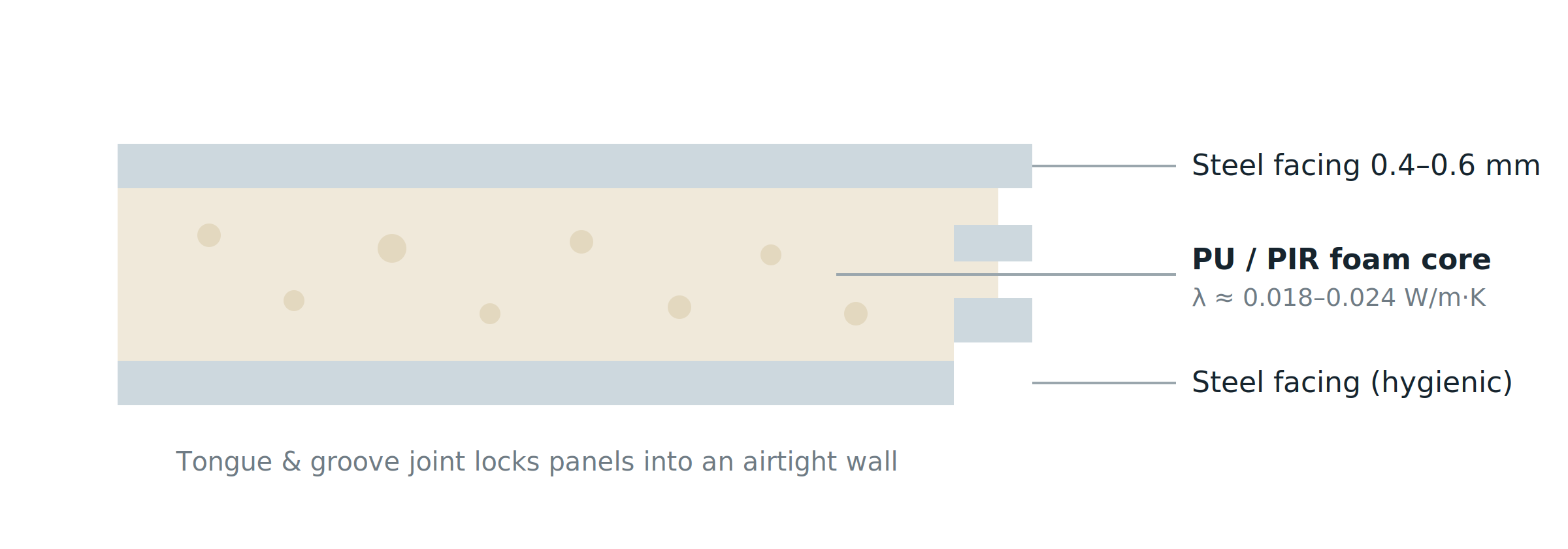
In a normal warehouse the structure does the work and the cladding keeps the rain out. In a cold store the logic reverses: the panneau sandwich isolant envelope is the insulation, the wall itself, and a wipe-clean hygienic finish, all at once — which is why panel choice, not the steel, sets the economics of the whole facility. A panel is a rigid insulating core bonded between two galvanised or pre-painted steel facings (0.4–0.6 mm). The core is where performance is won or lost:
- PIR — λ 0.018–0.024 W/m·K — the cold-storage standard; best energy performance and better fire behaviour than plain PU.
- PU / PUR — λ 0.022–0.026 W/m·K — a strong, widely used insulator at a lower price than PIR.
- EPS — λ 0.033–0.038 W/m·K — lower cost, but needs more thickness; suited to chill rooms, not deep freeze.
- Rock wool — λ 0.036–0.041 W/m·K — insulates less, but is non-combustible (Class A1) and used where fire-rated walls are mandated.
The lower the λ-value, the better the insulation. Closed-cell PU and PIR also absorb very little moisture (under ~2% by volume), which matters because a wet, degraded core silently raises the energy bill for years. For a deeper comparison, see Sandwich Panel Core Materials et Panneaux de chambre froide : Ce qui compte vraiment, au-delà de la mousse.
How Thick? Matching Panels to the Temperature Zone
Insulation performance is the core et its thickness together, captured by the R-value (R = thickness ÷ λ). A thicker panel resists more heat flow, which is why thickness is matched to the temperature zone rather than chosen for cost alone:
- Chill rooms, 0 to +4 °C — commonly 75–100 mm.
- Freezers, −18 to −25 °C — commonly 150–200 mm.
- Blast and deep freeze — 200 mm and above, with an insulated floor build-up to stop frost heave.
Refrigeration, Energy and the Running-Cost Truth
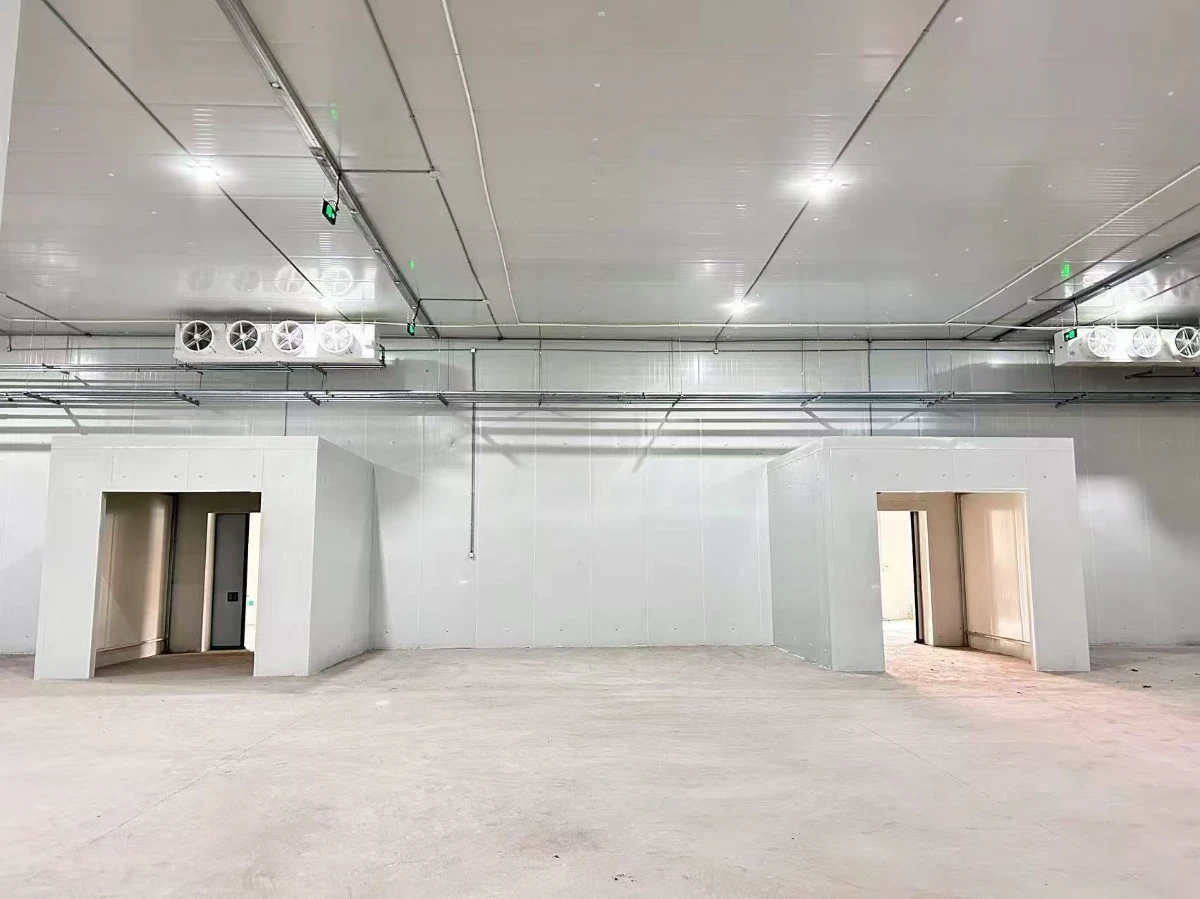
A cold store’s refrigeration has two halves: a condensing unit outside that rejects heat, and one or more evaporators (unit coolers) inside that absorb it. The system must be sized to overcome the building’s heat gain plus the product load — including the heat fresh, un-chilled product carries in every time the doors open. Two principles decide whether a cold store earns or leaks money: capacity has to match the worst case, not the average, because an undersized plant never recovers temperature; and insulation and refrigeration are one system, because every unit saved by under-specifying panels is paid back, with interest, in compressor runtime for the life of the building. Most of that lifetime cost is electricity, not construction, and the levers that control it are built into the envelope:
- Isolation — the right core and thickness for the zone.
- Étanchéité à l'air — sealed panel joints keep cold in; a leaky joint runs the compressor for twenty years.
- Doors and air curtains — fast-acting or sliding doors, strip curtains and airlocks cut the cold lost when a forklift passes.
- Vapour barrier — essential in hot, humid climates to stop moisture migrating into the core and freezing.
- Solar and efficient units — increasingly used to offset the standing electrical load.
Match the Solution to Your Product and Site
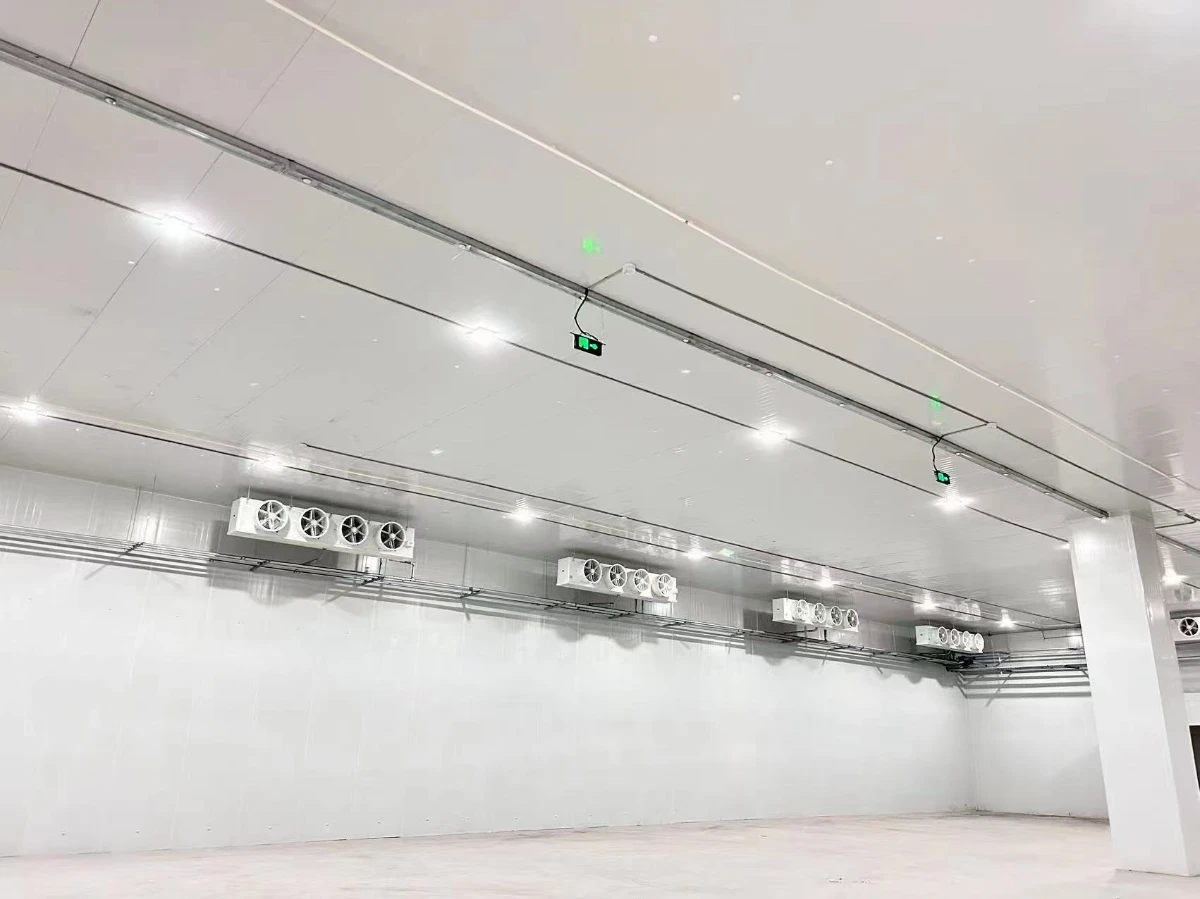
Larger cold storage typically needs three-phase power; small container and modular units may run single-phase, but performance favours three-phase for anything substantial. Mobile and modular routes need little or no civil work — often just a level, drained base — while a turnkey warehouse needs a proper foundation and, for freezer zones, an insulated floor. Beyond that, the right solution is defined by what you store:
- Seafood and fish — blast freeze plus deep freeze, with corrosion-resistant detailing for salt and wash-down.
- Fruit and produce — pre-cooling and chill with humidity control to protect shelf life.
- Pharmaceuticals — tight +2 to +8 °C control, monitoring and validation for compliance.
- Meat processing — chill, freeze and blast zones with hygienic, washable surfaces.
- Dairy and beverages — stable chill with high throughput at the dock.
Where Buyers Get Burned — And the Checklist Before You Quote
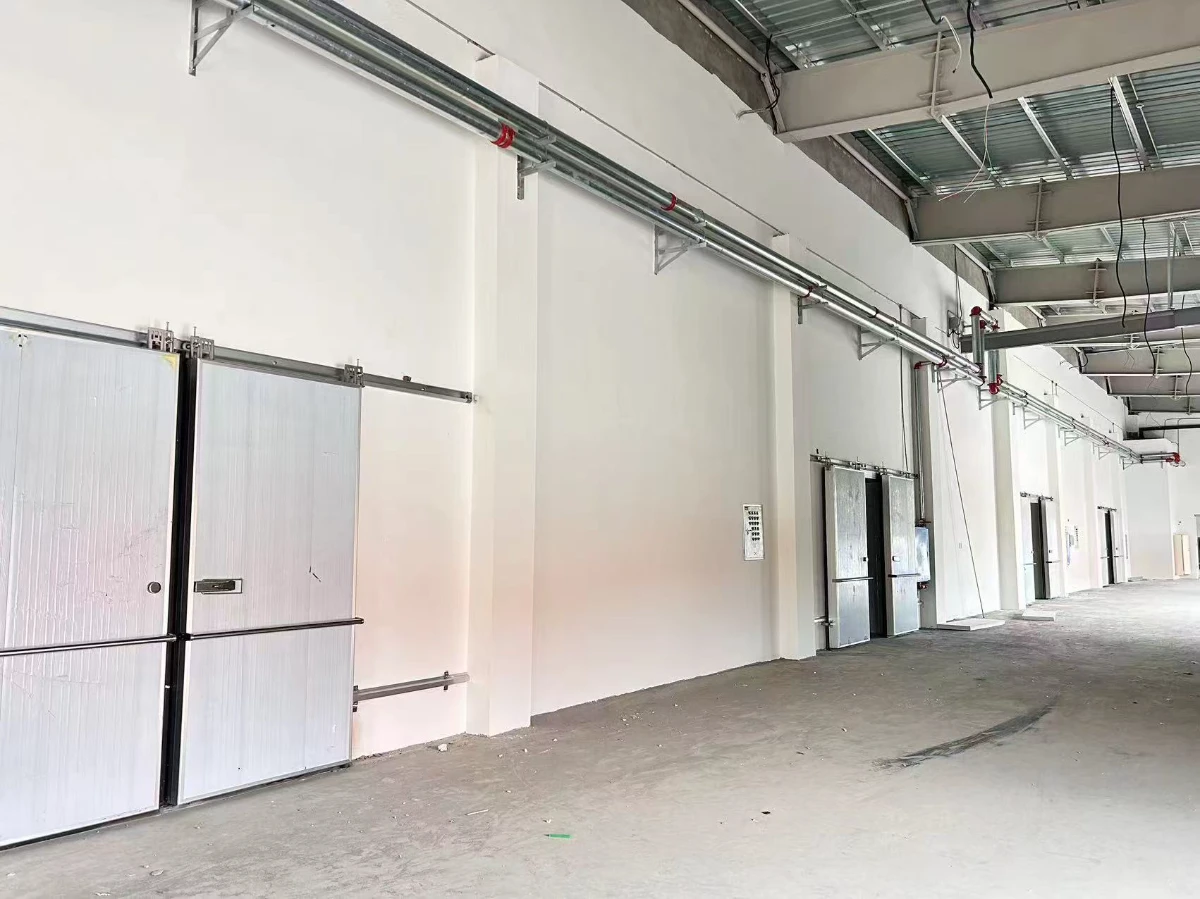
Almost every painful cold-store story traces back to the same handful of decisions: a leaky envelope that never holds temperature in a heat wave; under-specified panels that quietly inflate the power bill for decades; a system sized to the average instead of the peak; or slow delivery, where every month without a working cold store is product not stored and a loan still accruing. The way to avoid all of it is to define the brief before you ask for a quote — these six answers determine the entire design:
- Volume — pallets or m³ to store, today and in three years.
- Temperature zone(s) — chill, freeze, blast, or multi-temp.
- Produit — what it is, and how warm it arrives.
- Permanence — temporary or mobile vs a permanent facility.
- Site — available footprint, power supply and climate.
- Speed — how fast it must be operational.
VIKKINS delivers cold storage two ways, so the same factory serves both a contractor and a project owner. Distributors and installers can buy cold room panels and components wholesale — PIR, PU, EPS and rock wool sandwich panels shipped FCL or LCL — to build rooms locally. Project owners can take a complete turnkey cold storage building: clear-span steel structure, the insulated envelope and the refrigeration design delivered and supervised as one project. Everything is manufactured in ISO 9001 / ISO 14001-certified bases, packed for sea freight and delivered to 90+ countries with design, supply and installation support — engineered from our Montréal office for accountability you can reach, and supported in English, Spanish and French. (Choosing between mobile, modular and walk-in? See our guide to modular and mobile cold rooms.)
Construisons quelque chose ensemble
Indiquez-nous les dimensions et l'utilisation de votre projet – nous vous enverrons une conception préliminaire et un devis dans les 24 heures. Service en anglais, espagnol ou français.
| Obtenez un devis gratuit | Envoyez-nous un message sur WhatsApp dès maintenant |