




Choosing the right cold room panel is one of the most consequential decisions in any cold storage project. The panel is not just a wall — it is the thermal barrier that keeps your product safe, and it will quietly set your energy bill for the next 15 to 20 years. Get it right, and the cold room holds temperature effortlessly and cheaply. Get it wrong, and the refrigeration plant runs constantly, energy costs climb, and product quality suffers. This guide walks through every decision a buyer actually has to make — core material, thickness, facing, locking system, and how to spot a panel that has been quietly cheapened — so you can specify with confidence.
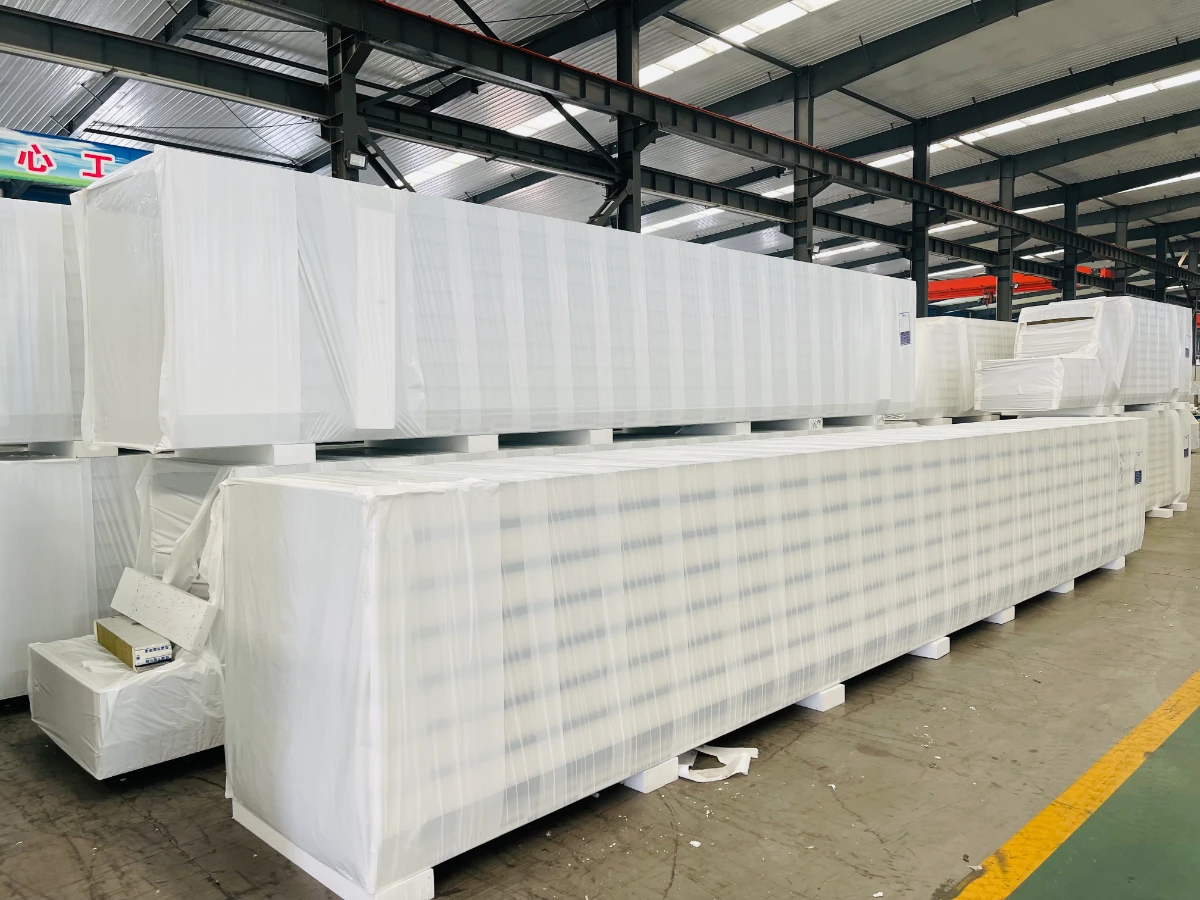
Cold room panels are prefabricated to fixed lengths, widths and thicknesses, then assembled on site.
What a cold room panel actually is
A cold room panel — also called an insulated sandwich panel or cold storage board — is a composite element built from three layers: two metal facings on the outside and a rigid insulation core in the middle. The core does the thermal work; the facings protect the core, give the panel its structural strength, and provide a hygienic, cleanable surface. Panels are prefabricated in a factory to precise dimensions and joined on site with a locking system, forming continuous insulated walls and ceilings for the cold room.
Because the panel is a system, choosing well means matching several properties to your application at once: the temperature you need to hold, the fire and hygiene rules you must meet, the loads the panel will carry, and the budget you have to work with. The sections below take these one at a time.
Decision 1: The core material
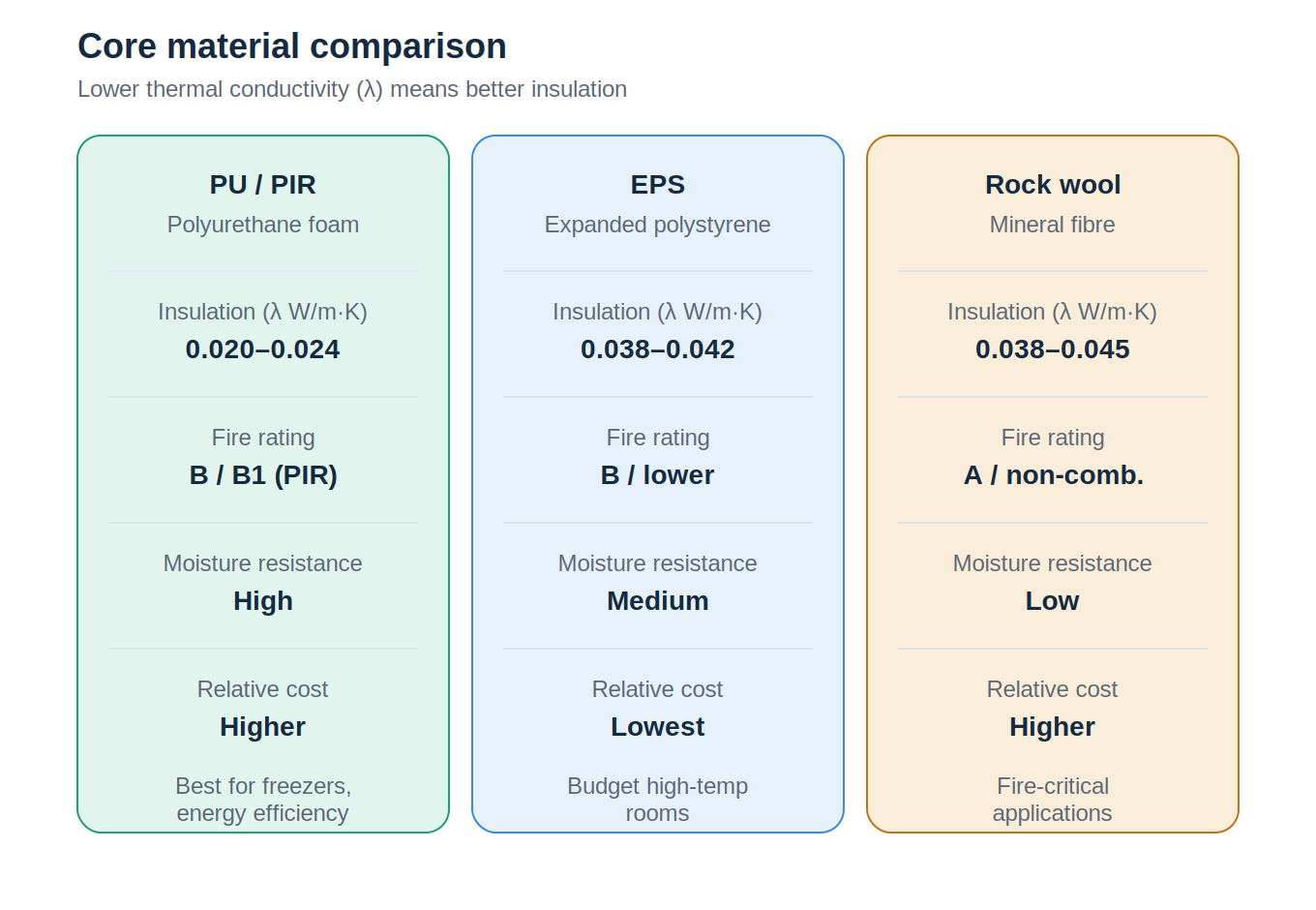
The insulation core is the single most important choice, because it sets the panel’s thermal performance, fire behaviour, and moisture resistance. Three core materials dominate the market: polyurethane (PU) and its higher-fire-grade cousin polyisocyanurate (PIR); expanded polystyrene (EPS); and rock wool (mineral fibre). The comparison chart below summarises how they differ across the properties that matter most.
PU / PIR — the cold storage benchmark
Rigid polyurethane is the industry benchmark for cold storage, and for good reason. Its thermal conductivity (λ) is roughly 0.020–0.024 W/(m·K) — about half that of EPS and rock wool — which means a thinner PU panel delivers the same insulation as a much thicker panel of any other material. In a freezer where every degree costs money, that efficiency compounds year after year. PU is also hydrophobic: it does not readily absorb water, so its insulation value stays stable over time and the panel resists the moisture problems that plague cold rooms. For applications that demand better fire performance, PIR uses the same production process but a modified chemistry to reach a B / B1 fire rating with lower smoke emission and self-extinguishing behaviour. For most walk-in cold rooms, freezers and cold-chain facilities, PU or PIR is the default choice.
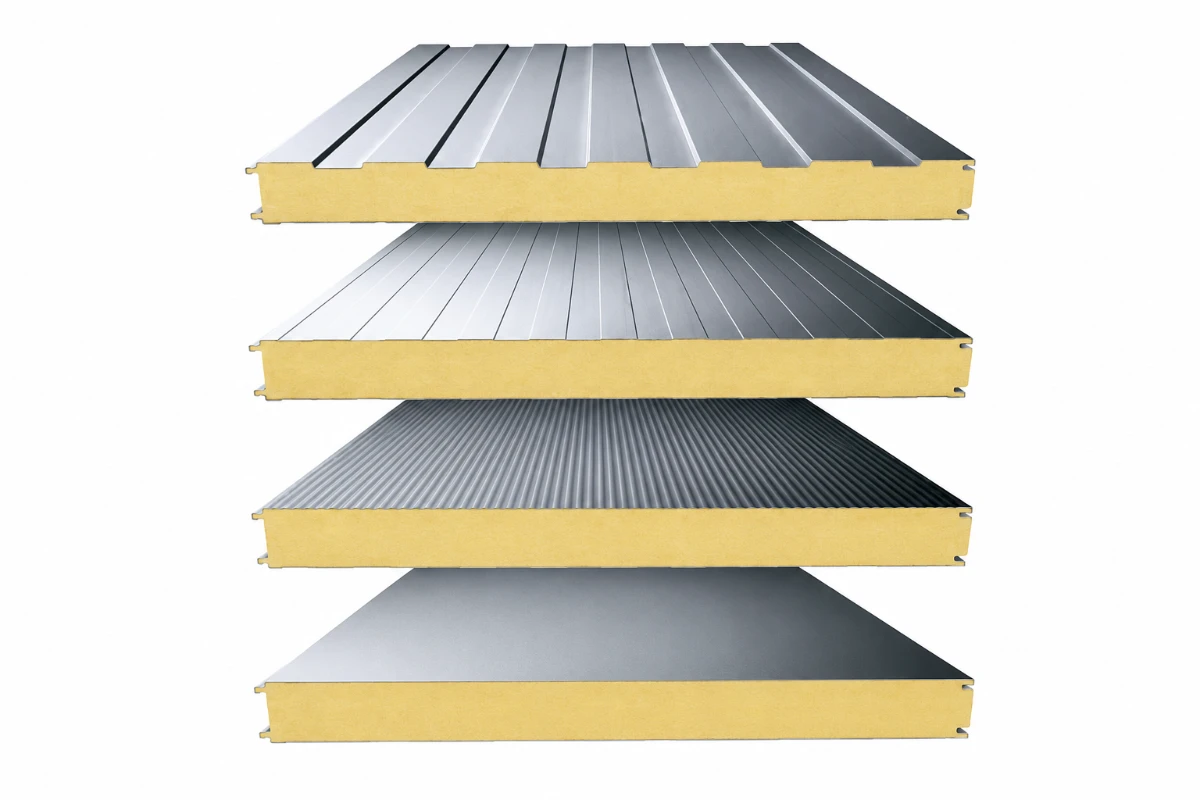
A PU / PIR cold room panel: rigid foam core bonded between two steel facings.
EPS — the budget option for high-temperature rooms
Expanded polystyrene is the lowest-cost core. Its thermal conductivity is higher (around 0.038–0.042 W/(m·K)), so an EPS panel has to be noticeably thicker to match PU, and it absorbs more moisture over its life. Where EPS earns its place is in budget-sensitive projects with modest temperature demands — high-temperature cold rooms above 0 °C, staging areas, or short-life installations where the lower upfront cost outweighs the higher running cost. For freezers and low-temperature storage, EPS is generally a false economy.
Rock wool — when fire performance comes first
Rock wool (mineral fibre) is the choice when fire safety is the governing requirement. It is non-combustible and typically carries an A-grade fire rating, far above PU or EPS, and it adds useful sound absorption. Its thermal conductivity is similar to EPS (around 0.038–0.045 W/(m·K)), so it is not as thermally efficient as PU, and it is heavier and more prone to absorbing moisture. Rock wool panels are specified where building codes or insurers demand non-combustible construction — often in fire compartment walls, or facilities handling flammable goods — rather than for pure thermal efficiency.
Decision 2: Panel thickness by temperature
Once the core is chosen, thickness follows from the temperature you need to hold. Colder rooms need thicker panels to slow heat transfer and keep the refrigeration load manageable. The values below are the industry norms for PU / PIR panels — the reference most buyers start from.
| Room type | Typical temperature | PU/PIR thickness |
| High / medium-temp cold room | +15 °C to 0 °C | 75–100 mm |
| Low-temperature chill room | 0 °C to −18 °C | 100–120 mm |
| Freezer / cold storage | −18 °C to −25 °C | 120–150 mm |
| Blast freezer / deep freeze | below −25 °C | 150–200 mm |
These are starting points, not absolutes. The right thickness also depends on your climate — a cold room in a hot, humid region faces a larger temperature difference across the wall and may need a step up in thickness — and on how hard you want the refrigeration plant to work. Under-specifying thickness to save on panel cost simply shifts the cost to the electricity bill, every day, for the life of the building. When in doubt, size up.
Decision 3: The facing material
The two metal facings determine the panel’s durability, hygiene and corrosion resistance. The most common choice is pre-painted (colour-coated) galvanised steel, which is economical, durable and available in a range of RAL colours. For interiors with strict hygiene demands — food processing, pharmaceutical and medical cold chains — stainless steel facings offer a smooth, non-porous, corrosion-resistant surface that withstands aggressive cleaning and disinfection.
A practical detail many buyers miss: the two facings do not have to be the same. It is common and cost-effective to specify a stainless steel facing on the hygienic interior side and a coated galvanised steel facing on the exterior, tailoring each side to its conditions. Whatever the material, the steel gauge matters — reputable manufacturers use facings of 0.4 mm or thicker, and a thinner facing is one of the first places a panel gets quietly cheapened.
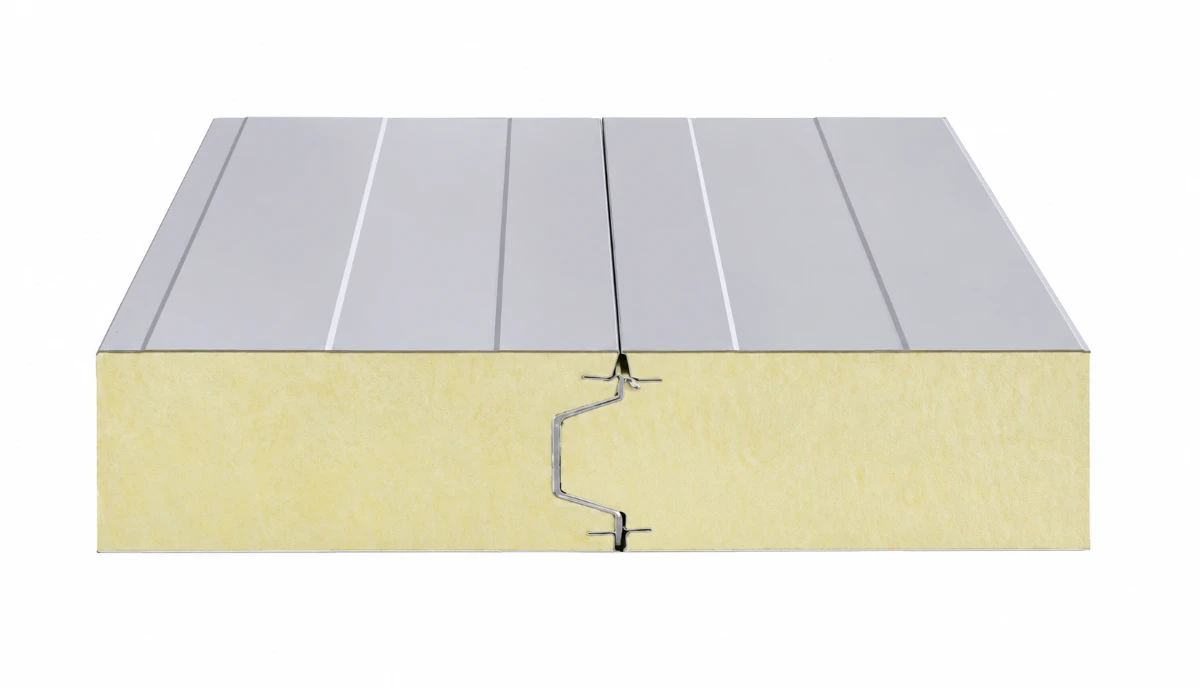
The facing gives the panel its strength, hygiene and corrosion resistance; the core does the insulating.
Decision 4: The locking system and joints
A cold room is only as good as its joints. Even a high-performance panel will leak cold and waste energy if the seams between panels are loose or poorly sealed. Quality cold room panels use a cam-lock (eccentric hook) system built into the tongue-and-groove edges: as the cam turns, it pulls adjacent panels tight together, compressing the seal and closing the joint. This does three things — it speeds installation, it ensures a tight, repeatable joint, and it minimises the thermal bridging and air leakage that undermine insulation. When comparing panels, ask about the locking system and the edge profile, not just the core and thickness.
How to spot a panel that has been cheapened
Two panels can look identical and perform very differently. The savings a low-cost supplier offers usually come from places you cannot see once the panel is installed. Three things separate a quality cold room panel from a cheapened one:
- Core density. For PU cold storage panels, the industry standard foaming density is around 38–40 kg/m³. Under-dense foam uses less polyurethane, which lowers cost — but it also weakens the panel and can raise thermal conductivity, so the room is harder to keep cold. Ask for the density figure in writing.
- Steel facing thickness. Reputable panels use facings of 0.4 mm or more. Thinner steel dents easily, carries less load, and is a common hidden cost-cut.
- Bond and finish quality. The foam must be fully bonded to both facings with no voids, and the panel should be dimensionally accurate (tight tolerances) so joints close cleanly on site. Poor bonding leads to delamination; poor tolerances lead to gaps and thermal bridging.
The three factors that decide a cold room panel’s real quality are core density, facing thickness, and the load-bearing integrity of the finished panel. A price that looks too good usually means one of these has been reduced.
Putting it together: a quick selection summary
For most cold storage and cold-chain projects, the decision path is straightforward once you know your temperature and your constraints:
- Standard cold rooms and freezers — PU or PIR core, thickness sized to temperature (see the table above), coated steel facings, cam-lock joints. This covers the large majority of projects.
- Food, pharma and medical interiors — the same PU / PIR panel, but with stainless steel on the hygienic side.
- Fire-critical construction — rock wool core where codes or insurers require non-combustible A-grade panels, accepting the trade-off in thermal efficiency.
- Budget high-temperature rooms — EPS core can be justified above 0 °C where upfront cost is the priority and running cost is secondary.
How VIKKINS supports your cold room project
At VIKKINS we manufacture cold room and cold storage panels to order, and we help clients specify them correctly rather than simply sell a fixed product. We supply PU, PIR and rock wool cores; a full range of thicknesses from 50 mm to 200 mm matched to your temperature and climate; and both coated-steel and stainless-steel facings, including mixed facings for hygienic interiors. Every panel is prefabricated to precise tolerances with cam-lock joints for fast, tight installation, and produced in ISO 9001-certified facilities. Because we also engineer the structure en acier and deliver complete turnkey cold storage buildings, we can match the panel specification to the whole building — from structure to envelope to installation — for clients worldwide.
Questions fréquemment posées
What thickness of cold room panel do I need for a freezer?
For a standard freezer running between −18 °C and −25 °C, PU / PIR panels of 120–150 mm are typical. Deep-freeze or blast-freezer rooms below −25 °C usually step up to 150–200 mm. In hot or humid climates, the larger temperature difference across the wall may justify going thicker still.
Which is better for cold storage — PU or EPS?
PU (polyurethane) is the better performer for cold storage. Its thermal conductivity is about half that of EPS, so a thinner PU panel matches a thicker EPS one, and PU resists moisture far better. EPS is cheaper upfront and can suit budget high-temperature rooms, but for freezers and low-temperature storage its higher running cost usually outweighs the saving.
Do I need fireproof (rock wool) cold room panels?
It depends on your building codes and insurer. Rock wool is non-combustible (A-grade) and is specified where fire regulations demand it — for example fire compartment walls or facilities with flammable goods. For pure thermal efficiency, PU / PIR is more effective; PIR also offers a good B / B1 fire rating that satisfies many projects without moving to rock wool.
How can I tell if a cold room panel is good quality?
Check three things: the core foaming density (around 38–40 kg/m³ for PU), the steel facing thickness (0.4 mm or more), and the bond and dimensional accuracy of the panel. A panel that is under-dense, uses thinner steel, or has poor tolerances will cost less upfront but perform worse and last less time.
Construisons quelque chose ensemble
Tell us your cold room temperature, size and use — we’ll recommend the right panel specification and send a quote within 24 hours. Service in English, Spanish, or French.