




Accueil / Connaissance des produits / Cold Room Doors: Types, Heated Frames and Sizing
Cold Room Doors: Types, Heated Frames and Sizing for Hot-Climate Cold Stores
Walls and ceilings hold the cold. The cold room door is where it gets out. Every time a door opens, warm humid air pours in, ice forms on the frame, the compressor works harder, and the floor at the threshold turns into a skating rink. In Lagos, Casablanca, Karachi or Guayaquil — where the outside air is 30 °C and 80% humidity for most of the year — a badly specified door costs more in electricity over its life than the door itself. This guide covers the four door types, why freezer doors need heated frames, how to size the opening, and the three installation mistakes we see most often on export projects.
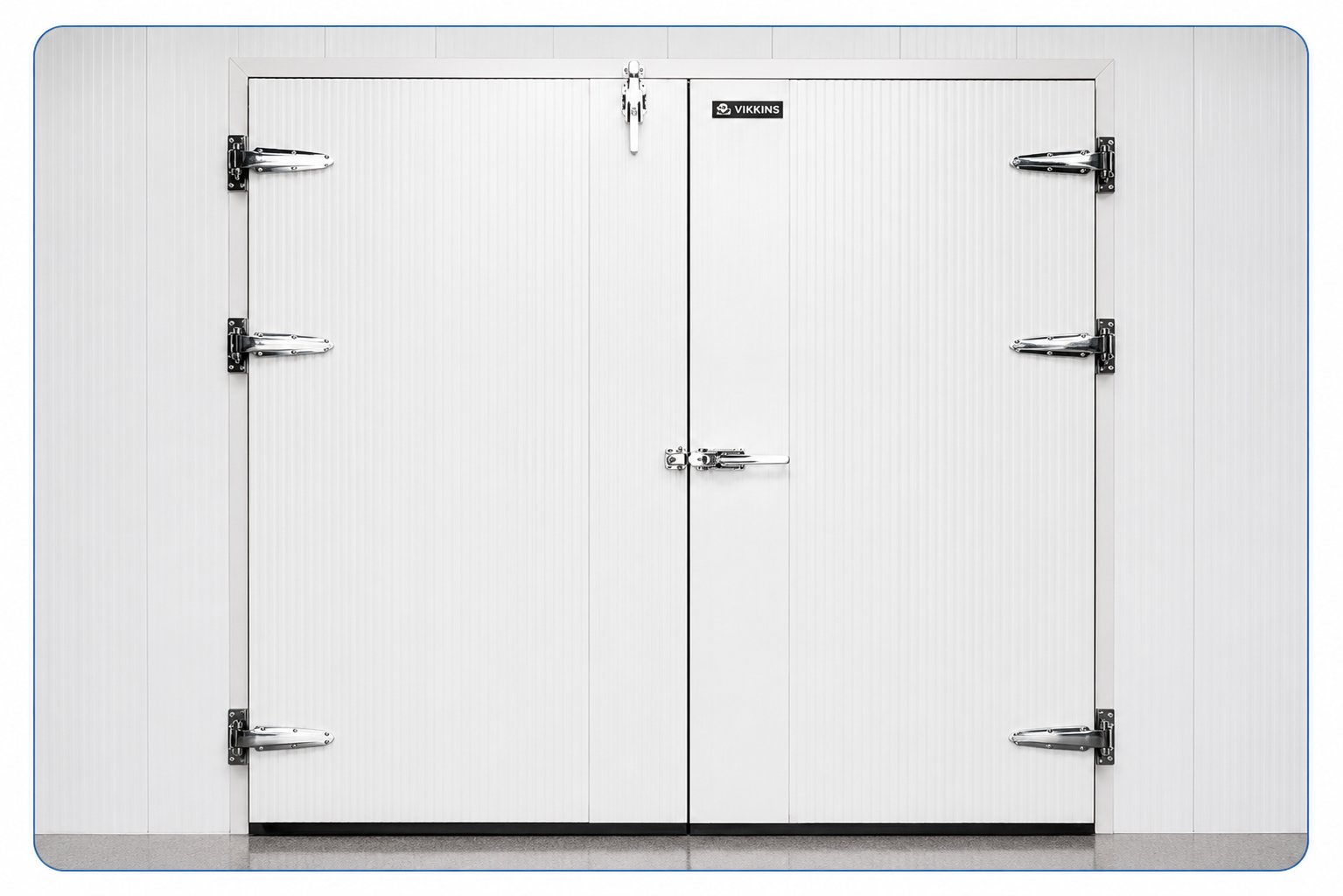
Four types of cold room door, and where each belongs
1. Hinged doors
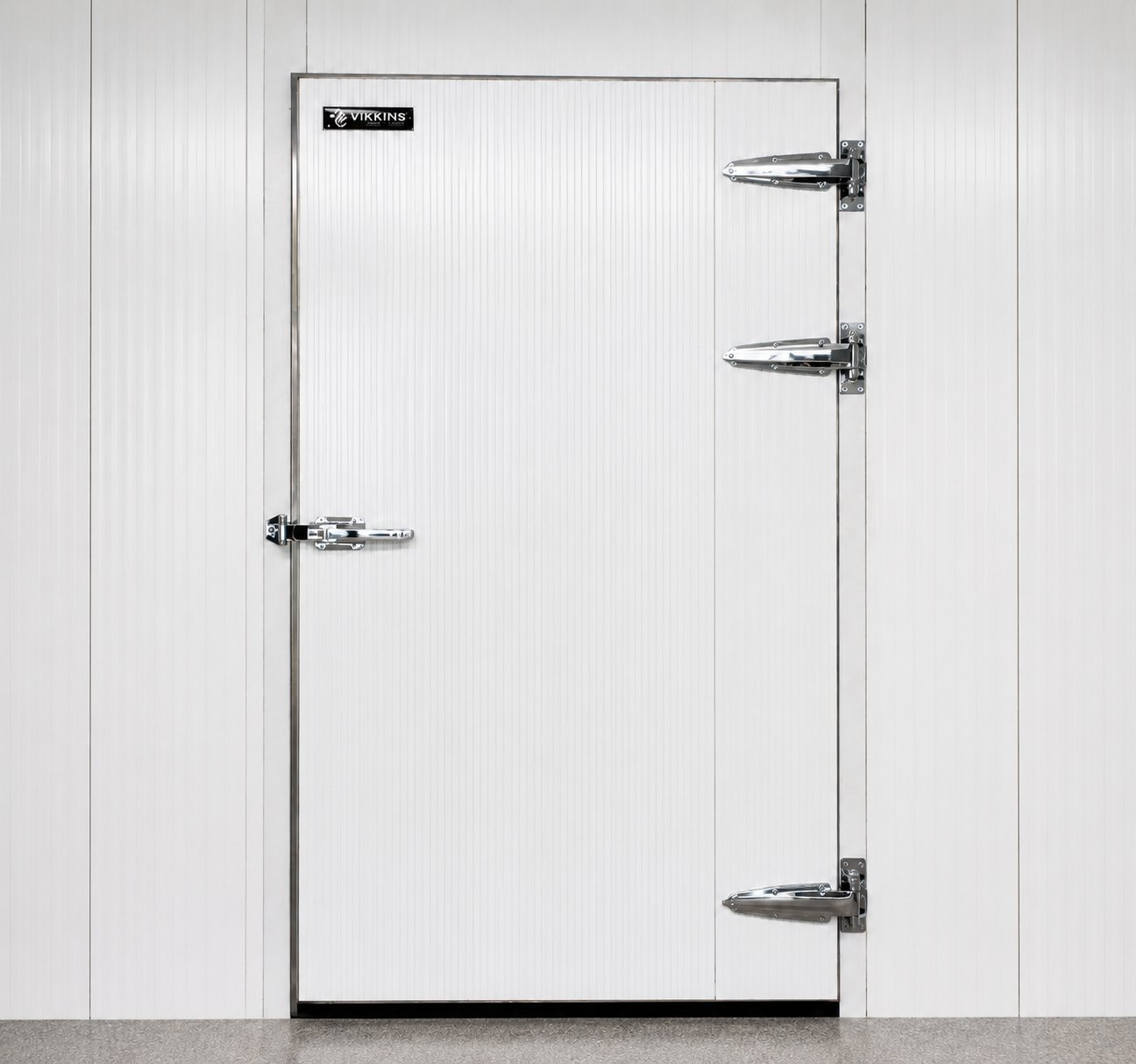
The standard for walk-in rooms and small to medium stores. Simple, cheap, easy to seal because the gasket compresses against a flat frame. Limits: the swing needs clear floor space, and anything wider than about 1.5 m gets heavy enough that the hinges and frame start to sag over time. Use them for rooms where people walk in and out and pallets do not.
2. Sliding doors
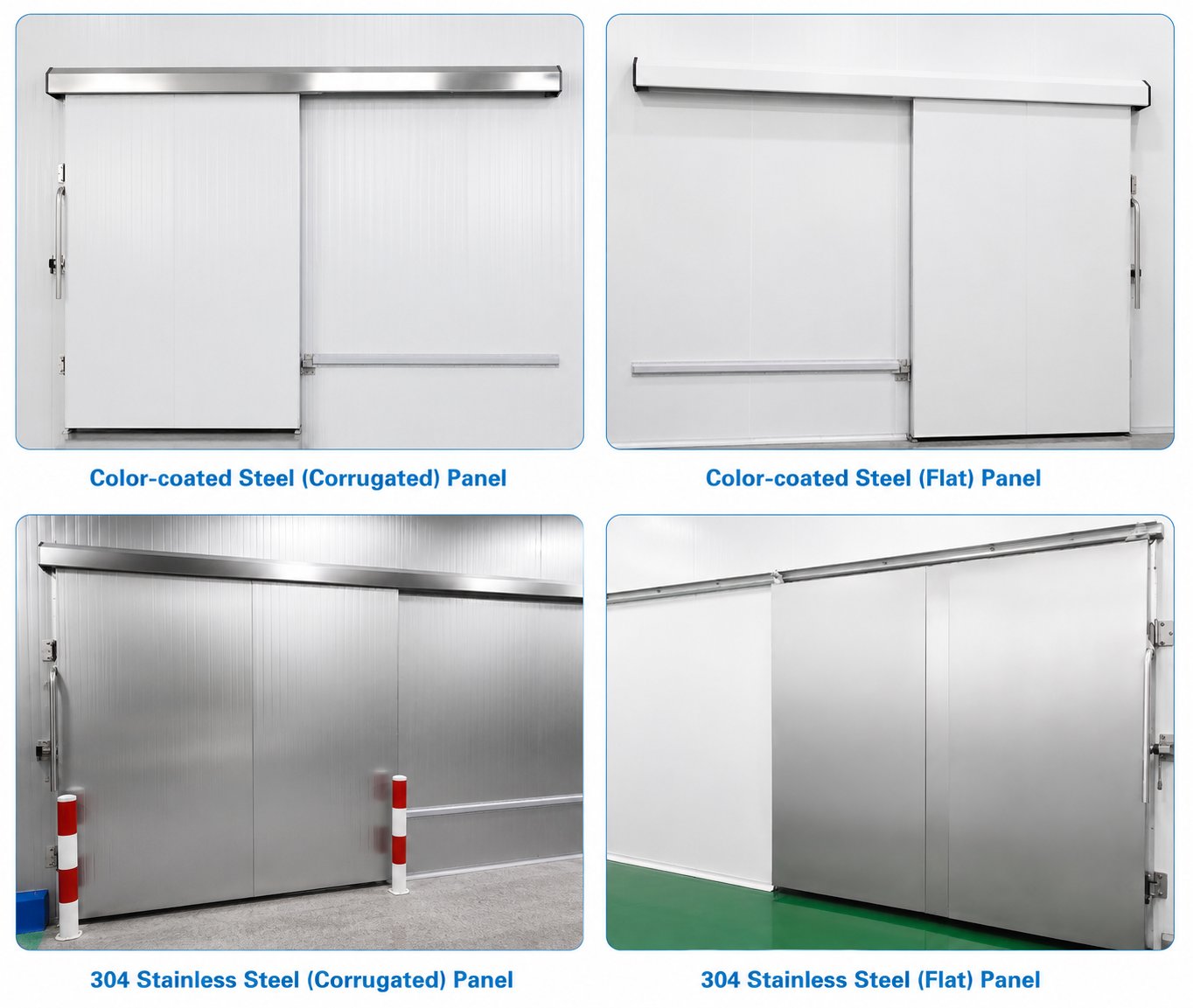
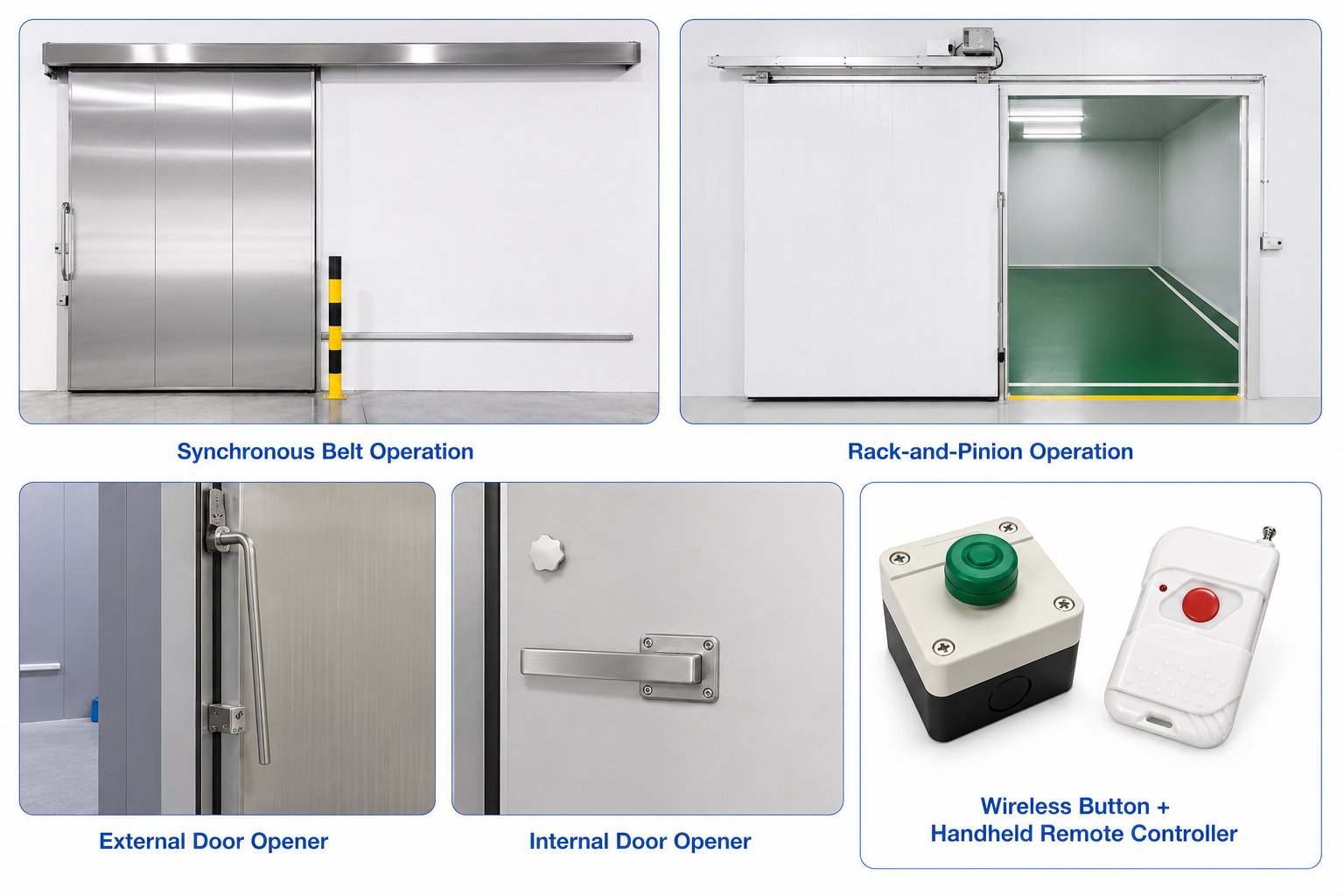
The workhorse of pallet-traffic cold stores. The leaf runs on an overhead track and parks flat against the wall, so there is no swing zone and the opening can be 2 to 3 m wide for forklifts. The trade-off: sealing is harder — the leaf has to be pulled in against the frame as it closes, so the track hardware and the closing mechanism matter as much as the panel. Most export cold stores in food processing and distribution use sliding doors on the main openings.
3. High-speed roll-up doors
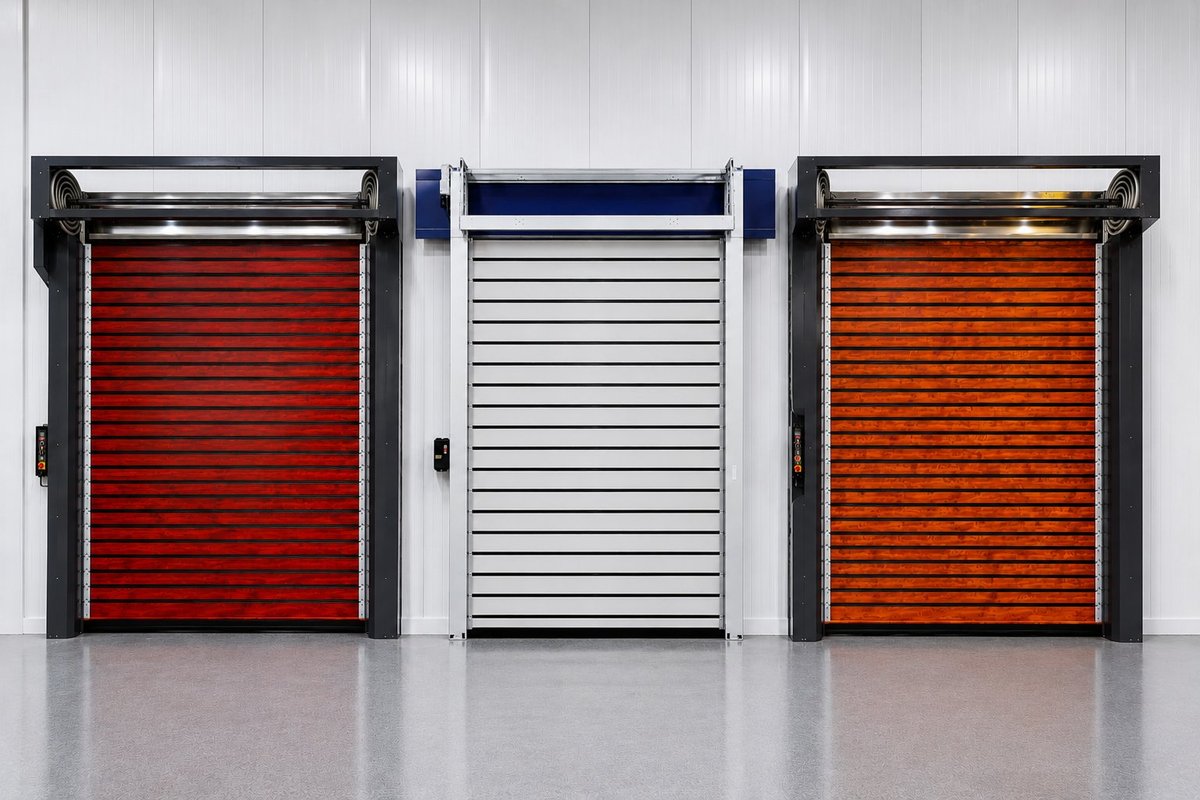
A flexible curtain that opens in two to three seconds and closes behind the forklift. They cut air exchange dramatically on busy openings — a door that is open 30 seconds per cycle instead of two minutes loses a fraction of the cold. They do not insulate well on their own, so they are paired with a sliding insulated door that stays open during the shift and is closed at night. Best for high-traffic docks and the opening between a chiller and a freezer.
4. Hermetic (airtight) doors
Sliding doors with an inflatable or mechanically pressed gasket that seals the full perimeter. Used where the atmosphere inside is controlled — CA storage for fruit, ripening rooms, and pharmaceutical cold rooms where temperature mapping has to stay within ±1 °C. Over-specified for a standard frozen-fish store; essential for a banana ripening room in Ecuador or a vaccine store in Kenya.
Why freezer doors need a heated frame
At −18 °C and below, the door frame is the coldest surface the outside air touches. Moisture condenses on it, freezes, and within hours the gasket is glued to the frame by a ridge of ice. Staff force the door; the gasket tears; now it never seals again. In a tropical climate the humidity makes this happen in days, not weeks.
The fix is a low-wattage heating cable embedded in the frame, running continuously, holding the frame surface just above the dew point. It uses very little power — typically 15 to 30 W per metre of frame — and it is the difference between a door that works for ten years and one that is replaced in two. Every freezer door needs it. Chiller doors at +2 °C usually do not, unless the room is in a very humid, unconditioned building.
Two related details for hot climates: the pressure relief valve (the room pulls a vacuum when warm air inside cools and contracts, and the door will not open until pressure equalises) also needs to be heated on a freezer; and the door should have a safety release on the inside, because a staff member locked inside a −25 °C room has minutes, not hours.
Sizing the opening
The door is sized from what goes through it, not from the room. Work backwards:
| Traffic | Clear opening (W × H) | Door type |
|---|---|---|
| People and trolleys | 800–1,000 × 1,900–2,000 mm | Hinged |
| Hand pallet truck | 1,200–1,500 × 2,000–2,200 mm | Hinged or sliding |
| Forklift, standard pallet | 1,800–2,200 × 2,400–2,800 mm | Sliding |
| Forklift, high-stack / double pallet | 2,400–3,000 × 3,000–3,500 mm | Sliding + high-speed |
Add 100 mm of clearance each side of the widest load and 200 mm above the tallest. A door that is one size too small gets hit; a door that is one size too large leaks cold on every cycle. Panel thickness for the door leaf follows the wall: 100 mm for chillers, 150 mm for −18 °C, 200 mm for −30 °C and below — the same bands as in our guide d'épaisseur des panneaux de chambre froide. If the room is still being laid out, our cold room sizing guide covers how door count and position affect the cooling load.
Three installation mistakes we see on export projects
- Door frame set on the wear slab, not through it. The threshold must be continuous with the floor insulation. A frame sitting on top of the concrete makes a thermal bridge straight into the slab — that is where the ice ridge at the threshold comes from, and over years it feeds the frost heave described in our cold room floor guide.
- No air curtain or strip curtain behind a sliding door. On a dock that cycles every few minutes, the insulated door is effectively open all shift. A PVC strip curtain costs almost nothing and cuts infiltration by more than half.
- Gasket replaced with a generic profile. The gasket is a wear part — two to four years in heavy use — and it has to match the frame exactly. A near-fit profile from a local hardware market leaves a gap you cannot see but the compressor can feel. Order spares with the door and keep two sets on site.
Doors in the context of the whole room
A cold room is a sealed box with one deliberate hole in it. The door is where most of the running cost leaks out, and it is also the component most likely to be swapped for a cheaper one during procurement. For the door, panel and refrigeration components that go together, see the Système de chambre froide range. For how heat, humidity and coastal air change the specification in Africa, the Gulf and Latin America, see cold storage in hot climates.
Questions fréquemment posées
Does a chiller door need a heated frame?
Usually not at 0 to +5 °C. The exception is a chiller in a hot, humid, unconditioned building — a fish hall in Mombasa or a produce store in Santo Domingo — where condensation on the frame can still be heavy enough to matter. If in doubt, specify it; the running cost is a few watts.
Sliding or hinged for a 20-pallet freezer room?
Sliding. Once pallets go through the door, a hinged leaf wide enough for a forklift becomes too heavy to seal reliably, and the swing zone wastes floor you paid to insulate.
How long does a cold room door gasket last?
Two to four years in daily pallet traffic; longer on a walk-in. Replace it when you can see light through the closed door or when ice forms along one edge of the frame in a pattern. Keep spares matched to the frame profile.
What is a pressure relief valve for and does it need heating?
When the room pulls down after loading, the air inside contracts and the door is sucked shut by the pressure difference. The valve lets air in to equalise. On a freezer it ices up like the frame does, so it needs its own small heater or it stops working exactly when you need it.
WRITTEN BY
L'équipe d'ingénierie VIKKINS
VIKKINS is a Canada-operated, China-manufacturing steel building company. Our engineers design and deliver turnkey steel structures and cold-chain systems to more than 90 countries from two production bases in Cangzhou (Hebei) and Harbin (Heilongjiang), coordinated through our Montréal office. We hold ISO 9001, ISO 14001 and ISO 45001 certification, CE and CWB welding qualifications, and a Level II steel-structure contracting qualification, with an annual capacity of 20,000 tonnes of steel and 5 million m² of insulated panels. These articles are written from real project experience and reviewed by our engineering team.
Indiquez-nous les dimensions et l'utilisation de votre projet – nous vous enverrons une conception préliminaire et un devis dans les 24 heures. Service en anglais, espagnol ou français.
Obtenez un devis gratuit Envoyez-nous un message sur WhatsApp dès maintenant