Importation de structures en acier : 5 erreurs coûteuses à éviter (et comment bien faire)
Importing a steel building from overseas can cut your costs dramatically. But when an import goes wrong, it goes wrong on site — the most expensive place to fix anything. The good news: the failures are predictable, and avoidable.
The safest way to import steel structures is to buy from a real factory you can verify — like ours.
If you’re sourcing a steel structure internationally, the price on the quotation is only part of the story. What happens between “order” and “built” is where projects are quietly won or lost. Below are the five most common — and most expensive — mistakes buyers make when importing steel structures, with concrete ways to avoid each one.
Mistake 01 Buying from a trader, not a factory
Le problème : Many “manufacturers” online are trading companies that buy from whoever is cheapest that month. You pay a markup, lose control of quality, and have no one accountable when components arrive out of spec.
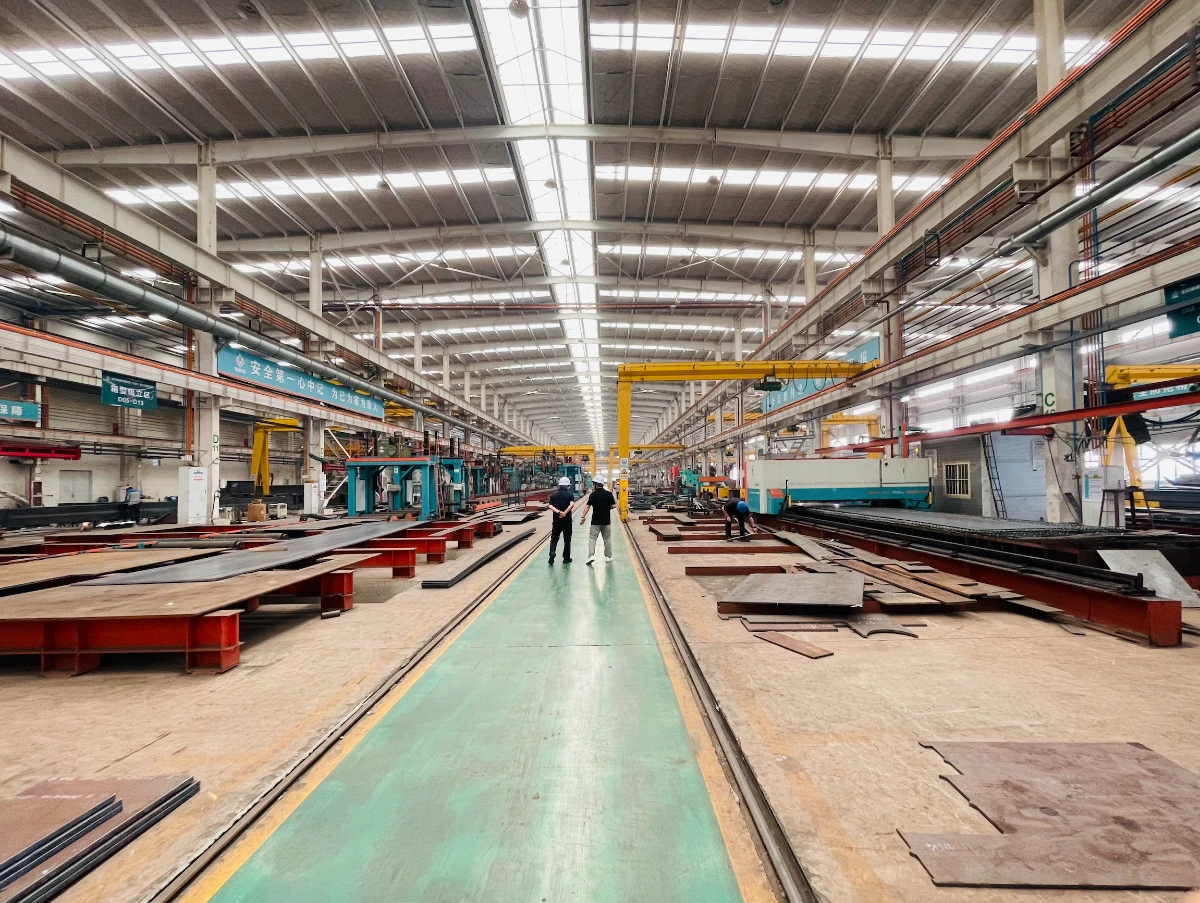
How to avoid it: Don’t take a supplier’s word for it — ask to see the actual production line: photos, a live call, or video from the workshop floor. A real factory can show you steel becoming your building; a trader can only forward your questions.
This is what “ask to see the factory” should look like — inside the Vikkins production line.
Mistake 02 A structure engineered for the wrong climate or codes
Le problème : A frame designed for mild conditions can be rejected by your local authorities — or, worse, fail under your real snow, wind, or seismic loads. A “standard” catalogue design rarely matches your site.
How to avoid it: Insist the structure is calculated to your country’s building codes and your site’s real loads, and that you receive engineered drawings to confirm it — before production starts, not after the container lands.
Every structure is engineered and fabricated to your project’s codes and loads — not pulled off a shelf.
Mistake 03 Missing parts on delivery
Le problème : Nothing stalls a project like reaching the final bay and finding the bolts, clips, or flashings are short. A few missing kilograms of fasteners can idle a crew for weeks while replacements are re-ordered and re-shipped.
How to avoid it: Require a complete, itemized packing list, and choose a supplier who ships the full building kit — every connection, fastener, and trim piece — not just the big steel.
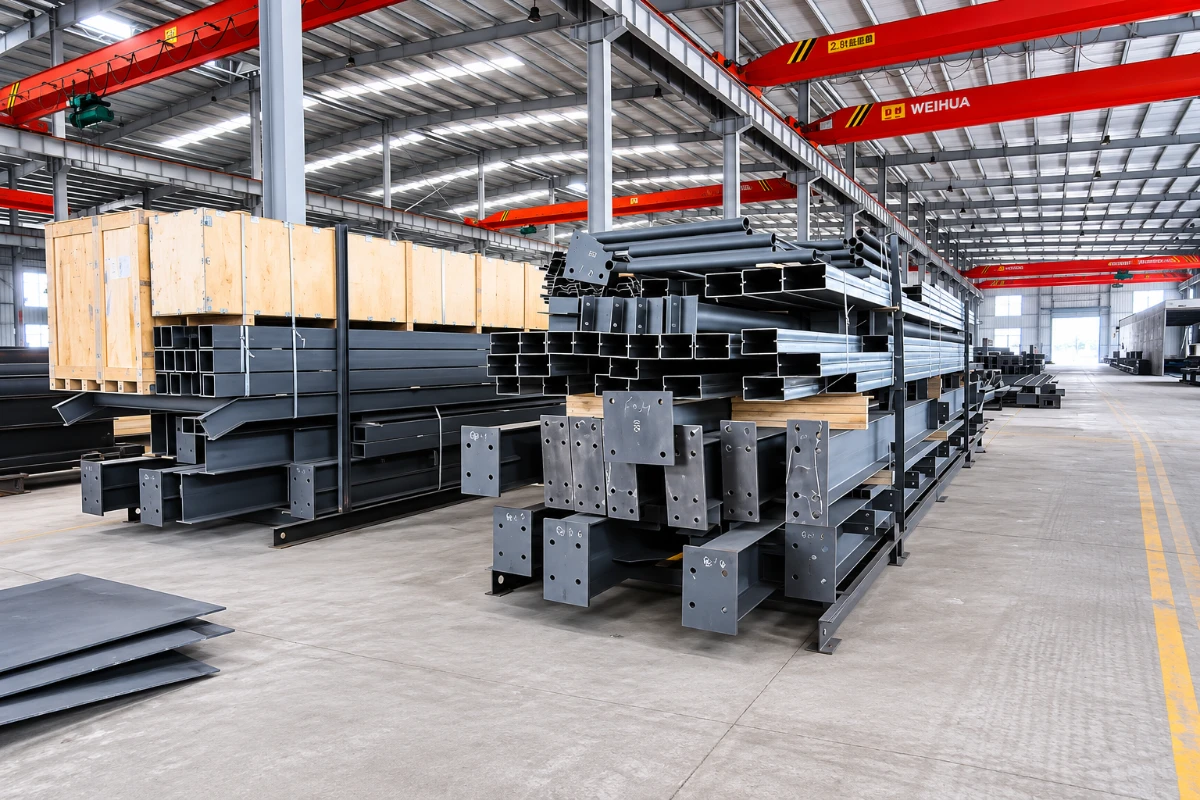
Your complete building kit — fabricated and accounted for in-house, down to the connections and trims.
Mistake 04 Damage in transit
Le problème : Steel that arrives rusted, bent, or scratched costs time, money, and rework. Components spend weeks at sea; poor priming and packing turn a long voyage into damage.
How to avoid it: Ask exactly how parts are primed against corrosion, bundled, and containerized. Good packaging is part of quality — it’s the difference between steel that arrives ready to build and steel that arrives ready to repair.
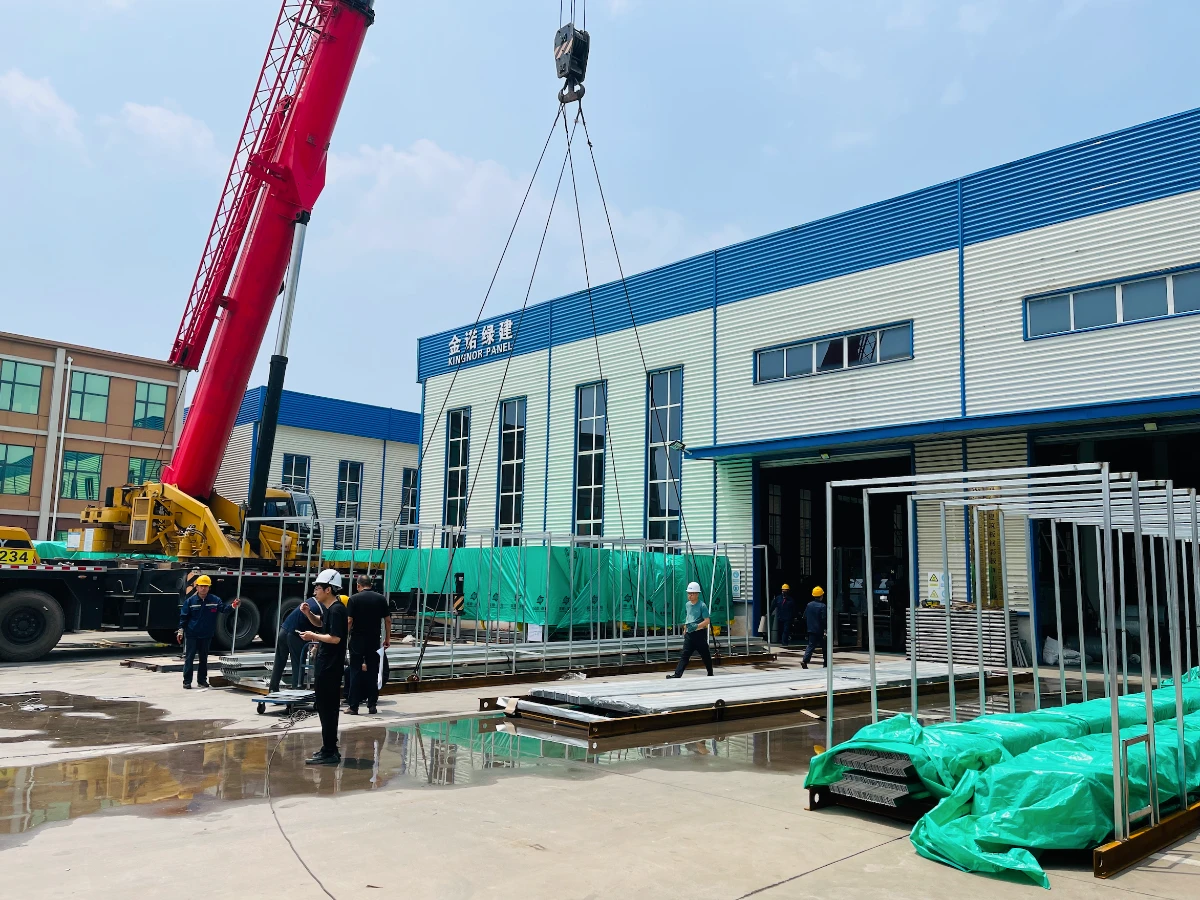
Primed, bundled, and containerized for the voyage — loaded for export to 90+ countries.
Mistake 05 No support during installation
Le problème : Drawings alone don’t raise a building. A local crew unfamiliar with the system makes costly errors, and when they get stuck mid-assembly, there’s often no one to call across the time zone.
How to avoid it: Choose a supplier who provides clear erection drawings and installation guidance — remote or on-site — from the first column to the final connection. The right partner stays with you until the structure stands.
Before you order — the 5-point buyer’s checklist
They fabricate in-house — you’ve seen the factory, not a catalogue.
The design is calculated to your local codes and site loads.
You’ll receive an itemized packing list and the full building kit.
Steel is primed, packed, and containerized for an ocean voyage.
Installation guidance is included — remote or on-site.
Importing steel structures the right way
Notice the pattern: every one of these mistakes turns the savings on a cheap quotation into delays, rework, and overtime later. The cheapest price on paper is rarely the lowest total cost. The way to avoid all five at once is to work with a manufacturer that controls the whole chain — design, fabrication, packing, and installation support — so accountability never disappears between “ordered” and “built.”




 Your complete building kit — fabricated and accounted for in-house, down to the connections and trims.