



De CAD de Beijing al sitio de Uganda: Cómo garantizamos la precisión de los agujeros para pernos en estructuras de acero de gran luz
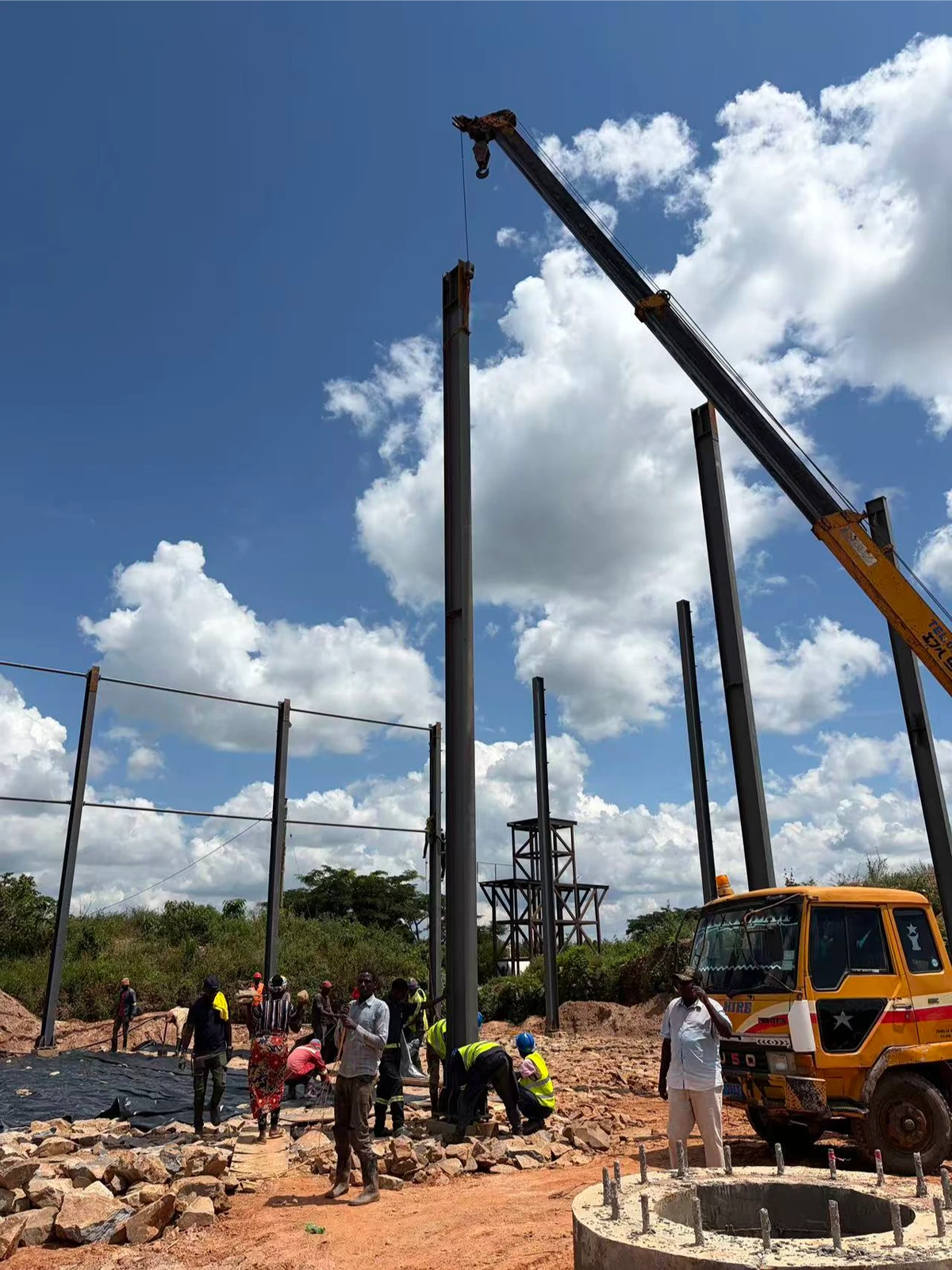
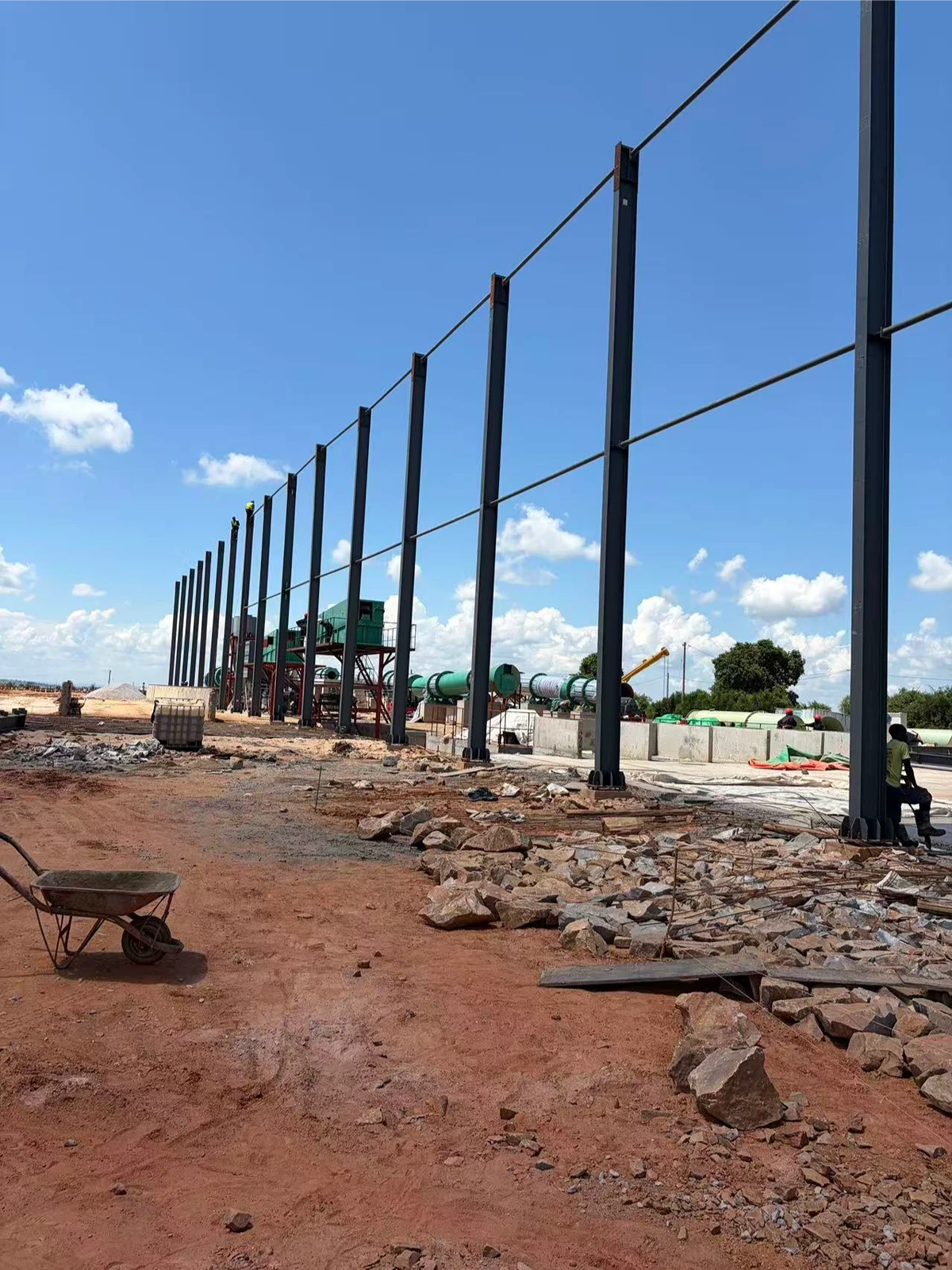
Last year, VIKKINS fabricated and delivered a large-span structure for a client in Uganda that demanded something most local suppliers simply couldn’t deliver: bolt-hole tolerance held to within ±3mm across a structure spanning 30+ meters and standing 8 stories high.
Here’s how we guaranteed that precision across 6,000 kilometers—and why it matters for your project.
Watch the five-stage precision process in action. 8-minute overview of how VIKKINS guarantees bolt-hole tolerance across international projects.
The Problem: Why Bolt-Hole Precision Fabrication Fails Over Distance
When a steel structure is fabricated, assembled, shipped overseas, and erected 6,000 km away, small errors multiply. A 5mm deviation in one column’s bolt pattern doesn’t sound like much. But when you’re trying to bolt a beam to that column on a hot, humid Uganda afternoon—with the crane already booked, the crew standing by, and the project timeline tight—that 5mm can cost you:
- $3,000–5,000 per day delay (equipment rental, crew costs)
- $8,000–15,000 for rework (return shipment + factory correction)
- 2–4 week project completion slip (with potential client penalties)
Most local steel manufacturers in Uganda—and many international suppliers—can’t hold tight tolerance consistently because:
- Design drift: Drawings get modified on the construction site, but the factory never finds out.
- Inconsistent QC: They may have CNC equipment, but their inspection process has gaps.
- Transit damage: No specialized protection during shipping; bolt accuracy gets compromised in transit.
- No remote coordination: The factory is on the other side of the world. You can’t show up and inspect.
The Solution: Precision Fabrication Through Five-Stage Quality Control
VIKKINS developed a different approach. We don’t just make steel structures—we guarantee them. Through a five-stage precision-lock system that starts the moment you send us your designs and doesn’t end until your bolts slide in perfectly on site. This precision engineering approach is what sets us apart from typical suppliers.
Stage 1: Centralized Design Control (Beijing)
All designs originate from one place: our Montreal engineering office y Beijing project coordination team. One master drawing file. Every factory fabricating your project sees the exact same blueprint.
Here’s what’s critical: if the client wants to modify the design, it doesn’t happen silently on a construction site. It goes through engineering review → approval → drawing update → factory notification. No surprises. No “oops, we forgot to tell the factory.”
For detailed specifications on how we maintain this precision engineering discipline, see our steel structure fabrication system guide.
Control Point 1: Design Approval Checklist
- ✓ Tolerance table locked into drawings
- ✓ Bolt-hole coordinate grid finalized
- ✓ Client sign-off documented
Stage 2: Precision Fabrication with 100% Verification (Harbin & Cangzhou)
Precision fabrication begins the moment designs are frozen. Fabrication happens on CNC-controlled equipment—not hand-drilling, not manual layout. Computer numerical control machines ensure consistent bolt accuracy and tolerance control across every component.
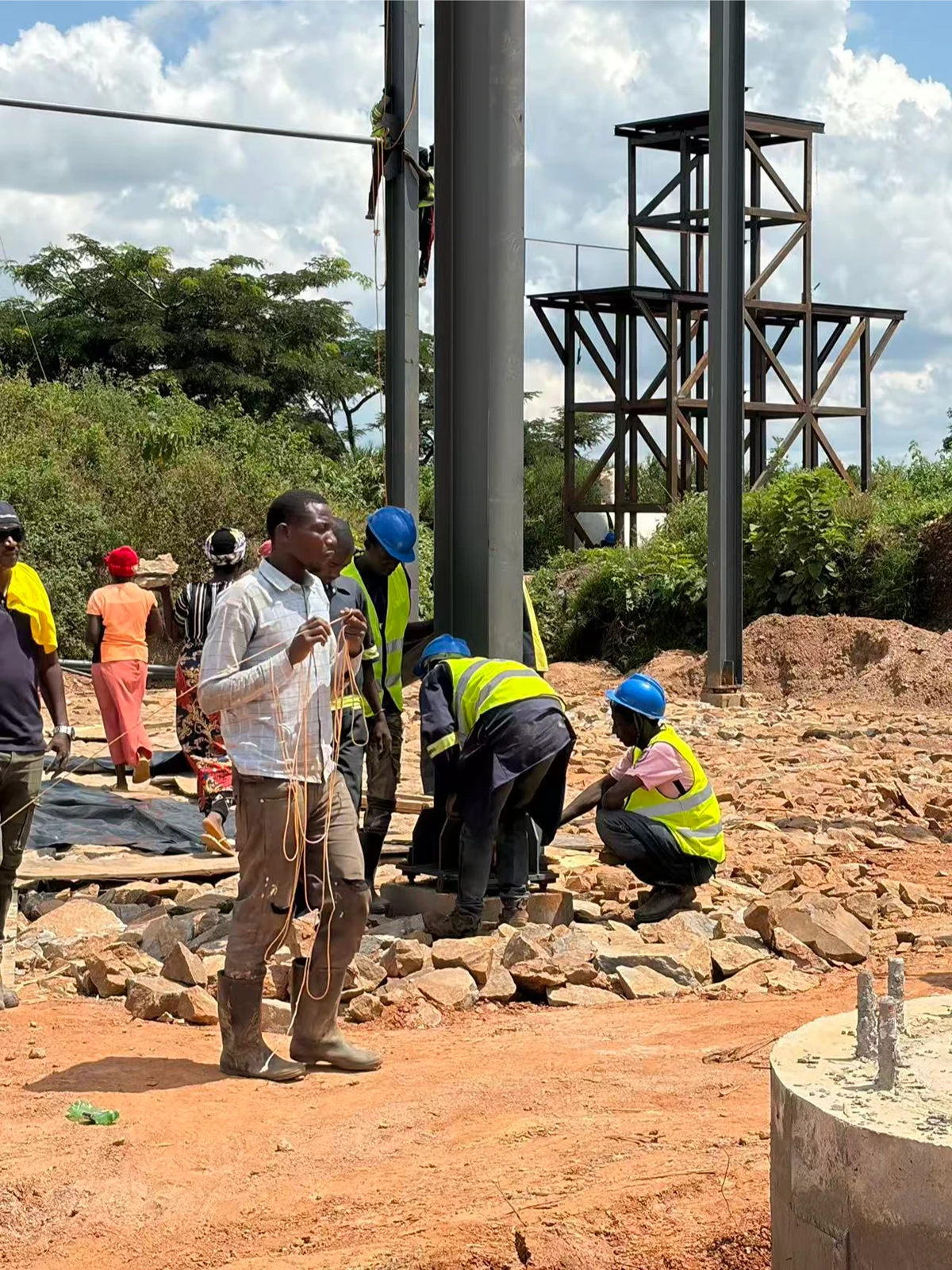
In our Harbin facility—where the Uganda project’s main structure was fabricated—bolt holes are routed to ±2 millimeters precision. That’s tighter than the ±3mm field tolerance in the design. Our tolerance control process is rigorous and verifiable.
Then comes verification. Every. Single. Component. gets measured by a Coordinate Measuring Machine (CMM). This isn’t sampling 10%. This is 100% dimensional verification. Our precision engineering methodology aligns with ISO 9001 quality management standards.
Real Uganda Project Data:
| Component Type | Main Column (8-story height) |
| Designed Tolerance | ±3mm (bolt-hole pattern) |
| Our Fabrication Tolerance | ±2mm (extra tight) |
| CMM Result | 100% within ±1.5mm |
| Non-Conforming Parts Shipped | ZERO / 247 columns |
| Non-Conforming Parts Detected & Reworked | 3 / 247 columns (caught in QC, reworked before shipping) |
| QC Cost per Column | $0.40 |
| Field Rework Cost (if shipped defective) | $4,500 per column × defect count |
Three columns came out slightly out of spec during fabrication. Our quality system caught them. Reworked them in the factory. By the time they shipped, all 247 columns were perfect. Every component gets tagged with a QR code carrying inspection data—so when your Uganda crew receives the shipment, they can scan and verify the component was CMM-tested and approved.
Control Point 2: 100% CMM Verification
- ✓ Every bolt hole measured (not sampled)
- ✓ Automatic deviation report generated
- ✓ Components outside tolerance flagged for rework
- ✓ QR code traceability on every piece
Stage 3: Protect for Ocean Transit (Port)
Your components don’t care about saltwater—but transport abuse does. Each piece gets individually packaged to preserve bolt accuracy:
- Wrapped in weatherproof packaging
- Bolted to heavy-duty wooden pallets (no loose stacking)
- Corner & edge protectors applied (foam + plywood)
- Photo documentation of every package’s position
Before we seal the container, we photograph every package’s position. You get a photo log of the shipment. So when it arrives in Uganda, you can verify nothing shifted during transit and bolt accuracy is preserved.
Control Point 3: Pre-Shipment Verification
- ✓ Spot-check QC on 10% of containers
- ✓ Photo documentation of package positions
- ✓ Shipper weight tickets verified
- ✓ Damage insurance in place
Stage 4: Real-Time Transit Visibility (Shipping)
Direct shipment. Your components get their own container—not consolidated with other buyers’ goods. That means we control the handling and maintain tolerance control throughout transit.
- Container is ventilated (humid climates = rust risk; air circulation prevents moisture pooling)
- Real-time GPS container tracking
- You know exactly where your steel is and when it’ll arrive
- Damage insurance covers transport handling
Control Point 4: In-Transit Visibility
- ✓ GPS container tracking
- ✓ Damage insurance coverage
- ✓ Port inspection before release
- ✓ Direct notification to client
Stage 5: On-Site Acceptance & Technical Support (Uganda)
When the container lands in Uganda, the real work begins—and this is where most suppliers disappear. We don’t.
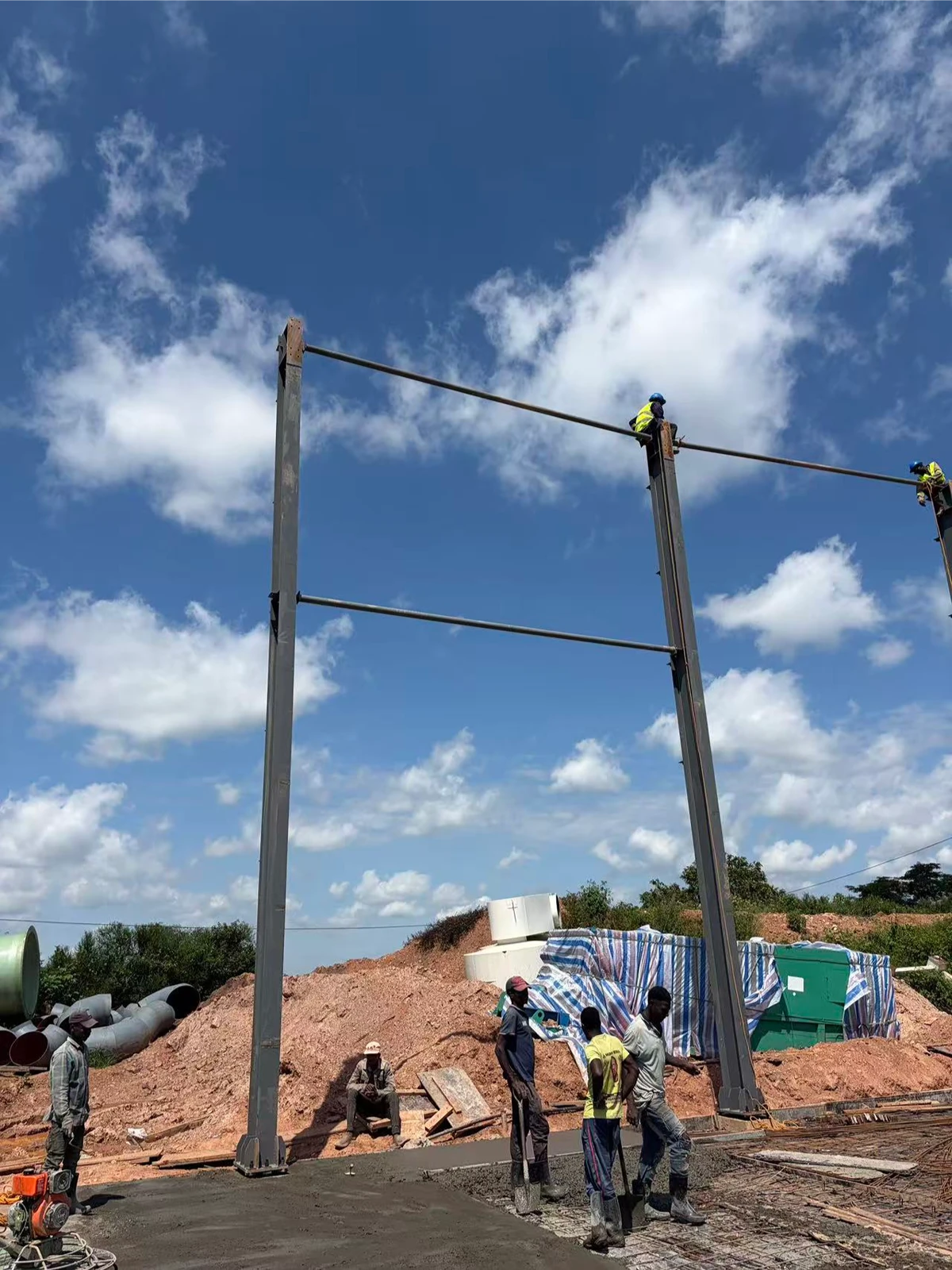
You get a detailed receiving checklist. Spot-check bolt holes on arrival. Verify QR codes. Assess for damage. Everything gets documented with our tolerance control verification procedures.
We’re on WhatsApp and email. Coordinating with your site foreman in real-time. If a discrepancy is found, you don’t panic and improvise—you get an instant corrective action plan from our team.
For major projects, we supervise the first bolts going in. First 5–10 bolts torqued under VIKKINS guidance. Bolt accuracy verified on-site. Your crew trained on “what to do if a bolt doesn’t slide in”—which is rarely the case.
Control Point 5: On-Site Acceptance
- ✓ Receiving inspection checklist completed
- ✓ Spot-check bolt-hole measurement on arrival
- ✓ Real-time technical support via WhatsApp/email
- ✓ On-site bolting supervision (major projects)
- ✓ Formal handover documentation signed
Why This Precision Matters: The Real-World Math
Scenario A: Supplier with “Normal” Quality Control
- Bolt-hole tolerance: ±5mm (typical)
- Field tolerance stack-up over 30m span: 10–15mm variation expected
- Probability of “bolt won’t fit”: 15–20%
- Resolution: Delay, grind, rework
- Cost: $200–$500 per hole fix × unknown number of holes = risk unquantified
Scenario B: VIKKINS Precision Fabrication Guarantee
- Fabrication tolerance: ±2mm (our internal spec)
- Field tolerance: ±3mm (design spec)
- Probability of “bolt won’t fit”: <1%
- Resolution: Pre-approved protocol, documented
- Cost: Included in price, fully transparent
Uganda Project Outcome
- 2,847 bolt holes across main structure
- 0 field rework incidents
- On-time erection (no weather delays wasted waiting for fixes)
- Client testimonial: “We were ready for problems. We had none.”
Three Reasons Precision Matters More Than You Think
1. Time = Money (Literally)
If your site crew is waiting for a component to be re-worked or re-shipped, you’re burning:
- Equipment rental (crane: $500–1,000/day)
- Labor (crew standing idle: $200–500/day)
- Schedule slip (project completion penalty: often 1–2% of contract value)
One week of delay = $5,000–10,000 USD in costs never in your budget. Precision ensures you bolt & go, not bolt & wait. Bolt accuracy from the factory prevents site delays.
2. Reputation & Predictability
Clients trust contractors who deliver on time. Contractors trust suppliers who don’t create surprises. By holding bolt-hole precision and maintaining tolerance control, VIKKINS isn’t just delivering steel—we’re delivering predictability. That’s worth more than a discount.
3. Remote Projects Require Ironclad Process
If your supplier is on the other side of the world, you can’t show up at their factory to inspect bolt accuracy in progress. What you can do is:
- Demand ISO certification (process discipline for precision engineering)
- Require CNC fabrication with tolerance control (machines don’t have bad days)
- Insist on 100% dimensional verification (not sampling)
- Demand photo documentation + QR traceability
These are minimum requirements for remote, high-stakes projects. VIKKINS meets all of them as standard. Our precision engineering methodology ensures no guesswork on bolt accuracy.
Let’s Build Something Together
Whether you’re building in Uganda, the Caribbean, Latin America, or anywhere else in the world—large-span steel structures demand suppliers who guarantee precision across design, fabrication, shipping, and on-site support.
If your current supplier can’t hold ±2mm fabrication tolerance, verify 100% of bolt holes, and provide on-site support, you’re carrying unnecessary risk.
Let’s talk about your project. Send us your specs—span, height, loads, climate—and we’ll show you how precision fabrication saves time, cost, and headaches.