



Sandwich Panel Cost: PUF vs PIR vs Mineral Wool Comparison
Sandwich panel cost is the first decision that shapes your building’s total operating expense over the next 10, 15, or 20 years. Most buyers focus on the price tag — how much to buy the panels. Few ask the harder question: how much will those panels cost to operate? A facility manager in Shanghai buys the cheapest PUF sandwich panels upfront. Five years later, his energy bill tells the real story: his building consumed 30% more electricity than an identical warehouse using PIR panels one city over. The upfront material cost gap was 15%. The operating cost penalty was much larger.
This is the hidden truth about sandwich panel cost. It is not just about the purchase price. It is about the 10, 15, or 20-year operational truth. When choosing between PUF, PIR, and mineral wool, the initial decision appears simple: cheaper panels save money. The reality is far more complex. This guide compares all three core materials, with real-world analysis on total cost of ownership (TCO), and explains when each material makes sense — or costs you dearly over time.
Understanding Sandwich Panel Cost: The Three Panel Types
All three materials serve the same purpose: a steel or aluminum-faced insulated core that seals the building envelope. But their performance, cost structure, and lifetime value are worlds apart. Understanding the true sandwich panel cost means looking beyond the invoice.
PUF (Polyurethane Foam) Panels
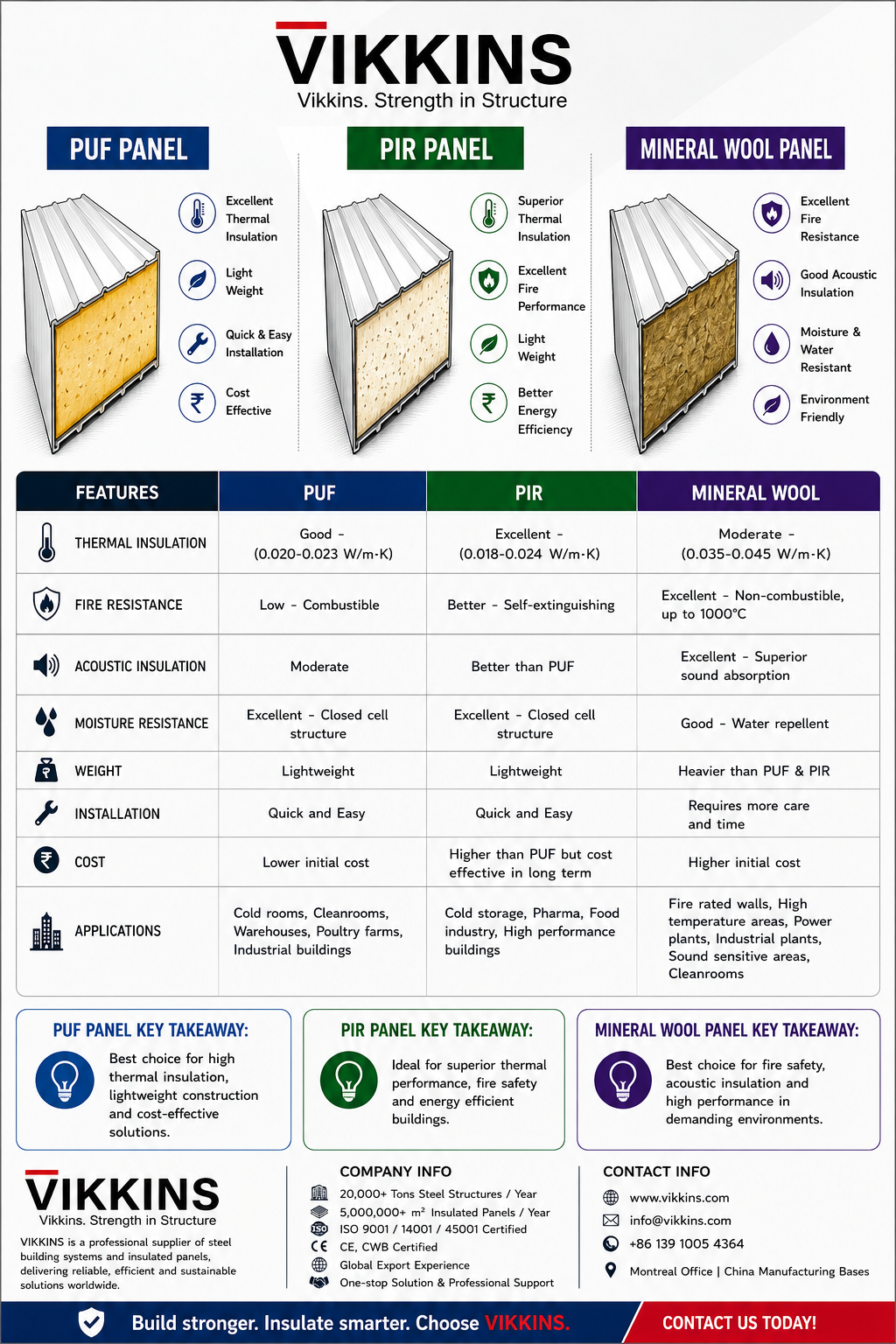
Thermal insulation (U-value): 0.020–0.023 W/m·K — good, but modest.
Fire resistance: Low. Polyurethane is combustible and requires additional fire-retardant coatings or protective layers to meet building codes.
Weight: Lightweight — one of PUF’s strongest points.
Installation: Quick and easy. Most contractors can handle assembly without specialized training.
Initial sandwich panel cost: 15–20% cheaper than PIR; 40–50% cheaper than mineral wool.
The real story: PUF is the workhorse of low-cost construction. You buy it when capital cost matters more than operating cost — and that calculation changes depending on the building type and climate. The upfront savings hide higher energy bills for years to come.
PIR (Polyisocyanurate) Panels
Thermal insulation (U-value): 0.018–0.022 W/m·K — superior to PUF, especially in thicker sections.
Fire resistance: Excellent. PIR is inherently fire-resistant and self-extinguishing, meeting strict fire codes without additional treatment.
Weight: Slightly heavier than PUF, but still manageable for standard construction equipment.
Installation: Identical to PUF — no special skills required.
Initial sandwich panel cost: 15–25% more than PUF; 25–35% cheaper than mineral wool.
The real story: PIR is the sweet spot for most commercial and industrial applications. Better insulation + superior fire performance + modest cost premium = lowest total cost of ownership over 15+ years. The higher upfront sandwich panel cost is recovered through energy savings and reduced maintenance.
Mineral Wool (Rockwool) Panels
Thermal insulation (U-value): 0.035–0.045 W/m·K — moderate insulation, significantly less efficient than PUF or PIR.
Fire resistance: Excellent. Non-combustible, fire-resistant up to 1000°C, and superior acoustic absorption.
Weight: Heaviest of the three — requires stronger structural support and heavier handling equipment.
Installation: Time-intensive. Mineral wool is brittle and requires careful handling, protective equipment (dust masks), and specialized labor.
Initial sandwich panel cost: 40–60% more expensive than PUF; highest of the three.
The real story: Mineral wool is engineered for environments where fire safety and durability trump cost: high-temperature facilities, fire-rated walls, acoustic chambers, and specialized industrial zones. It is not a general-purpose panel. High upfront sandwich panel cost is justified only in specific applications.
Sandwich Panel Cost: Total Cost of Ownership (TCO) Analysis
The true measure of sandwich panel cost is not the purchase price alone, but the total cost over the building’s operating life. Let’s model a typical 2,000 m² cold storage facility (maintained at -18°C) operating for 10 years in a temperate climate. The following figures are illustrative to demonstrate how material selection affects total sandwich panel cost — actual costs vary significantly by location, local energy rates, climate zone, and specific operational conditions. This example is for education purposes to show how panel choice drives long-term economics:
Scenario A: PUF Panels (100mm) — Low Initial Cost Choice
- Initial panel cost: $40,000
- Annual energy cost (poor insulation): $12,000
- 10-year energy cost: $120,000
- Maintenance (fire-protection repairs, re-coating): $8,000
- 10-year total sandwich panel cost: $168,000
Scenario B: PIR Panels (100mm) — Efficiency Choice
- Initial panel cost: $48,000 (20% premium)
- Annual energy cost (better insulation): $8,500
- 10-year energy cost: $85,000
- Maintenance (minimal): $3,000
- 10-year total sandwich panel cost: $136,000
True sandwich panel cost comparison: PIR saves $32,000 (19% lower total cost) over 10 years — despite costing 15% more upfront.
This example illustrates the fundamental principle: while PIR carries a higher initial sandwich panel cost, energy savings and lower maintenance quickly offset the premium. The gap widens further in colder climates or applications requiring tighter temperature control (pharmaceutical cold chain, deep freeze). In warmer regions with moderate cooling demands, the absolute savings are smaller but PIR still delivers better long-term value through superior fire performance and durability.
For your specific project, the actual sandwich panel cost and TCO will depend on your local electricity rates, climate zone, building dimensions, temperature setpoint, and operational hours. VIKKINS engineering can model the precise financial impact of sandwich panel cost for your situation.
Sandwich Panel Cost Strategy: When Each Material Makes Sense
Choosing the right material is about matching sandwich panel cost to your actual operational requirements, not just picking the cheapest option today.
Use PUF When Sandwich Panel Cost Is the Only Metric:
- Capital cost is the primary constraint. Budget-conscious warehouse, temporary structure, or modular facility where capital preservation is paramount. The lower initial sandwich panel cost is more important than 10-year economics.
- Thermal performance is acceptable. Ambient-temperature warehouses, offices, or workshops where HVAC load is not critical. Lower sandwich panel cost + adequate performance = the right choice.
- Fire risk is manageable. Single-storey structures with adequate fire suppression and exit routes; local codes allow PUF with approved coatings.
- Operating life is short (5 years or less). Lease-back buildings, temporary logistics hubs, or pilot facilities where resale/salvage value matters more than long-term operating cost.
Use PIR When Total Sandwich Panel Cost (TCO) Matters:
- Energy efficiency is important. Cold storage, pharmaceutical warehouses, food distribution — any facility where refrigeration or climate control runs continuously. Higher initial sandwich panel cost is recovered through lower energy bills.
- Fire codes are strict. Multi-storey structures, densely populated areas, or regulated industries (pharma, food processing) where fire rating is non-negotiable. Sandwich panel cost premium includes fire safety built-in.
- Operating life exceeds 10 years. Core business infrastructure where the building is an asset, not an expense. Higher upfront sandwich panel cost becomes negligible over 20+ years of operation.
- Long-term cost is the metric. TCO analysis tips in PIR’s favour once operating life reaches 8–10 years in temperate climates, or 5–6 years in cold climates. The math always favours PIR in true cost calculation.
Use Mineral Wool When Sandwich Panel Cost Is Secondary to Safety:
- Fire safety is paramount. Fire-rated compartments, high-temperature processing areas, or acoustically sensitive environments where high sandwich panel cost is justified by non-negotiable safety requirements.
- Durability in extreme environments is required. Industrial furnaces, power plants, or facilities with sustained high-temperature exposure. Sandwich panel cost reflects specialized engineering, not overcost.
- Acoustic insulation is specified. Manufacturing plants, sound-rated clean rooms, or broadcasting facilities. Higher sandwich panel cost delivers acoustic performance no other material can match.
- Building code mandates non-combustibility. Certain jurisdictions or applications legally require mineral fibre or mineral wool in specific locations. Sandwich panel cost is non-negotiable due to regulatory compliance.
The VIKKINS Advantage: Honest Sandwich Panel Cost Analysis
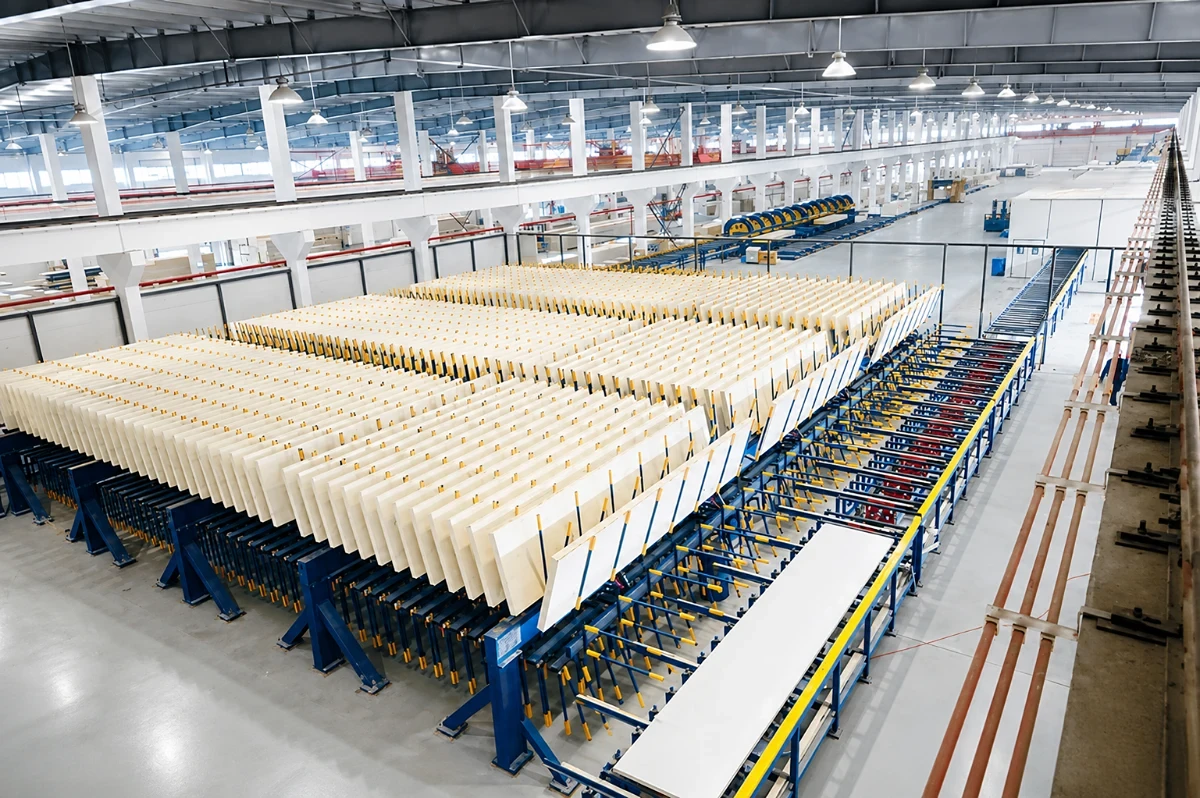
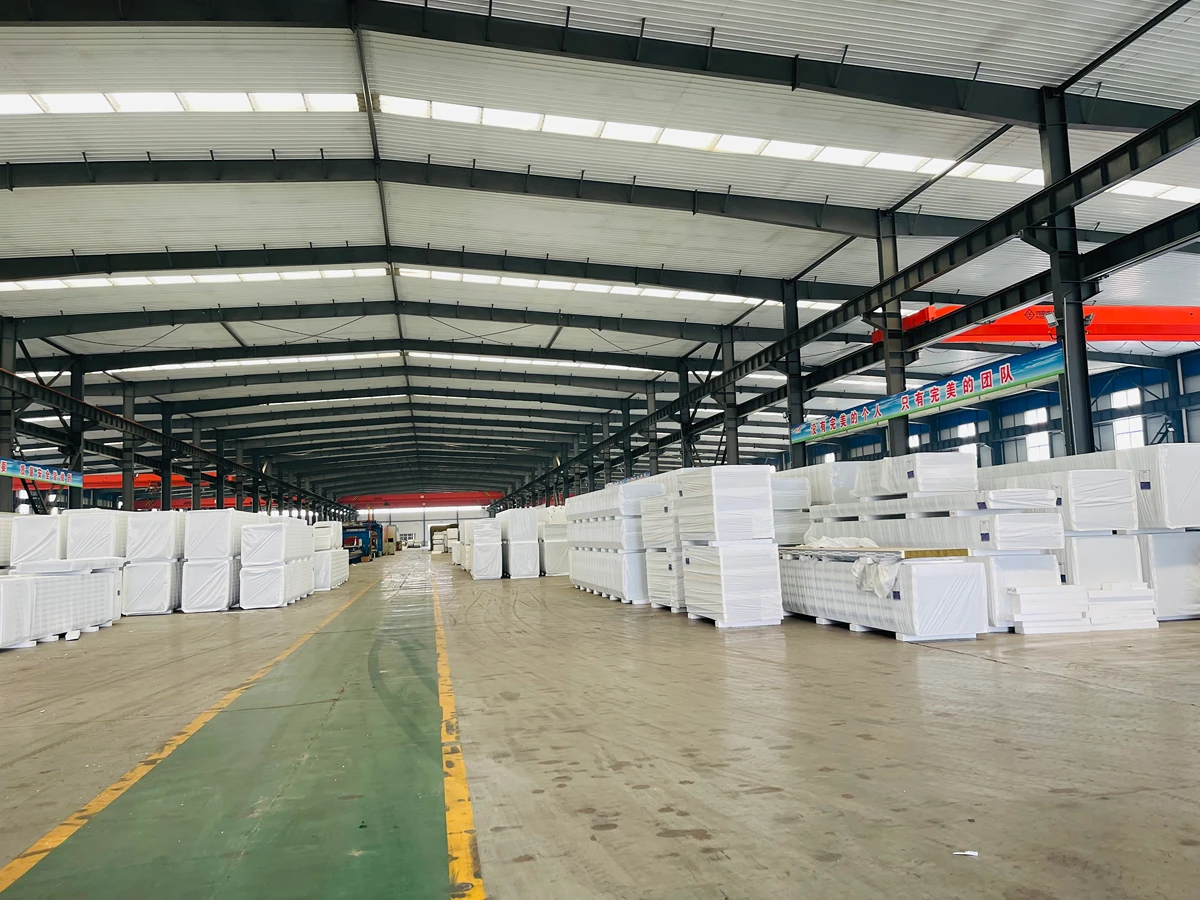
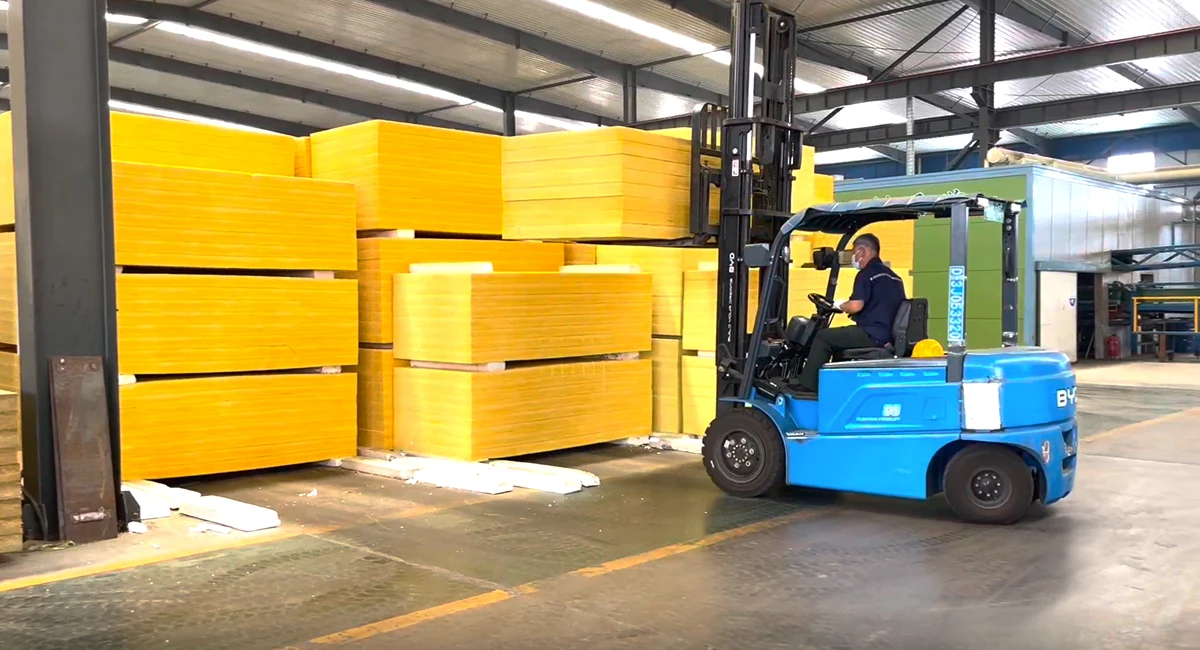
The panel you choose is only as good as the consistency of its manufacture. VIKKINS operates one of Asia’s largest sandwich panel production facilities, manufacturing both PUF and PIR cores to ISO 9001 / 14001 / 45001 standards.
Why manufacturing scale affects true sandwich panel cost:
- Quality control: Large-scale production means consistent U-values, tight tolerances, and repeatable joint performance. Smaller manufacturers’ quality drifts — and so does their actual sandwich panel cost performance. You pay the same price but get less efficiency.
- Cost efficiency: 5 million m² annual capacity spreads overhead across volume. You get PIR performance — superior to cheaper PUF — without paying a boutique-material premium. Sandwich panel cost is fair because manufacturing is optimized.
- Supply security: Unlike small manufacturers or regional suppliers who face raw material shortages, VIKKINS’ scale ensures continuous supply and price stability. Your sandwich panel cost remains predictable over the project timeline.
- Application matching: Our engineering team designs the right core — PUF, PIR, or mineral wool — for your building’s actual use case, not a one-size-fits-all approach. We help you minimize true sandwich panel cost, not just purchase price.
We don’t sell you panels; we engineer the envelope to minimize true sandwich panel cost. That means TCO analysis before you buy, not regret after five years of higher energy bills.
Sandwich Panel Cost: The Real Question
Most buyers ask: “What’s the sandwich panel cost?” and stop there. The right question is: “What is the lowest cost per year of operation?” That shift in thinking changes everything about how you evaluate sandwich panel cost.
A PUF panel that costs 15% less but runs your cooling system 30% harder for 15 years is not a bargain — it is a penalty disguised as savings. The true sandwich panel cost is the upfront price plus every energy bill for the life of the building.
At VIKKINS, we work backward from your 10-year or 20-year operational budget, specify the right core material, engineer the right thickness, and deliver it to your site on schedule. We help you optimize true sandwich panel cost, not just minimize the invoice. That’s why cold storage operators, pharmaceutical distributors, and food logistics companies across 90 countries trust us — not because we’re the cheapest, but because we’re the most honest about what sandwich panel cost actually means.
Written by the VIKKINS Engineering Team. VIKKINS is a Canada-operated, China-manufacturing sandwich panel and steel building company. We operate 5 million m² of annual panel manufacturing capacity across two production bases in Cangzhou and Harbin, delivering PUF, PIR, and mineral wool cores to 90+ countries with ISO 9001 / 14001 / 45001 certification. Engineering support, design, and installation guidance included in every project — not upsold later.
Get Your Sandwich Panel Cost Analysis
Tell us your building dimensions, climate zone, and operating temperature. Our engineering team will model the true sandwich panel cost and total cost of ownership for PUF, PIR, and mineral wool — you’ll see which core saves you the most over 10–20 years. Quote and TCO report within 24 hours.
| Get Your TCO Analysis | Envíanos un mensaje por WhatsApp ahora mismo |