




Ultra-low temperature cold storage is expanding across North America — cold-chain operators are announcing blast-freezing rooms, tuna-grade freezers and pharma-adjacent storage running from −40°C down to −70°C. If you are planning one, the most expensive mistake is assuming a ULT room is just “a colder freezer”. Below −40°C, the physics changes — and so must the panel spec, the floor detail and the steel structure around it.
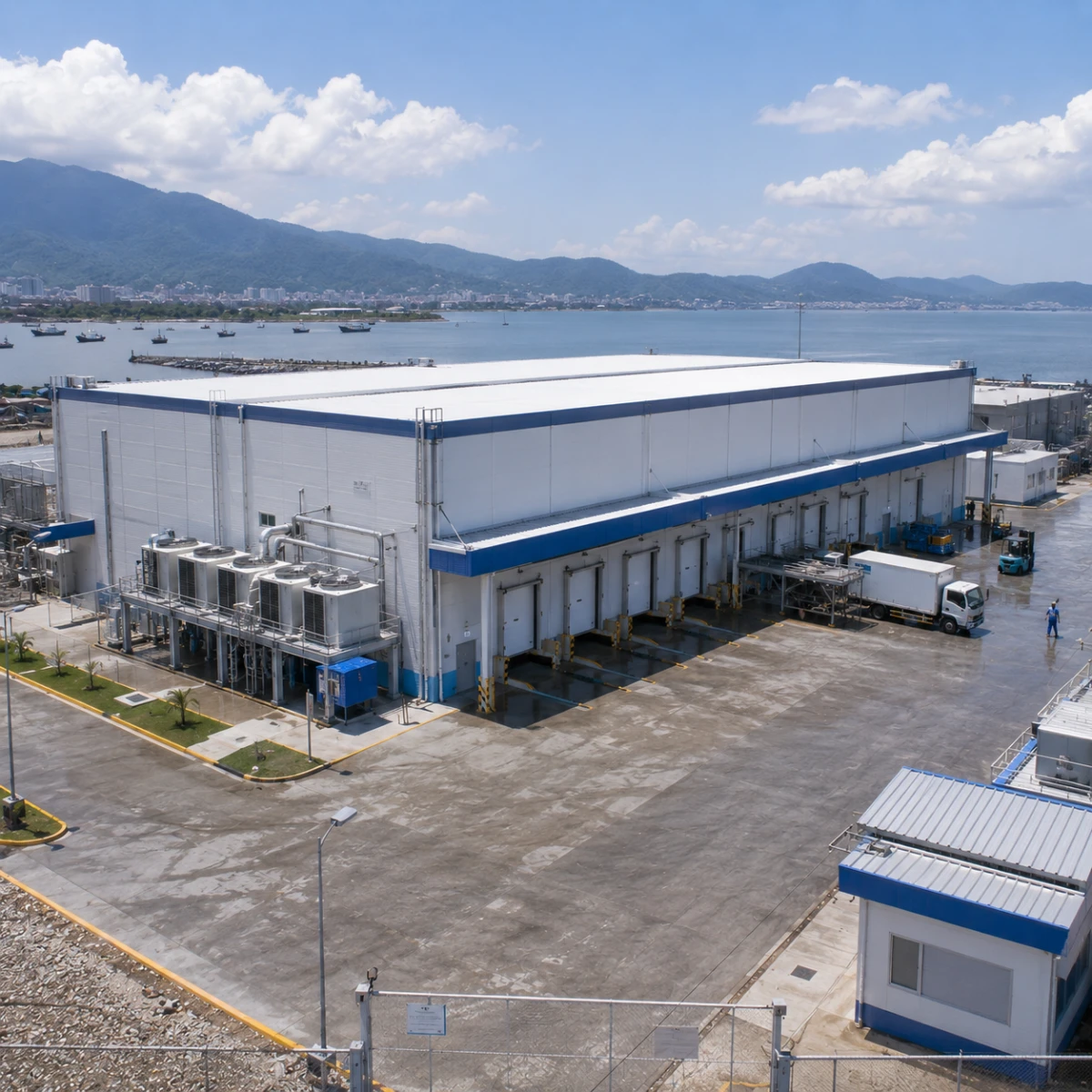
What Changes Below −40°C
1. Panel core and thickness
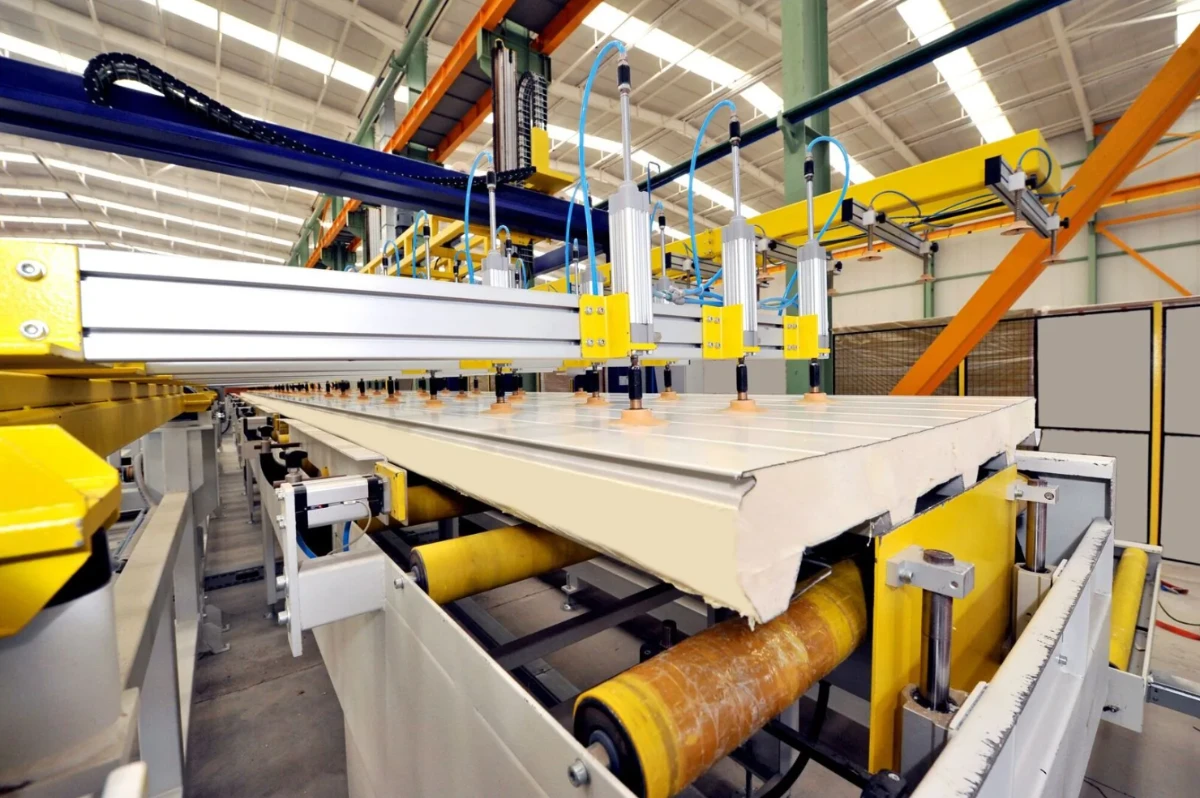
Standard freezer rooms typically run PIR panels around 150 mm. ULT rooms need 200 mm or more — often a double-panel build-up with staggered joints — because every extra degree of differential drives heat gain and frost load. PIR remains the workhorse core: closed-cell, dimensionally stable at deep-freeze temperatures, and available with fire-rated facings. (For a cost comparison of cores, see our guide: Sandwich Panel Cost: PUF vs PIR vs Mineral Wool.)
2. Vapor sealing and thermal bridging
At ULT, any vapor path becomes an ice-maker. Panel joints need continuous vapor-tight sealing on the warm side; fasteners and structural penetrations must be thermally broken. A single unsealed camlock pocket can grow an ice column that pries a joint open within a season.
3. The floor is a project of its own
Ground-bearing ULT floors will freeze the soil beneath them and heave the slab unless you design against it: insulated sub-slab build-up plus a frost-heave prevention layer (ventilated ducts or heated glycol loops). Retrofit is far costlier than doing it at first pour.
4. Doors, airlocks and openings
ULT rooms live or die at the openings. Specify heated door frames and seals, vestibule airlocks between temperature zones, and pressure-relief ports sized for deep-freeze air density. (Spec details in أبواب الغرف المبردة: 6 مواصفات تصنع الختم أو تكسره.)
The Steel Structure Around a ULT Room
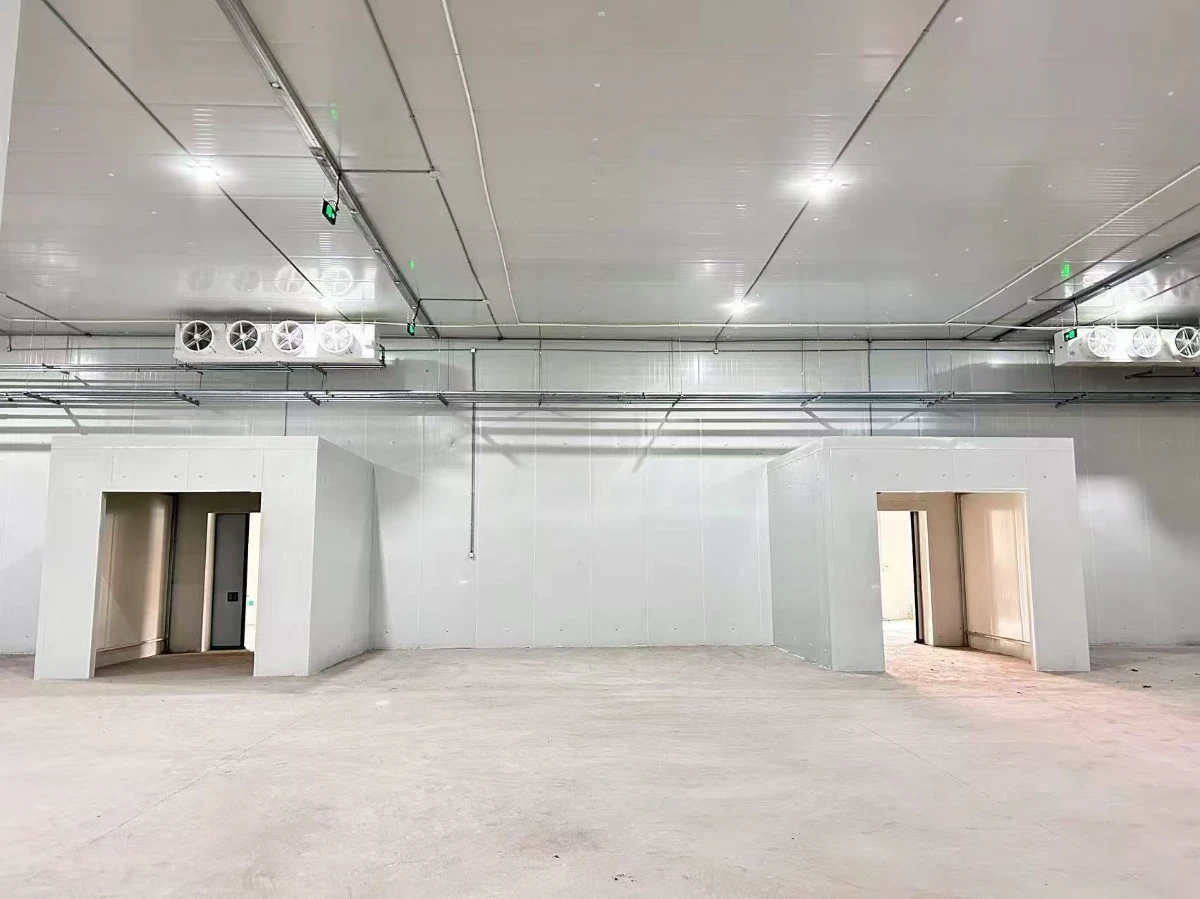
Deep-freeze envelopes move. Steel members inside the cold zone contract; connection detailing must allow it without tearing panel joints. The cleanest solution is usually an external structural shell — a portal-frame building carrying roof, services and mezzanines — with the ULT box built as an independent envelope inside. That is the package we engineer as one scope: structural steel and insulated panels from the same factory, detailed to work together. (Background: Modular Cold Rooms: The Complete B2B Buyer’s Guide.)
Build Sequence and Lead Time
Because the steel shell and the panel envelope come from one supplier, fabrication runs in parallel: structure and panels are produced together, shipped containerized, and bolted up in sequence on site. Our manufacturing bases cover 80,000 m² including a 40,000 m² workshop, producing 30,000+ tons/yr of structural steel and over 5,000,000 m²/yr of sandwich panels — ISO 9001:2015, ISO 14001:2015, ISO 45001:2018, CE and CWB certified — with typical 30–45 day production lead times and worldwide containerized delivery.
ULT Planning Checklist
• Design temperature and pull-down profile defined?
• Panel core, thickness and joint system rated for the differential?
• Warm-side vapor sealing continuous — including penetrations?
• Sub-slab insulation plus frost-heave prevention in the floor design?
• Heated doors, airlocks and pressure relief specified?
• Structure detailed for thermal movement — or external shell + independent box?
Planning an Ultra-Low Temperature Build?
Send us your drawings or a rough spec — chamber size, design temperature, location — and we will return a technical and commercial proposal covering the steel structure and panel envelope as one package.
FAQ: Can a standard freezer room be converted to ULT? Rarely in a cost-effective way. Ultra-low temperature cold storage needs thicker PIR/PU panels (200mm or more), a continuous vapor barrier on the warm side, floor heave protection, and steel connections detailed for deep-frost movement. Retrofitting all four into a standard −18°C room usually costs more than building the ULT envelope right the first time. If you are weighing both options, send us your drawings — we will give you a straight answer on which way is cheaper.