








Greenhouse Steel Structure: How the Building Decides Your Yield and ROI
A commercial greenhouse is a yield machine, and the greenhouse steel structure
is the machine’s frame. It sets how much light reaches the crop, how much hanging crop load the
building can carry, how well you can ventilate and control the climate — and ultimately whether
you grow high-value produce year-round or only in season. Build it cheap and you don’t just lose a
little efficiency; you cap the yield and the income for the next twenty years. Here is what
actually matters, by greenhouse type, with the numbers growers and investors need.
Glass, Polycarbonate or Film — The Greenhouse Type Sets the Ceiling
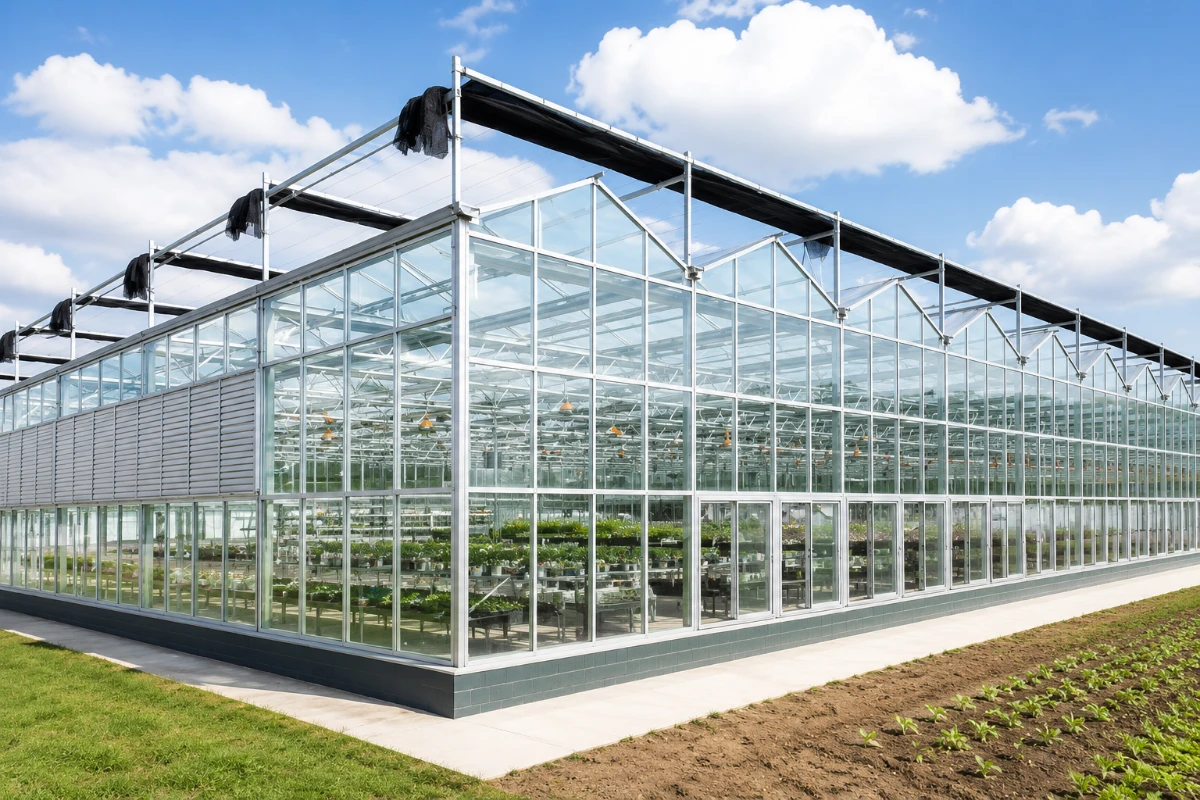
The first decision is the type, because it sets a ceiling nothing else can lift:
- Glass multi-span (Venlo) — highest light transmission and climate control, built for year-round, high-value production. Highest capital cost, highest yield, longest glazing life.
- Polycarbonate — better insulation and impact resistance than glass, with somewhat lower light; a middle path for cooler climates.
- Plastic-film tunnels (single or multi-span) — lowest capital cost and fast to build, but lower light and control, and the film needs replacing every few years.
Single-span tunnels suit small or seasonal growers; gutter-connected multi-span greenhouses give a
larger, more stable internal climate and the economies of scale serious producers need. Match the
type to the crop value, the climate and the market — not to the lowest quote.
Light Is Yield — Why the Greenhouse Steel Structure Casts a Costly Shadow
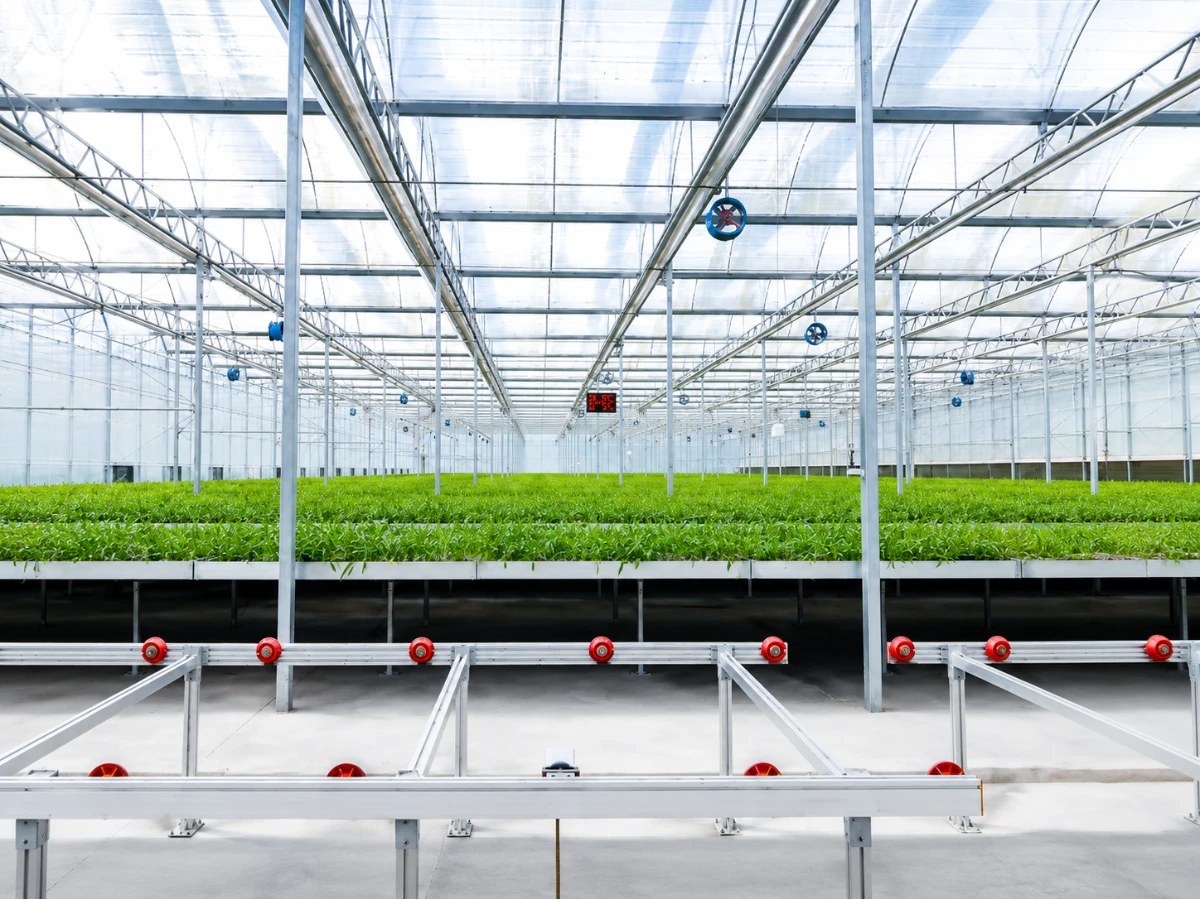
In greenhouse horticulture there is a well-known rule of thumb: roughly
1% more light means about 1% more production.
That turns the structure into a yield decision. Every bulky frame member, every badly placed
gutter and every metre of lost height casts shade and shaves output across the whole growing area,
season after season. A good greenhouse steel structure uses slim, hot-dip galvanized members and a
geometry that minimises shading, so the building disappears and the crop gets the light. This is
exactly where the cheapest frame quietly costs the most: heavier, closer-spaced steel saves a
little on fabrication and loses far more in yield every year the greenhouse stands.
Crop Load and Gutter Height — Engineering for High-Wire Growing
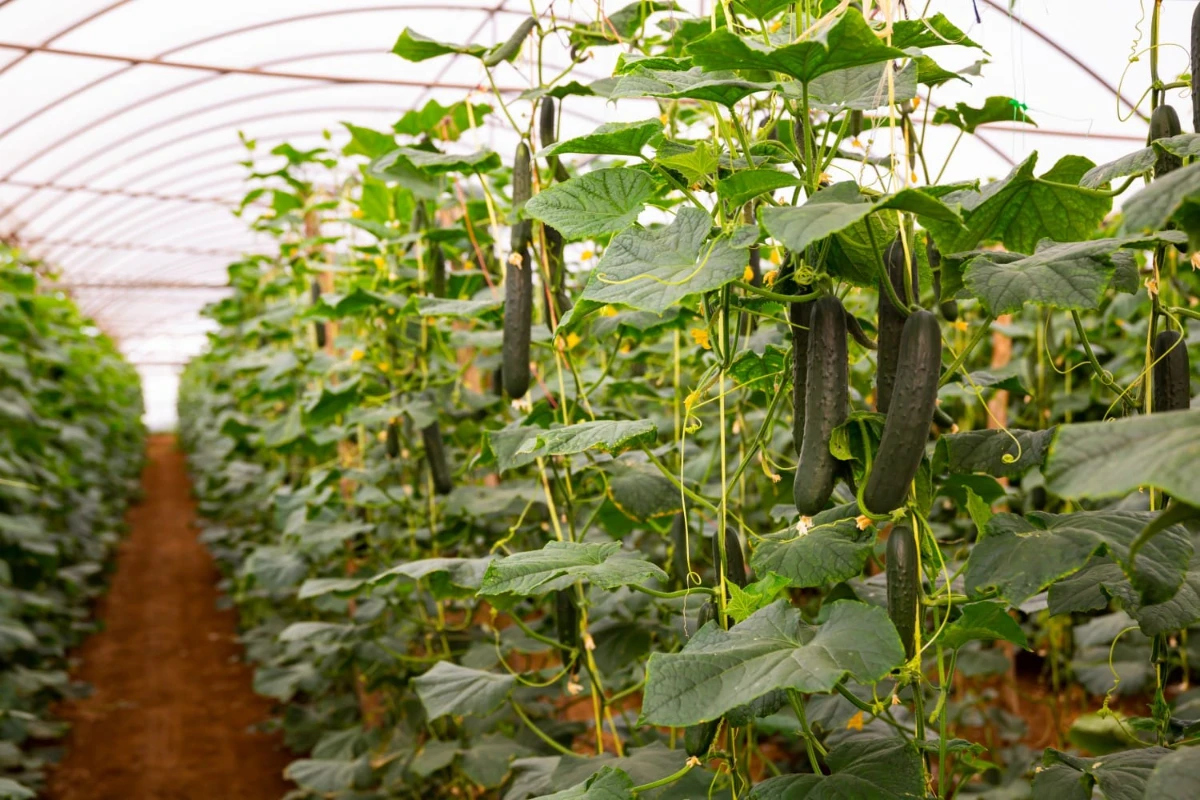
Modern cucumber and tomato growing is high-wire: the plants are trained up wires suspended from
the structure, and that hanging crop load can reach roughly 25–35 kg/m² carried by
the gutters and trellis. A greenhouse not engineered for it can sag or fail mid-season — and a
structural failure with a full crop on the wires is a catastrophe, not an inconvenience. Gutter
height matters just as much: modern high-wire greenhouses run 5–7 m to the gutter,
because the extra volume buffers temperature swings, lets more light spread, and gives room to
grow the crop and work beneath it. Low, lightweight tunnels built to a budget simply can’t support
this kind of production, which is why crop-load capacity and gutter height belong in the spec
before price does.
Ventilation and Climate Control — Surviving Summer, Growing in Winter
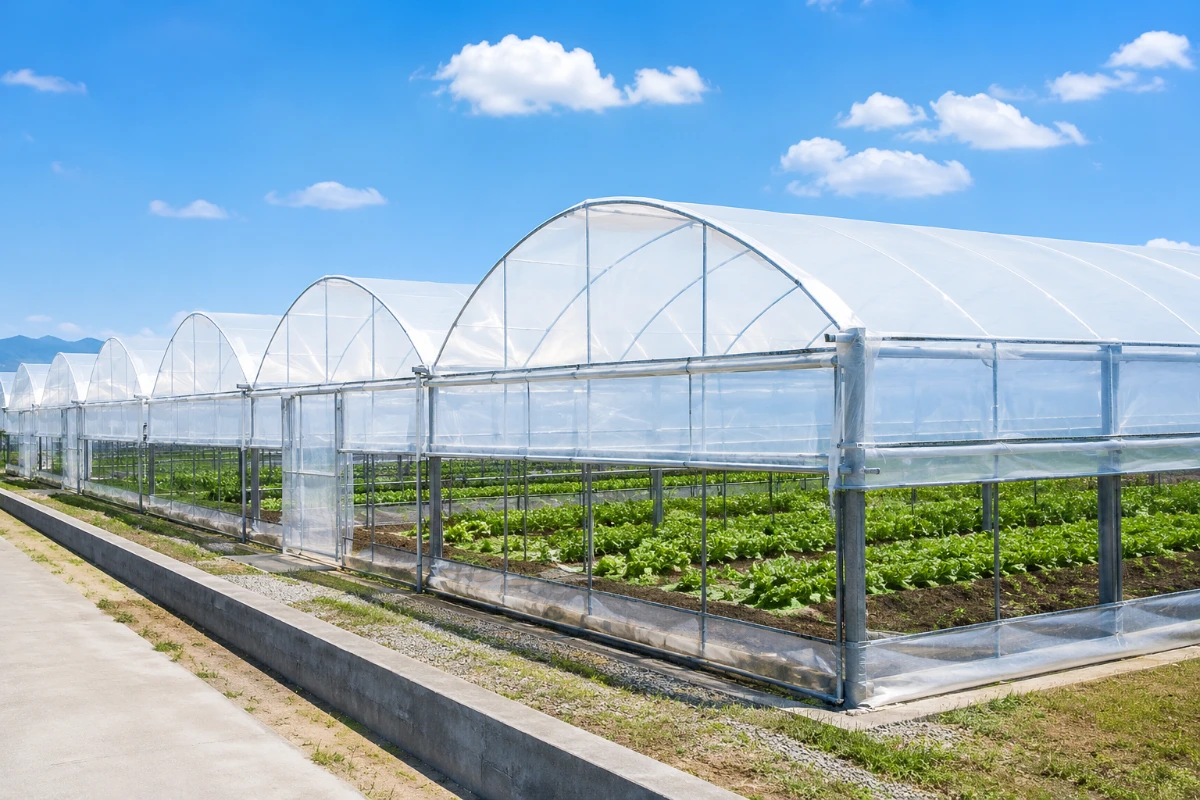
A greenhouse without ventilation cooks the crop. Continuous roof vents and side vents drive natural
airflow that controls temperature and humidity and cuts disease pressure; in hot climates,
evaporative pad-and-fan or fogging cooling extends the growing window through summer. In cold
climates, pipe-rail heating, thermal and shade screens and CO&sub2; enrichment let the greenhouse
produce through winter. None of this works as a bolt-on: the vent areas, screen runs, heating pipes
and sensors are loads and geometry the structure has to be designed around from the start. A
greenhouse engineered for its climate produces all year; one that wasn’t loses crops to heat in
summer and stalls in winter.
Sizing, Yield and ROI — Match the Greenhouse to the Business Case
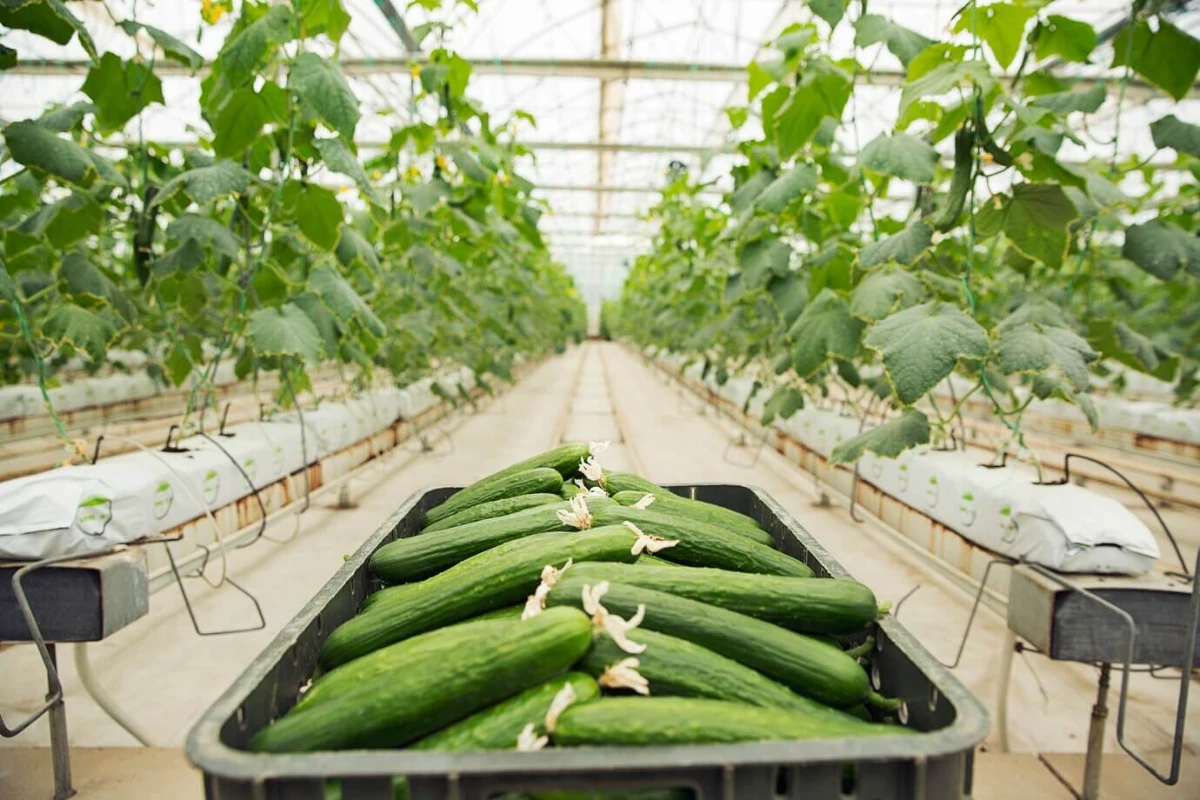
For an investor, a greenhouse is judged on yield per square metre per year, and a well-built,
climate-controlled greenhouse can lift that several times above open-field farming while producing
all year round. The structure, light and climate system are what unlock that yield — so the
building is a small share of the lifetime crop revenue it generates. The trap is treating it as a
cost to minimise rather than the asset that sets the income. A glass greenhouse carries a higher
capital cost but the highest yield and longest life; a film tunnel is cheaper to build but produces
less and is rebuilt sooner. The right call is to size the area, gutter height, light and climate
control to the crop and market you’re targeting, then build it to last — not to shave the upfront
figure and live with the ceiling forever.
Where Growers and Investors Get Burned
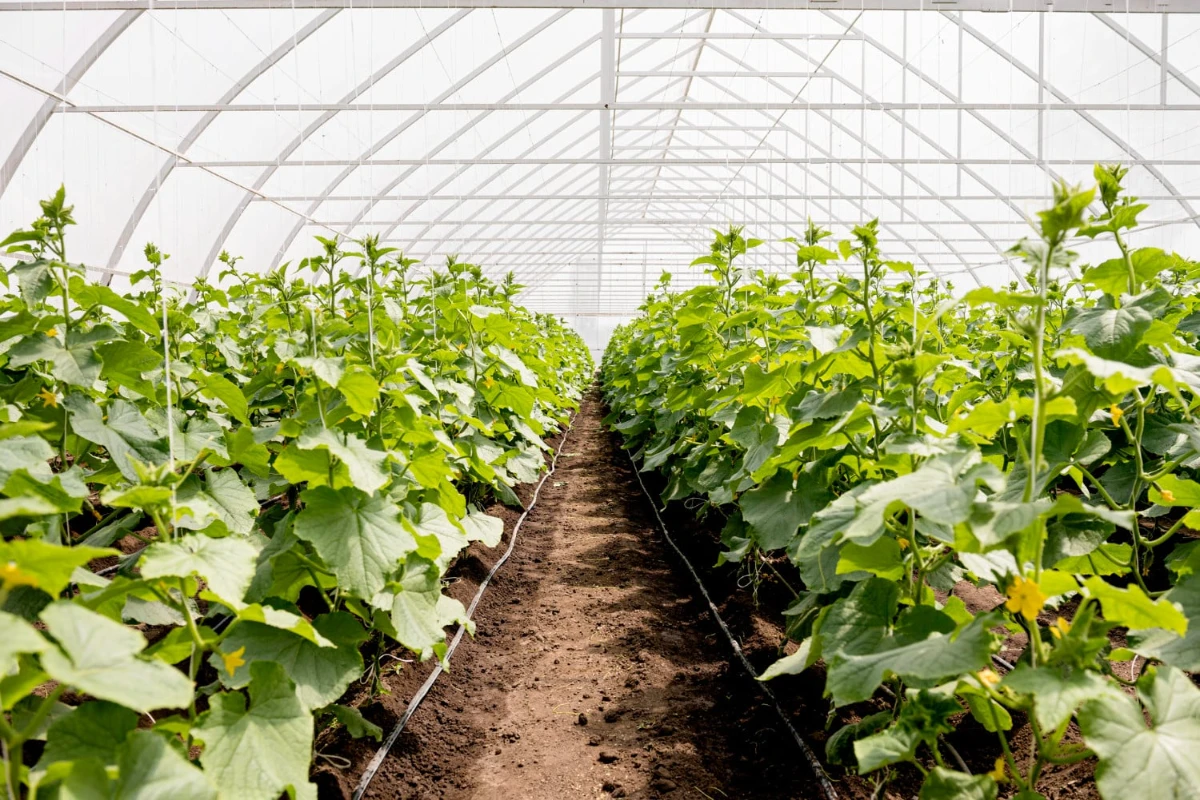
The same handful of decisions lie behind most greenhouse disappointments:
- Building for the lowest price — low gutter height, heavy shading steel and no climate control, so the greenhouse is seasonal and low-yielding from day one.
- Under-designed for crop load — the structure can’t carry a high-wire crop and fails with a full canopy on the wires.
- Under-engineered for wind and snow — greenhouses are light structures, and an undersized frame is the one that collapses in the first severe storm, a total loss.
- Bare or under-galvanized steel — the humid, fertigated interior corrodes it fast.
- Slow delivery — miss the planting window and you lose a whole growing cycle of revenue.
VIKKINS engineers greenhouse steel structures as a complete system: slim, hot-dip galvanized frames
that maximise light, gutter heights and crop-load capacity sized for high-wire production, and the
geometry to support your ventilation, screens and climate control — all designed to your crop,
climate and local wind and snow loads. Everything is manufactured in ISO 9001 /
ISO 14001-certified bases, packed for sea freight and delivered to 90+ countries with design,
supply and installation support, engineered from our Montréal office. (Building other
agricultural facilities too? See our guide to poultry house design.)
Tell us your project dimensions and use — we’ll send a preliminary design and quote within 24 hours. Service in English, Spanish, or French.
Nhận báo giá miễn phíHãy nhắn tin cho chúng tôi qua WhatsApp ngay bây giờ