









Cold Room Panels: What Really Matters, Beyond the Foam
A cold room panel looks simple — two steel facings wrapped around an insulated core. But it is
really a sealed thermal envelope, and the difference between a panel that holds
−25 °C for twenty years and one that frosts up in two is rarely the foam name on
the datasheet. Most articles about cold room panels stop at “PU vs PIR.” This one
goes further: what the panel actually is, how the right spec changes with the type of cold room,
how it differs from an ordinary sandwich panel, and exactly where buyers get burned.
What a Cold Room Panel Actually Is
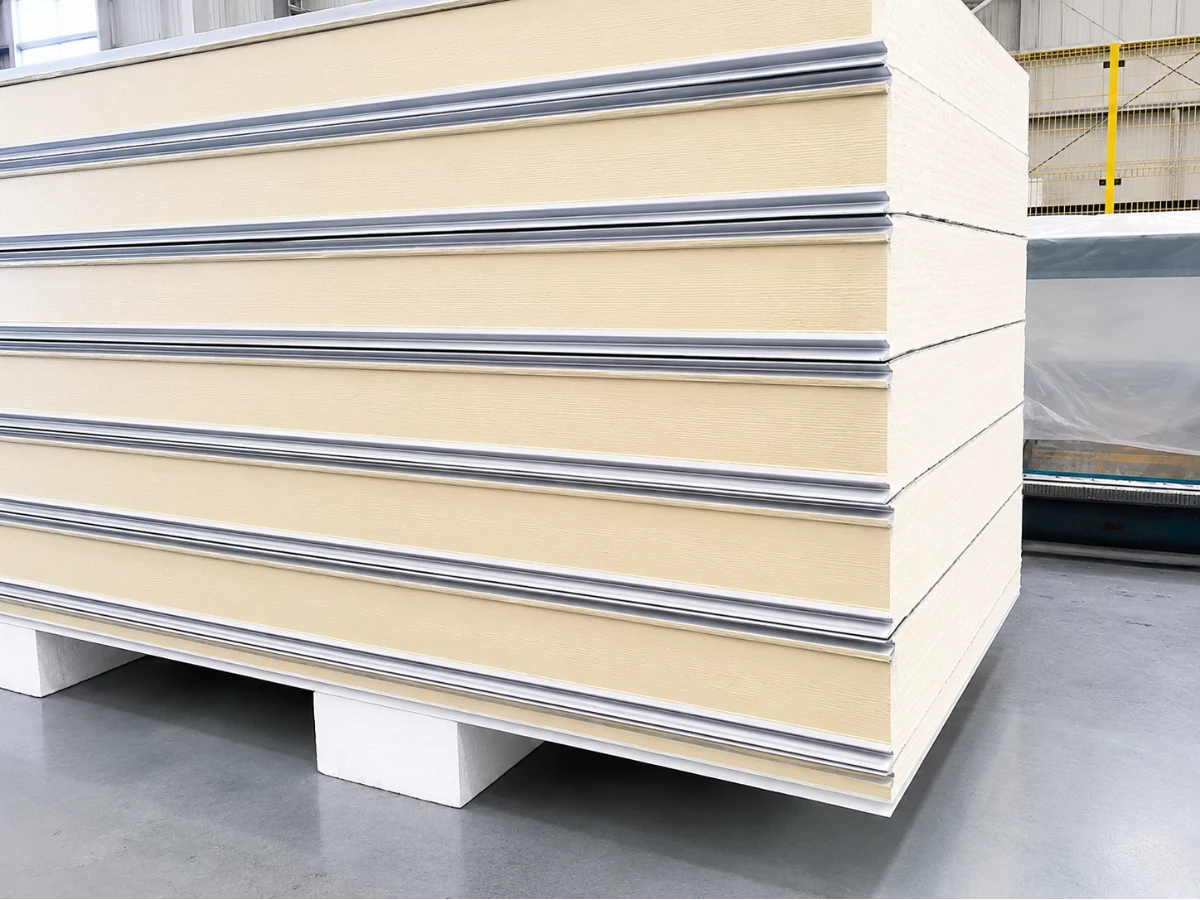
A cold room panel is built from two coated-steel facings — typically 0.4–0.6 mm
pre-painted or food-grade steel — bonded under pressure to a rigid, closed-cell insulation core,
usually polyurethane (PU) or polyisocyanurate (PIR). What turns that sandwich into a cold-store
component is the detail at the edges: a tongue-and-groove profile fitted with a cam-lock
mechanism and a vapor seal, so panels pull tight against each other and lock into an airtight
line. The numbers that actually define a panel are five: core type, core density
(kg/m³), thickness, facing gauge and coating, and the joint system. Two panels can
both say “PU” and behave completely differently because their density and joints are worlds
apart. Treat a cold room panel as an engineered part, not a commodity slab — that single shift in
mindset prevents most cold-store failures.
Why the Joint — Not the Foam — Decides Performance
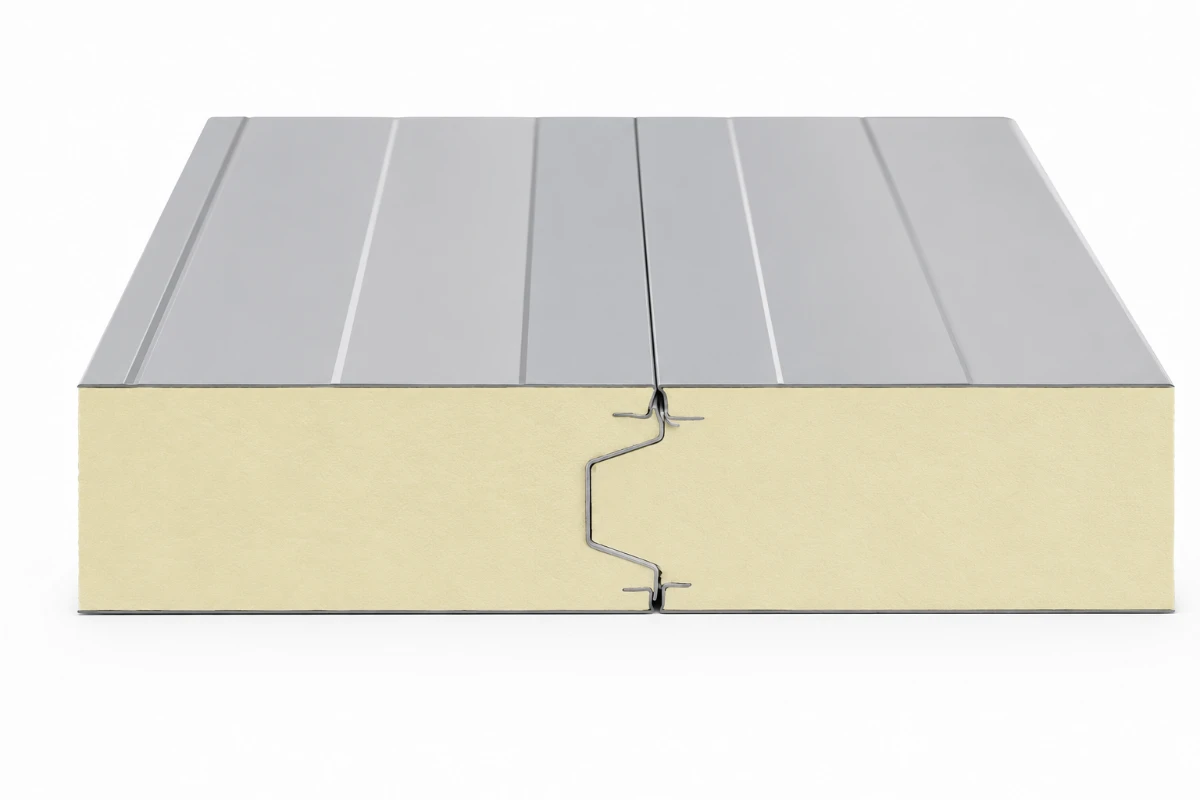
Heat and moisture do not leak through good foam; they leak through the joints. This is the part
the foam-versus-foam debate misses. A cam-lock joint draws adjacent panels together with a
repeatable, mechanical force, and the tongue-and-groove edge plus a continuous gasket creates a
double seal that blocks both air movement and water vapor. Get this right and the wall behaves as
one continuous surface; get it wrong and warm, humid air finds the gap, condenses inside the
structure, and turns to ice. A premium foam behind a sloppy joint will still grow mould and frost
— which is why an experienced buyer inspects the locking system and the seal before debating the
core. Airtightness, not the brochure’s thermal-conductivity figure, is what keeps the refrigeration
plant from running all day.
The Right Panel Changes With the Cold Room
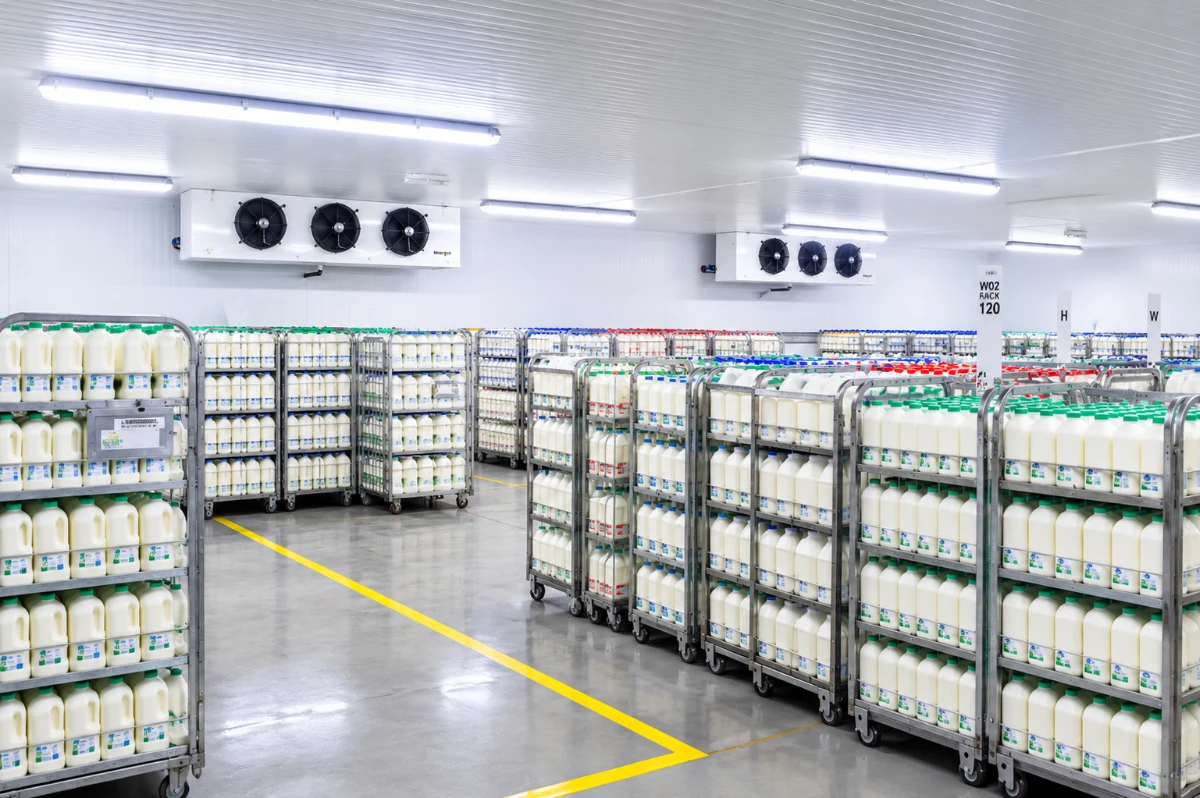
There is no single “cold room panel.” The correct thickness rises with how cold and how demanding
the room is, because thicker insulation slows heat gain and protects the refrigeration load.
Typical guidance runs roughly:
- Chiller (0 to +5 °C) — around 75–100 mm
- Freezer (−18 to −25 °C) — around 100–150 mm
- Blast / low-temperature (−30 to −40 °C) — around 150–200 mm
The form of the room matters just as much. A walk-in unit, a large distribution cold storage
warehouse, a modular box and a pharmaceutical clean-room each demand different choices: ceiling
panels have a maximum unsupported span before they need internal hangers; floor panels must be
high-density and load-rated for forklift traffic; food and pharma rooms need hygienic facings and
coved corners that can be washed down. Specifying a cold room panel without first fixing the
temperature, the room type and the loads is guessing.
Cold Room Panels vs an Ordinary Sandwich Panel: The Real Difference
A wall or roof sandwich panel and a cold room panel can look almost identical, yet they solve
different problems. A standard building panel is a weather envelope: it sheds rain and provides
everyday insulation, and a simple overlapping joint is fine. A cold room panel has to hold a
controlled, often sub-zero temperature against constant pressure from warm outside air — so the
differences that matter are:
- Sub-zero-rated thickness and density sized to the target temperature, not just to a wall.
- An airtight cam-lock joint with a double tongue-and-groove and vapor seal — the single biggest difference — versus a basic overlap.
- A coordinated envelope: walls, ceiling, floor, coving and doors engineered to work as one sealed box.
- Hygienic, food-grade facings and tighter dimensional tolerances that suppress thermal bridges.
If you want the core-material side of the story — PU vs PIR vs rock wool — that is a separate
decision about fire rating and conductivity, and the right panel pairs the correct core with the
sealing system above. The mistake competitors encourage is choosing a foam and assuming the cold
room is solved. It isn’t: the seal and the spec are.
Where Buyers Get Burned
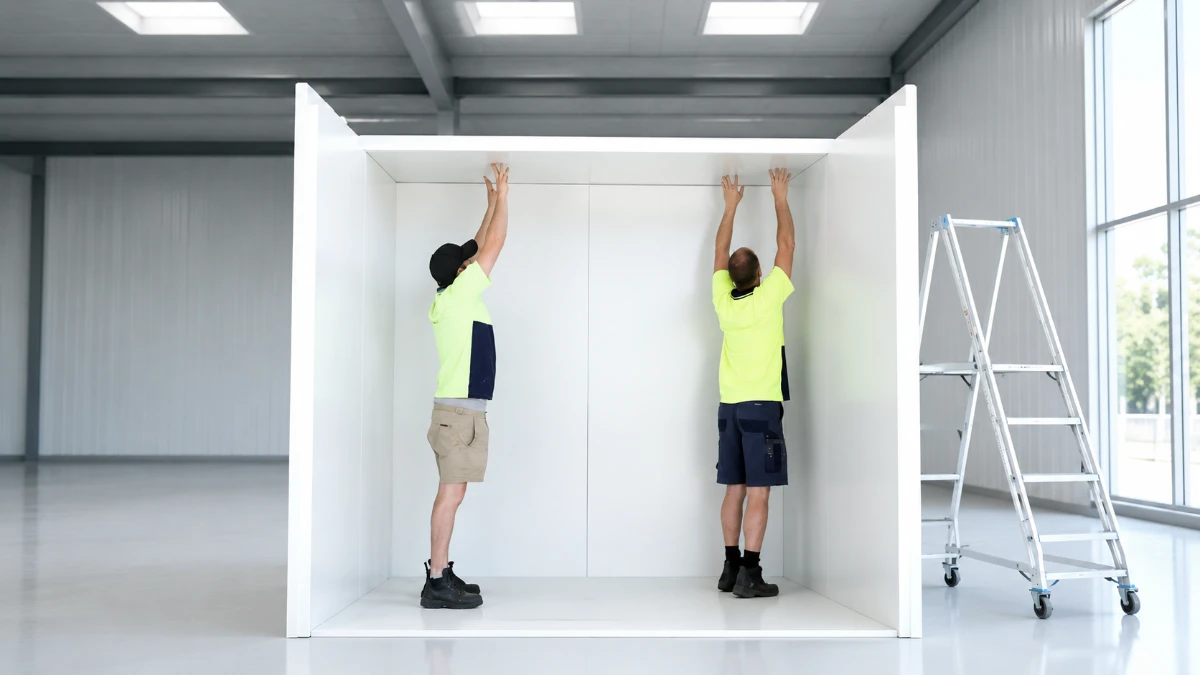
The cheapest cold room panels usually get cheap by quietly removing the things you can’t see on a
photo. The traps that cost the most later:
- Buying by the foam name, ignoring density. Two “PU” panels at 35 vs 42 kg/m³ perform and last very differently. Ask for kg/m³.
- Under-specified thickness. A freezer built with chiller-thickness panels frosts, ices the floor and runs the compressor non-stop — the “saving” is paid back in energy within a season.
- Thin facing steel. 0.3 mm facings dent and corrode in wash-down rooms; confirm the gauge and coating.
- A weak joint. No cam-lock or a single seal means air leakage, condensation and mould — the most common cold-store complaint there is.
- Panels only, no envelope. Buying loose panels without coordinated floor, coving and door details leaves thermal bridges at every corner.
- No vapor-barrier strategy. If the warm side isn’t sealed, moisture migrates into the core, saturates it, and the insulation value collapses over a few years — a slow, invisible failure that follows
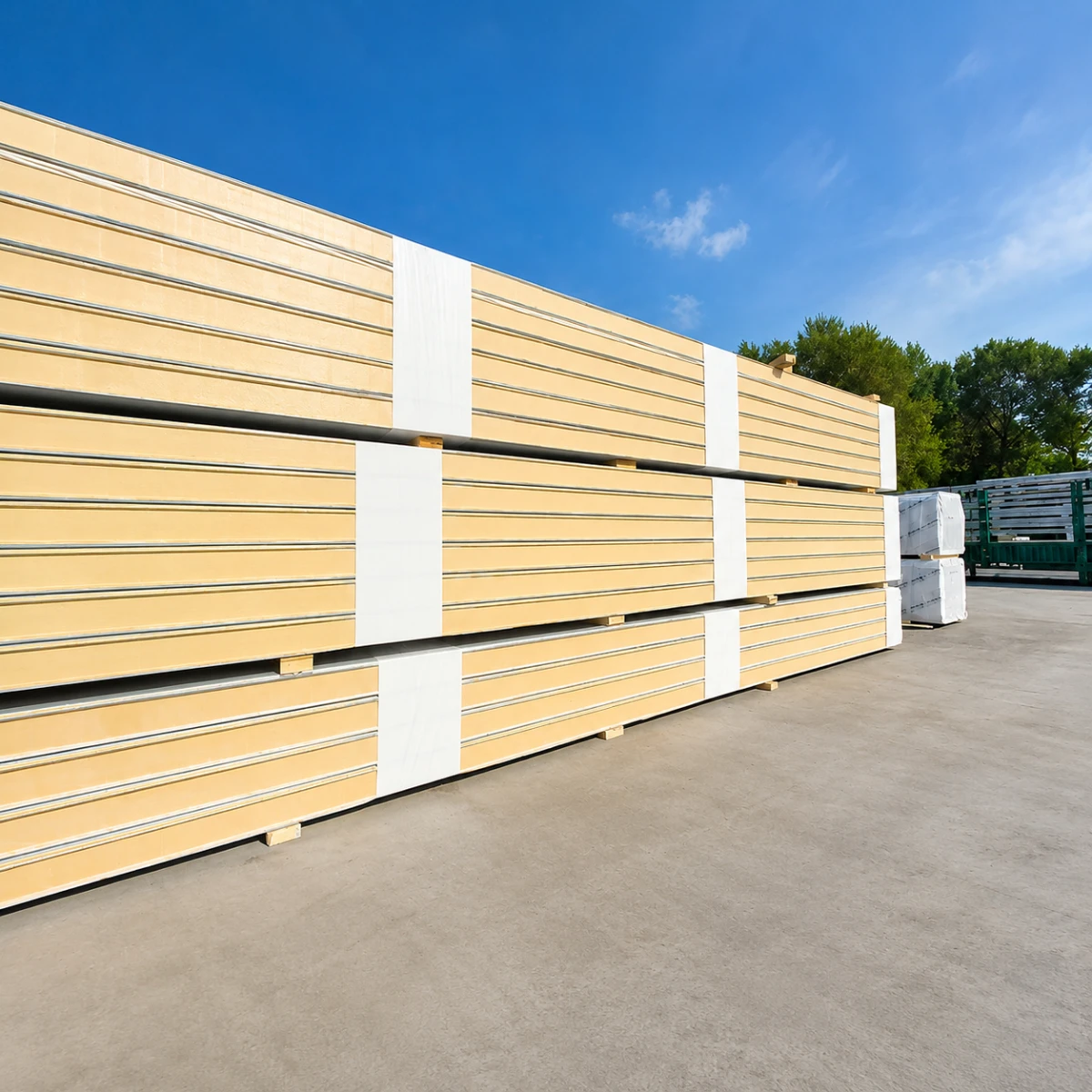
cold-chain best practice when done correctly. - Export damage. Cam-lock edges crush easily; without proper packing and handling, panels arrive unusable. Ask how they’re protected for sea freight.
In every one of these, the lowest quote is rarely the best supplier — it’s the one that has the
most room to cut where you won’t notice until the room is running.
The VIKKINS Approach: A Coordinated Cold-Room Envelope
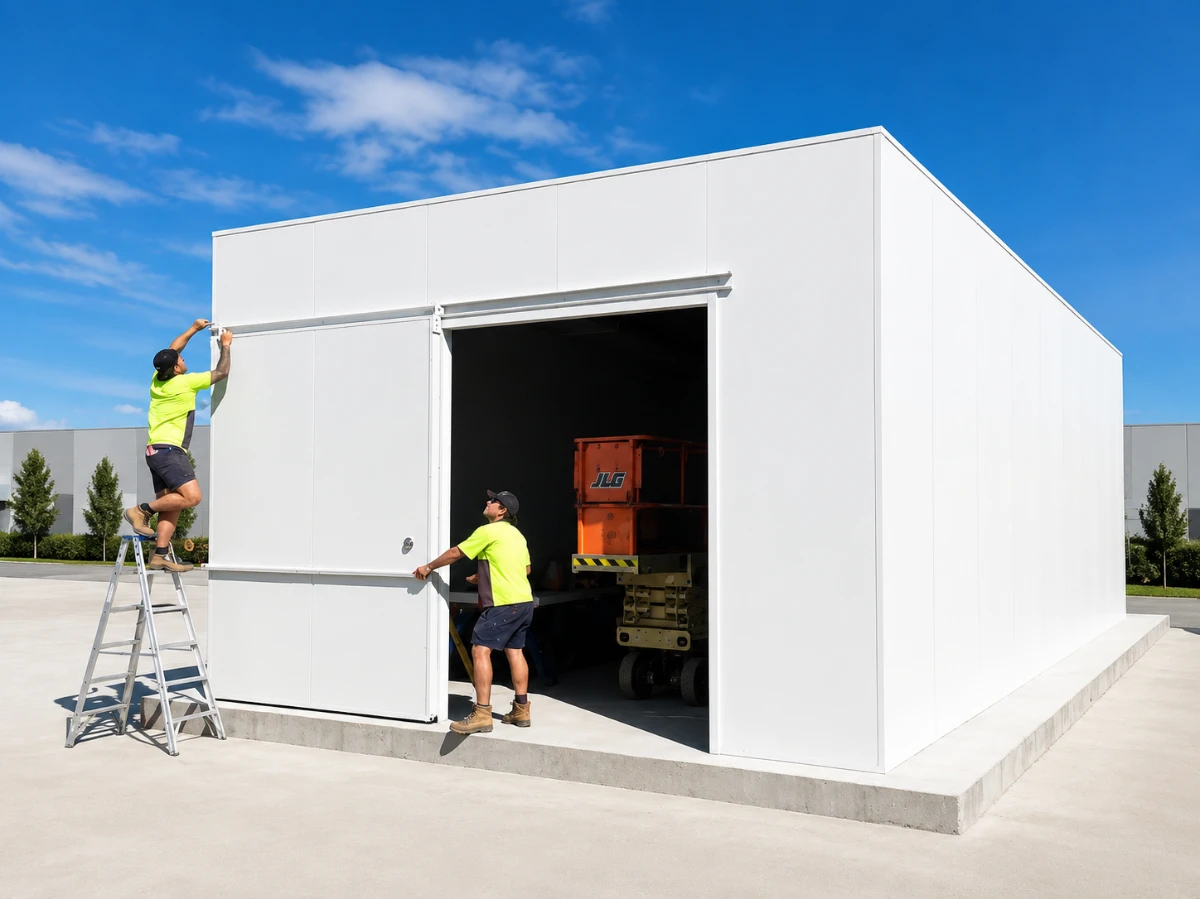
VIKKINS supplies cold room panels as part of a complete, coordinated envelope rather than a stack
of loose boards. We spec core density and thickness to your actual temperature and room type,
use airtight cam-lock joints with proper vapor sealing, match facings to food or pharma hygiene
requirements, and coordinate walls, ceiling, floor and coving so the box seals as one. Everything
is manufactured in ISO 9001 / ISO 14001-certified bases, packed for sea freight, and
delivered to 90+ countries with design, supply and installation support — and engineered from our
Montréal office for accountability you can talk to. The result is a cold store that holds
its temperature on day 7,000, not just on day one. (Building the structure around it, too? See our
guide to prefabricated steel structures.)
Tell us your project dimensions and use — we’ll send a preliminary design and quote within 24 hours. Service in English, Spanish, or French.
Получите бесплатный расчет стоимостиНапишите нам в WhatsApp прямо сейчас