



Costo de Edificios de Acero: Qué Realmente Impulsa el Precio
“How much does a steel building cost?” is the first question every buyer asks — and the honest
answer is that the same building can vary by 30–40% between suppliers without either of them
being wrong. Steel building cost is not one number; it is a stack of components
and a set of variables, and once you can see them, you can read any quote, spot where a price has
been padded or cut, and compare suppliers on equal footing. Here is exactly where the money goes
and what moves it.
Where Your Money Actually Goes
A delivered steel building breaks down into a handful of cost blocks. The exact split shifts with
the project, but a typical delivered structure looks roughly like this:
Illustrative shares of a delivered steel building; on-site installation is usually quoted separately.
The headline is simple: structural steel is roughly half the cost, which is why
the steel tonnage and grade are the single most important figures on any quote. The envelope is the
next big block, and freight can swing the total dramatically on an export project. Engineering is a
small line — and the one buyers most regret cutting, because it decides whether the other 90% is
designed efficiently and safely.
The Variables That Move the Price Up or Down
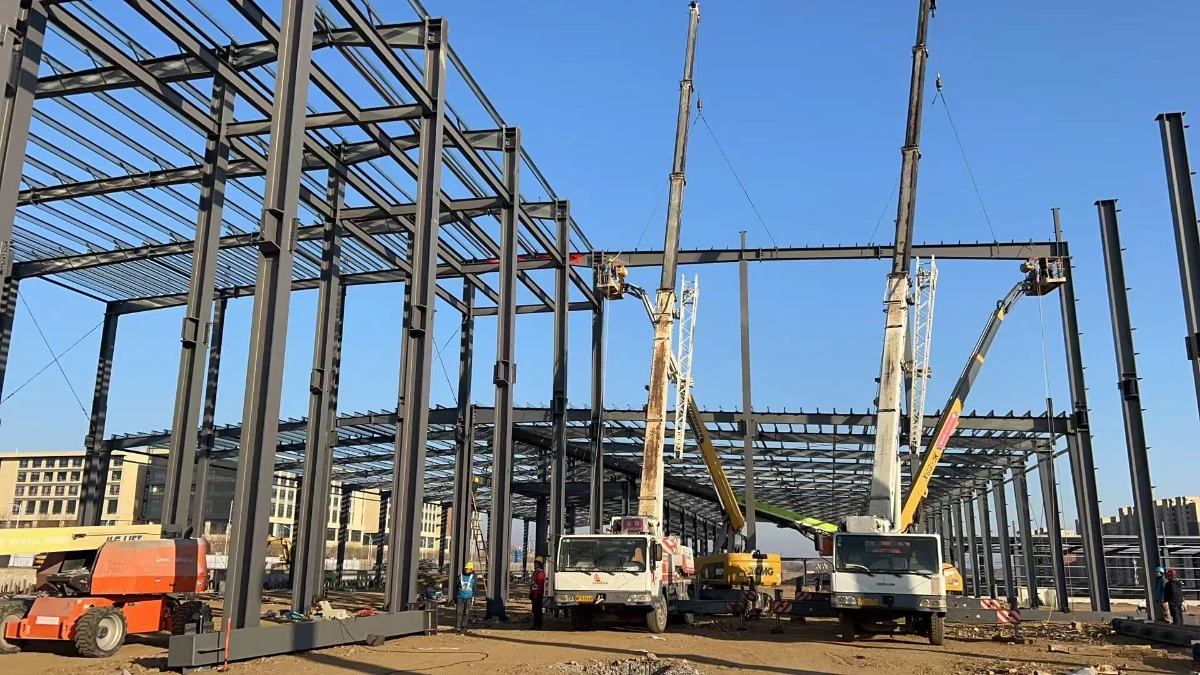
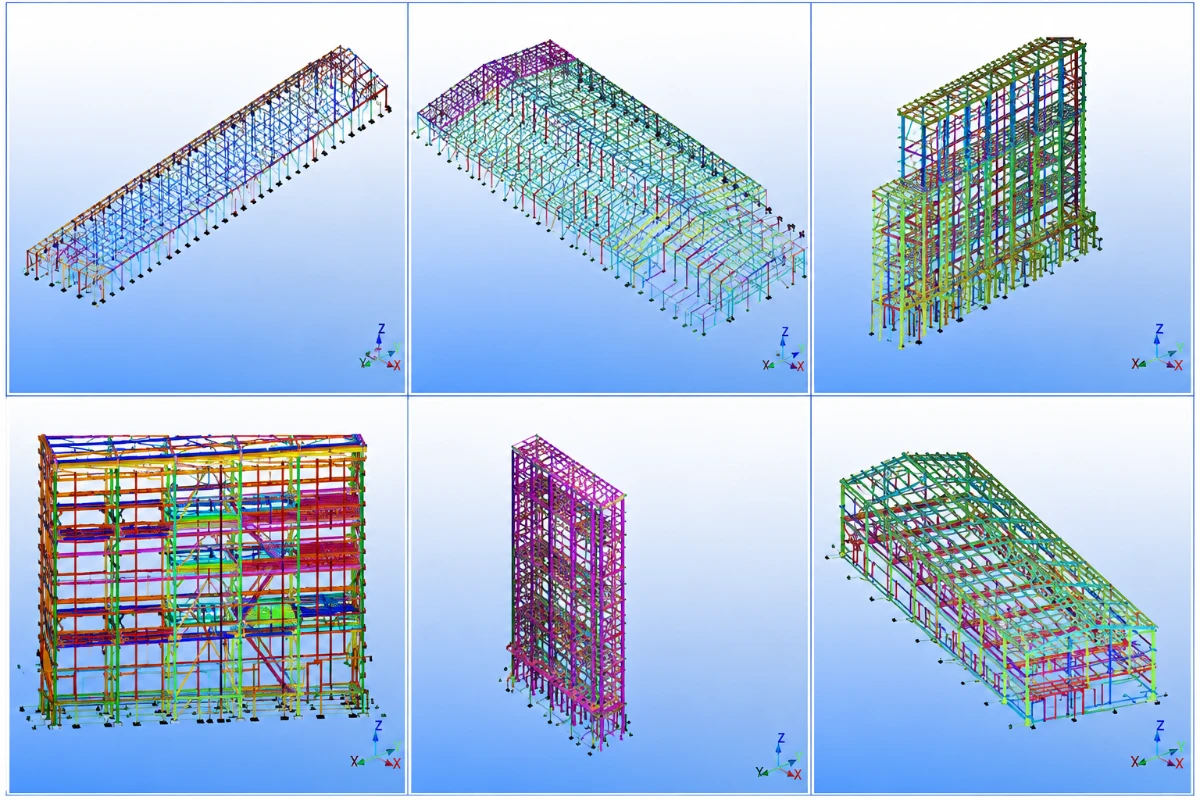
Two buildings of the same floor area can cost very differently, because the steel weight is driven
by what the structure has to do:
- Span and height — wider column-free spans and taller buildings need more steel per square metre.
- Loads — high wind, heavy snow, seismic zones or a crane runway all add weight and cost.
- Use and finish — a cold store, a clean workshop or an office fit-out costs more than a bare warehouse shell.
- Insulation and envelope — thicker, higher-performance panels cost more upfront and save on energy later.
- Location and quantity — climate, local code, site access and how many buildings you order all shift the price.
This is also why a quote with no engineering behind it is a red flag: without calculations sized to
your loads, the steel weight — and therefore the price — is a guess.
Per Ton vs Per m² — Reading the Number Without Getting Fooled
Steel is usually quoted two ways, and mixing them up is how buyers get fooled. Fabricated
steel is priced per ton, while a turnkey building is priced per square
metre. A low price per m² can simply mean a lighter, under-designed building with
less steel in it — cheaper on paper, weaker in reality. The only honest comparison is on the same
basis: the same scope, the same Incoterm, and a stated steel weight and grade. Ask every supplier
for tonnage and grade, and a per-m² figure suddenly becomes something you can actually judge.
Total Cost of Ownership — The Cheapest Build Isn’t the Cheapest Building
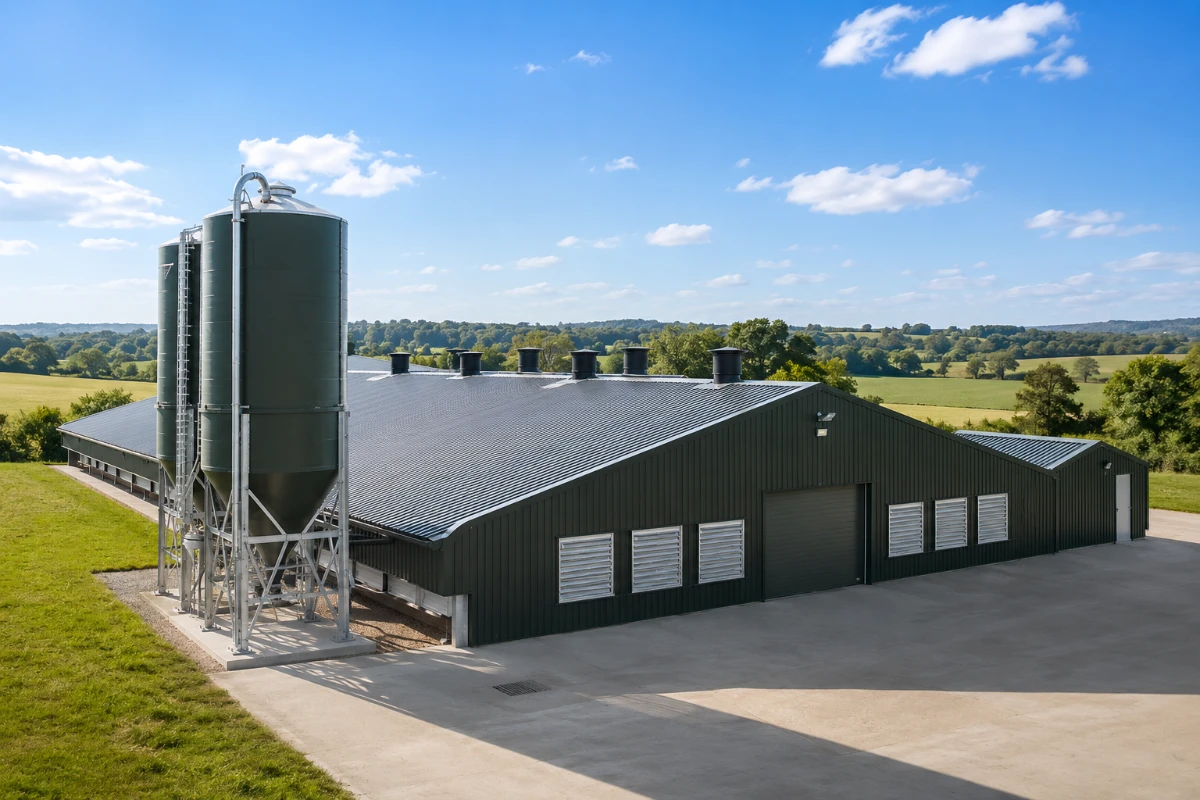
The lowest build price often becomes the highest lifetime cost. Thinner insulation means higher
heating and cooling bills for the life of the building; a lighter, cheaper coating means corrosion
and repairs years sooner; and a slow, low-quality build delays the day the building starts earning.
A slightly higher upfront steel building cost that buys proper insulation, the right coating and a
faster delivery is usually the cheaper building once you count energy, maintenance and
time-to-revenue. Judge the cost over the building’s life, not just the line on the quotation.
How to Get a Steel Building Cost You Can Trust
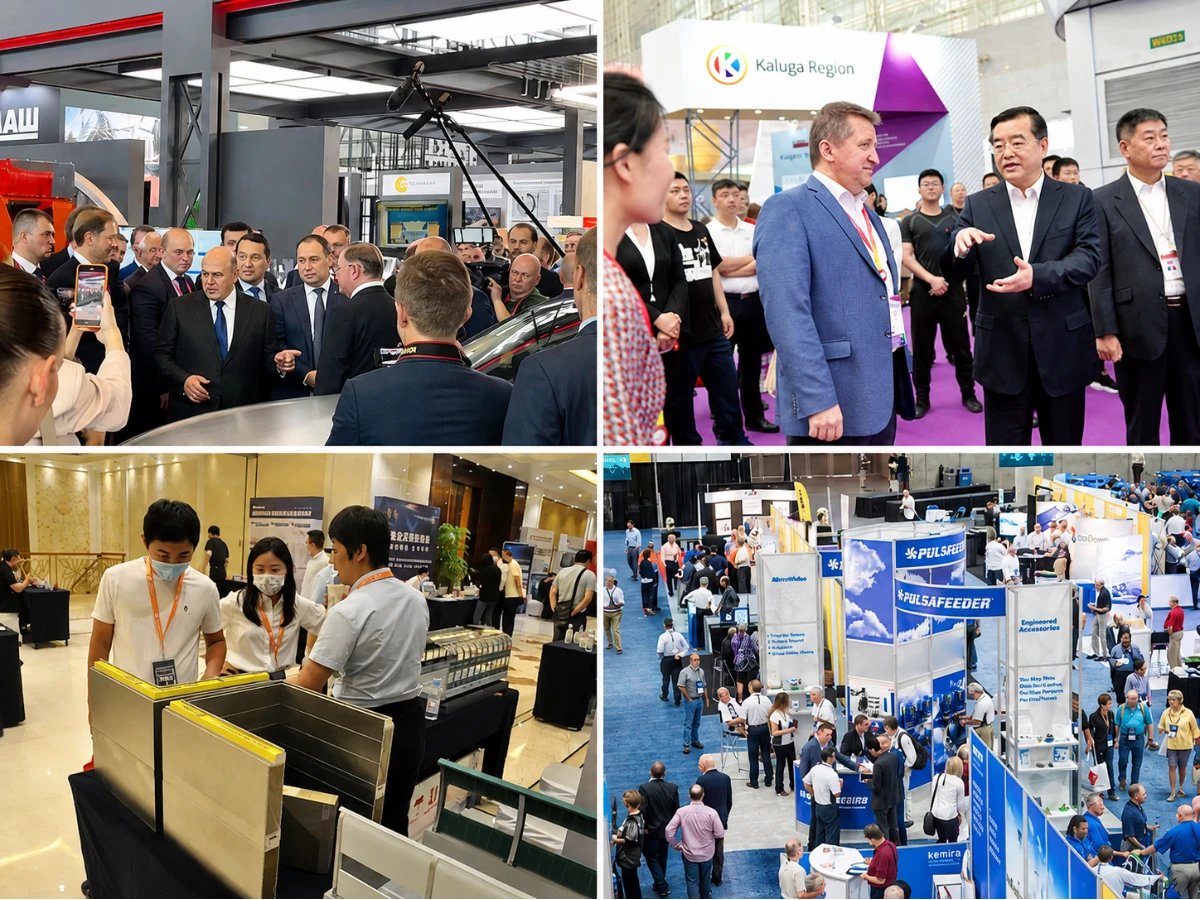
To get a number you can rely on, fix the scope, the building code and the
Incoterm
first, then ask each supplier for an itemised quote. A trustworthy steel building cost should spell out:
- Total steel weight (tons) and grade
- Envelope specification — panel type, thickness and coating
- Connections, bolts and surface protection
- Export packing, the Incoterm, and what’s included vs excluded
- Engineering, drawings and lead time
VIKKINS issues itemised quotes
on FOB or CIF terms with engineering included, so you can see every block of the cost rather than a
single mystery total — built in ISO 9001 / ISO 14001-certified bases and delivered to 90+
countries with design, supply and installation support. Before you compare prices, make sure you’re
reading them right: our guide to
safely importing steel structures from China
covers the checks that protect both your budget and your project.
Díganos las dimensiones de su proyecto y su uso: le enviaremos un diseño preliminar y un presupuesto en 24 horas. Servicio en inglés, español o francés.
Solicita un presupuesto gratuitoEnvíanos un mensaje por WhatsApp ahora mismo