









Poultry House Design: Building for Flock Health and ROI
A modern poultry house is a climate machine, not a shed with birds in it. For a
broiler or layer producer, the building quietly decides your feed conversion, your mortality, and
whether output holds through a summer heat wave and a winter cold snap. Cut the wrong corner and
you don’t lose a few percent of efficiency — you lose whole flocks. This guide is specific on
purpose: how the house changes by bird type, why the structure and ventilation matter more than
the price tag, and the sizing and ROI math owners and investors actually need.
Broiler, Layer or Breeder — The Poultry House Follows the Bird
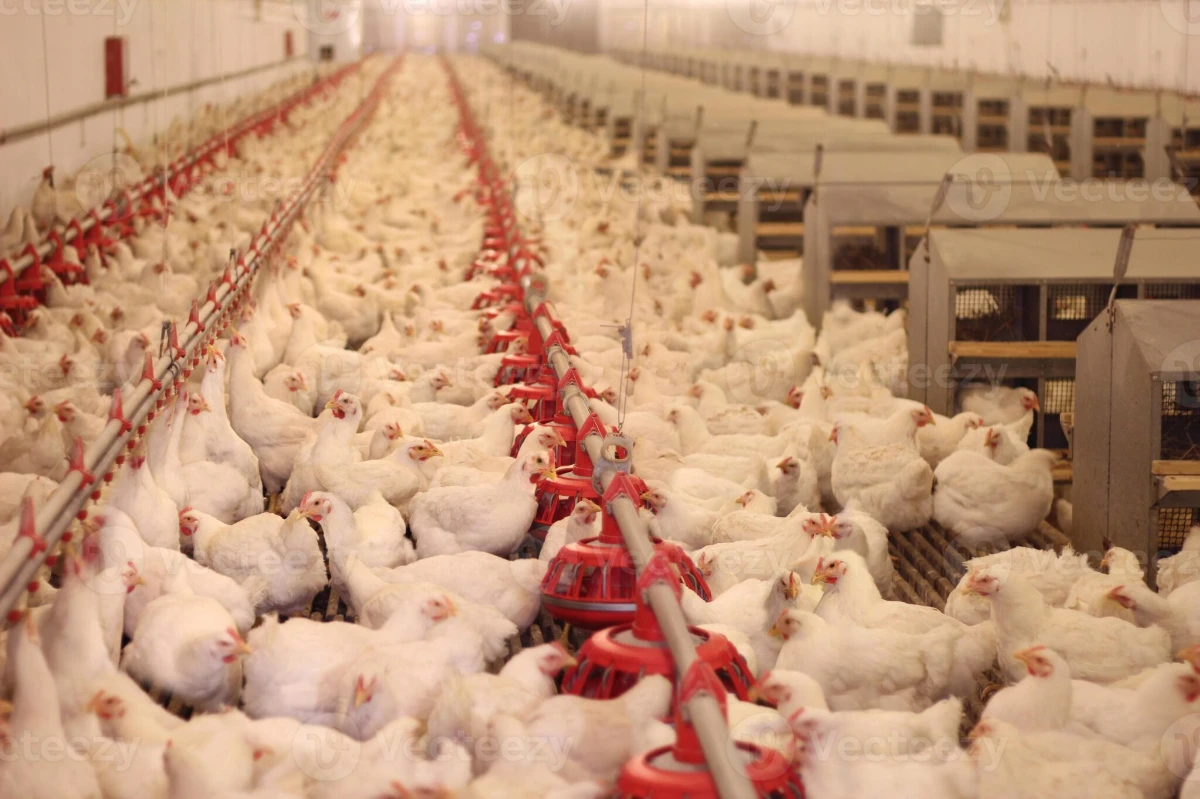
There is no generic poultry house, and treating one bird’s building as another’s is where many
projects go wrong. Each segment has its own envelope, height, loads and equipment:
- Broiler grow-out houses — floor-raised on litter, high density (often 15–22 birds/m², up to ~30–42 kg/m² depending on welfare rules), short 5–7 week cycles with 6–7 flocks a year. They live and die on tunnel ventilation and even feed/drinker lines.
- Layer houses — long occupancy of 70–90 weeks in cage, enriched-colony or aviary systems. Multi-tier layouts demand greater clear height and a structure that carries tier and manure-belt loads, plus egg-collection lines.
- Breeder / parent-stock houses — lower density with nest boxes and a slat-and-litter floor, and the tightest environmental control of all, because the value per bird is highest.
Decide the bird and the production system first; the building follows from it, not the other way
around.
Clear-Span Steel — Why the Structure Decides the Operation
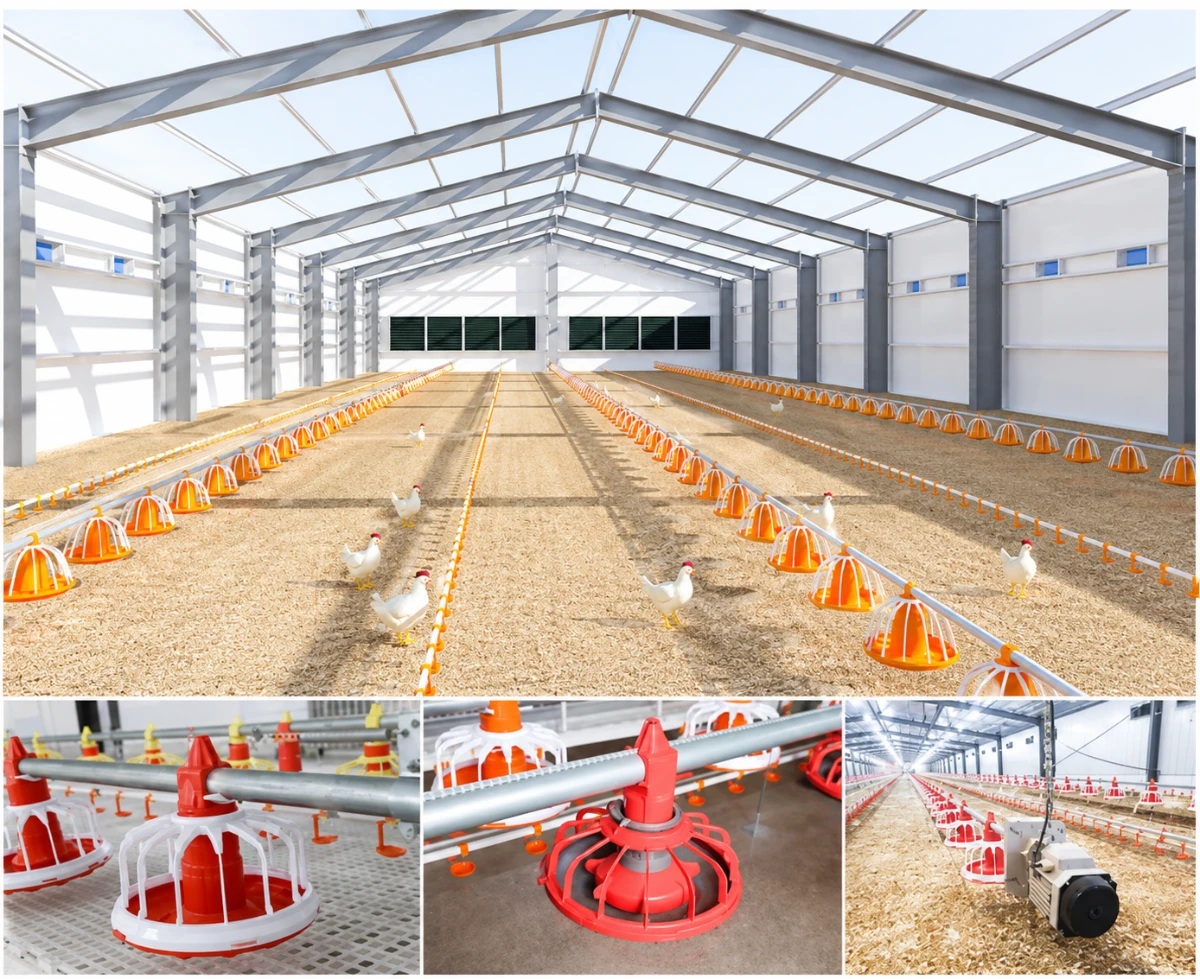
Poultry houses are usually 12–20 m wide and 100–150 m long, and the single
most important structural feature is a column-free clear span. Internal columns
obstruct feeder and drinker lines, disturb the smooth end-to-end airflow that tunnel ventilation
depends on, and get in the way of cleanout. A steel portal frame removes them, carries the
equipment hung from the roof — feed lines, nipple drinkers, lighting and heavy tunnel fans — and
handles wind and snow loads as well as the cage tiers in a layer house. One detail decides
longevity: a poultry house is a humid, ammonia-rich environment that corrodes ordinary steel
fast, so frames and fixings must be galvanized or properly coated. Saving money on bare steel
here is how a 25-year building starts rusting in five.
Tunnel Ventilation — The Engine of Year-Round Output
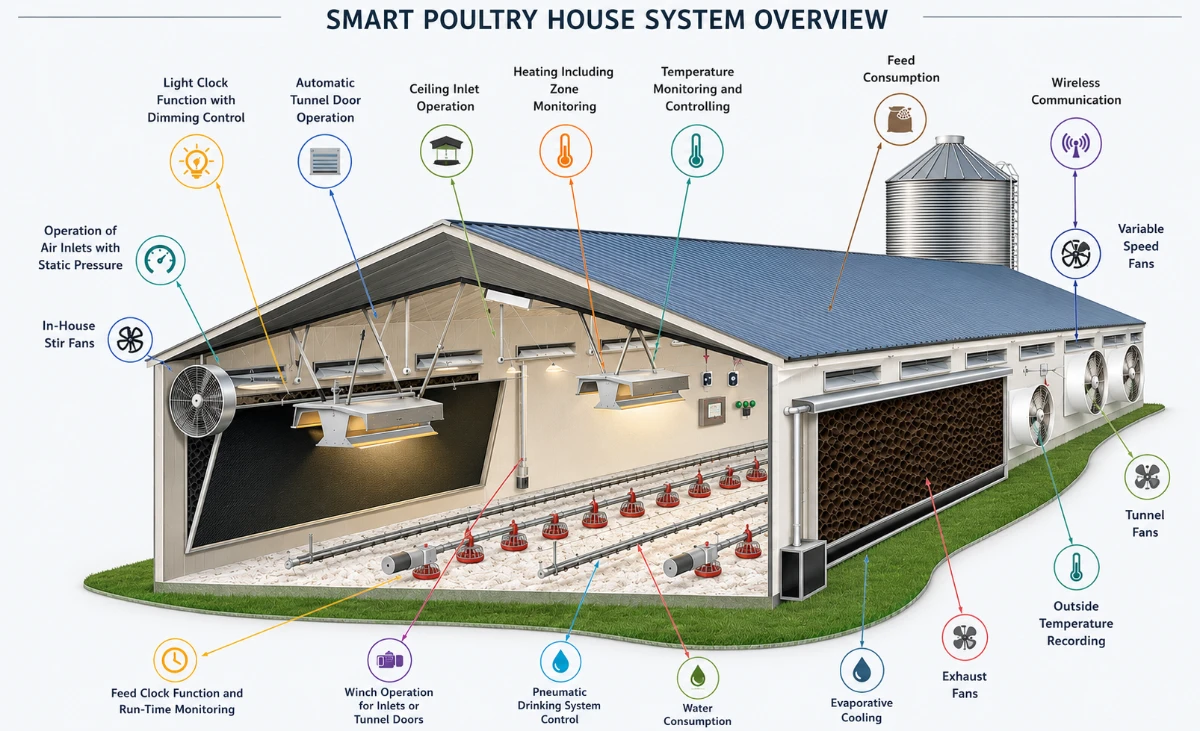
Stable year-round output comes from ventilation, and a poultry house runs two modes. In cold
weather and with young chicks, minimum ventilation exchanges just enough air to
remove ammonia, CO&sub2; and moisture without chilling the birds. In hot weather,
tunnel ventilation pulls air the full length of the house at high speed — often
2–3 m/s over the birds — so the wind-chill effect cools them, while evaporative cooling
pads drop the incoming air temperature at the inlet end. This is exactly how a flock survives a
40 °C afternoon and keeps eating instead of panting. It only works if the building is
sealed and the cross-section is right: air leaks destroy the static pressure and air speed the
system needs, which is why ventilation and the building envelope are one decision, not two.
Getting it right keeps birds in the comfort zone that modern flock management is built around.
Insulation and the Envelope — Less Feed, Fewer Losses
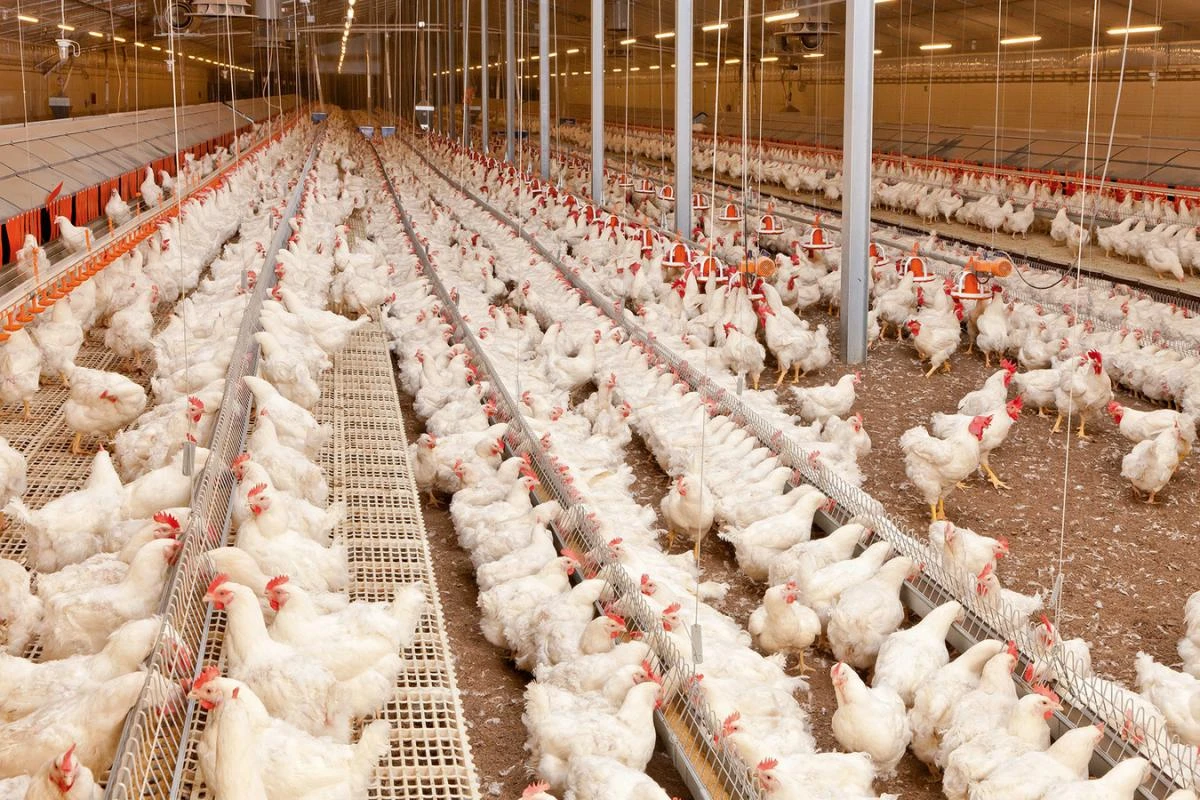
Insulation is not comfort; it is profit. An insulated roof and wall envelope holds the internal
temperature steady, and a steady temperature means birds spend their feed on growth instead of on
keeping warm or cooling down — directly improving the feed-conversion ratio that decides a broiler
operation’s margin. In cold climates, good insulation also cuts heating fuel and, just as
importantly, stops condensation that soaks the litter; wet litter drives ammonia, footpad lesions
and disease, all of which raise mortality and downgrade the birds. In hot climates, it keeps solar
heat out and lets the cooling system win. A tight, insulated envelope is also a precondition for
tunnel ventilation to perform, so the panel specification and the airflow design have to be made
together.
Sizing and Capacity — Match the Poultry House to the Business Case
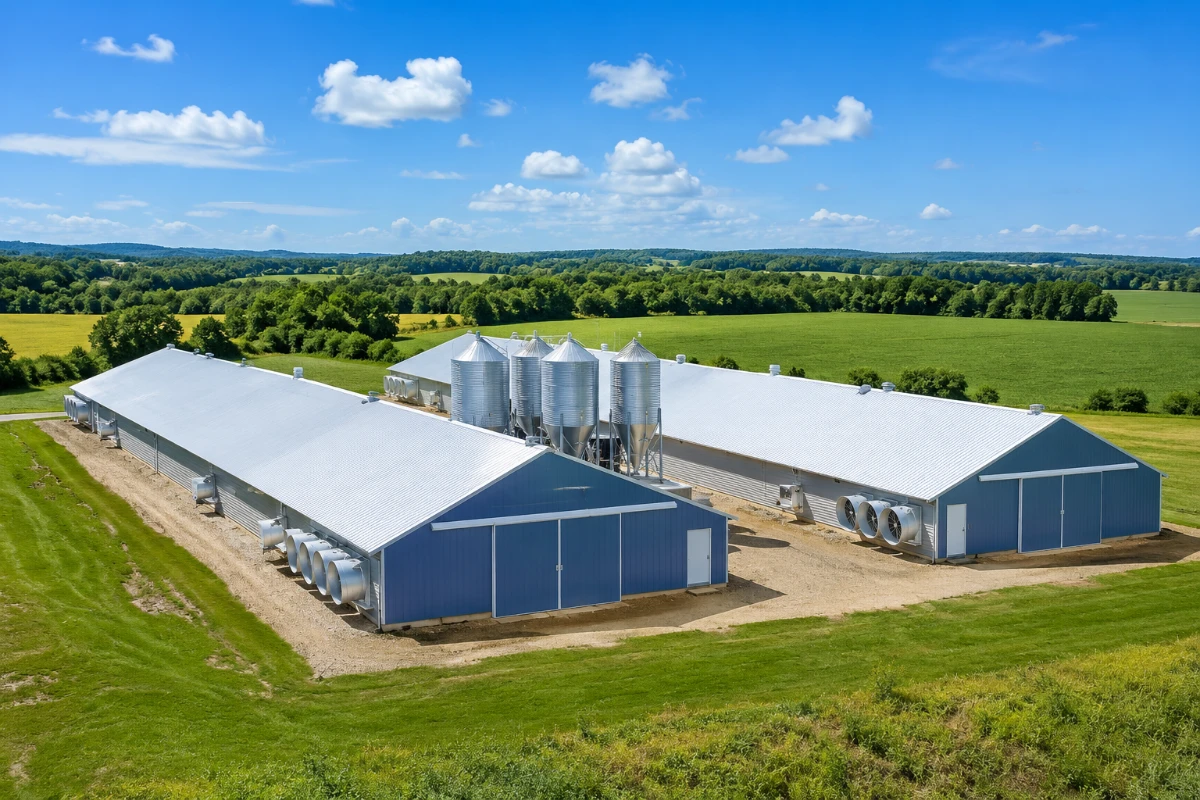
For an investor, the house is just the machine that produces the cash flow, so size it to the
business case. A worked example: a 150 m × 18 m broiler house gives about
2,700 m² of usable floor; at roughly 16 birds/m² that is around
43,000 broilers per flock, and at 6–7 flocks a year, well over a quarter of a million
birds annually from one house. Plan the rest of the site around it — multiple houses with
biosecurity spacing, feed silos, a service and cold-storage area — and remember that the building
is a small fraction of the lifetime flock revenue it generates. Under-building to shave the upfront
cost simply caps the capacity and the income for the next two decades. The right move is to size
floor area, clear height and ventilation to the flock you intend to run, with room to grow.
Where Owners and Investors Get Burned
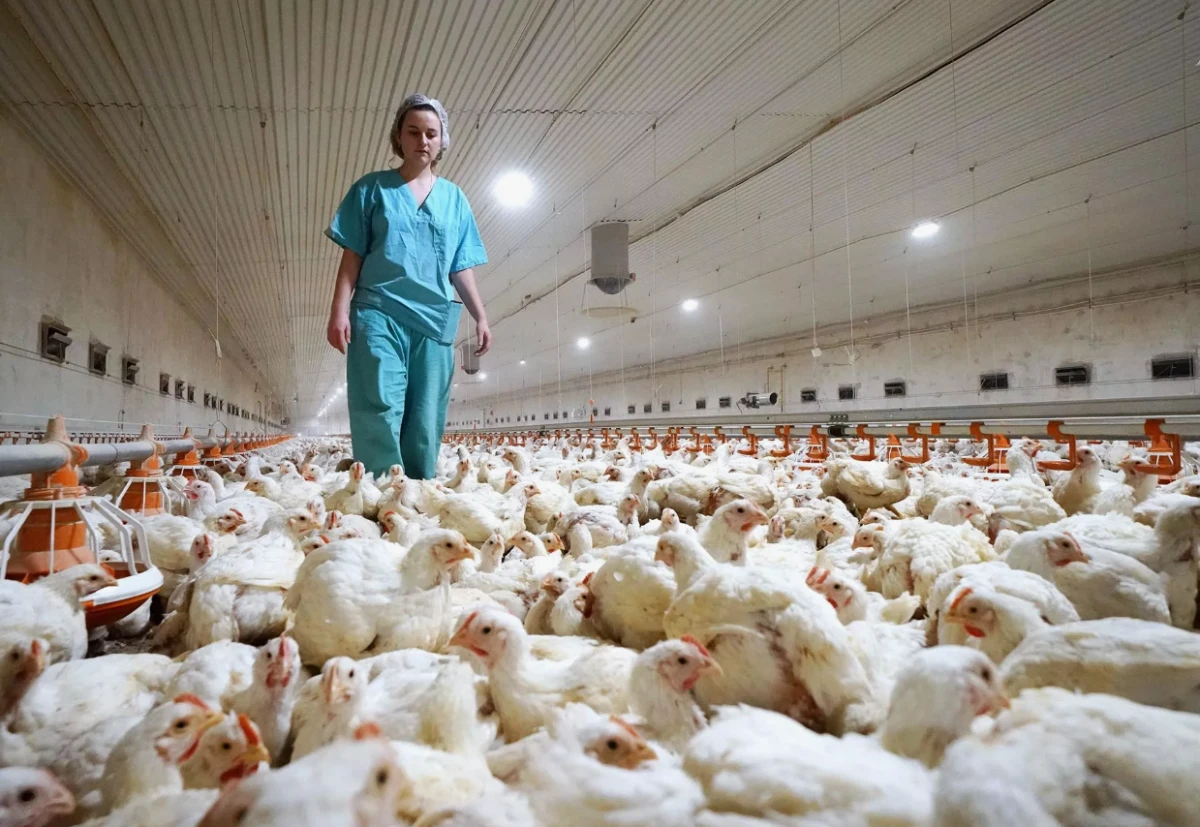
Almost every painful poultry-house story traces back to the same handful of decisions:
- Building for the lowest upfront price — thin insulation and undersized ventilation, then heat-stress die-offs and a feed-conversion ratio that quietly erases the margin.
- A leaky envelope — tunnel ventilation can’t hold air speed or static pressure, so the house can’t cool in a heat wave and a whole flock is lost in an afternoon.
- Bare or thin steel — ammonia and humidity corrode it, and structural problems arrive in years, not decades.
- The wrong span or height — modern equipment or layer tiers don’t fit, permanently capping capacity.
- Slow delivery — every month the house isn’t finished is a flock not raised and a loan still accruing.
VIKKINS engineers poultry houses as a complete system: clear-span steel sized for poultry loads
and protected against corrosion, an insulated envelope sealed for tunnel ventilation, all
specified to broiler, layer or breeder production and to your climate. Everything is manufactured
in ISO 9001 / ISO 14001-certified bases, packed for sea freight and delivered to 90+
countries with design, supply and installation support — engineered from our Montréal
office for accountability you can reach. (Planning the wider site? See our guide to
turnkey livestock farm delivery.)
Tell us your project dimensions and use — we’ll send a preliminary design and quote within 24 hours. Service in English, Spanish, or French.