









Industry insight · Cold chain
Modular Cold Rooms: How to Match Cold Storage to Your Business — Mini, Mobile and Walk-In
Not every business needs to pour a giant fixed cold warehouse. A modular cold room is built from prefabricated insulated panels that lock together on site — so you can size the cold space to what you actually store, move it when you need to, and add to it later. Pick the wrong format and you either over-spend on capital or lose product to spoilage.
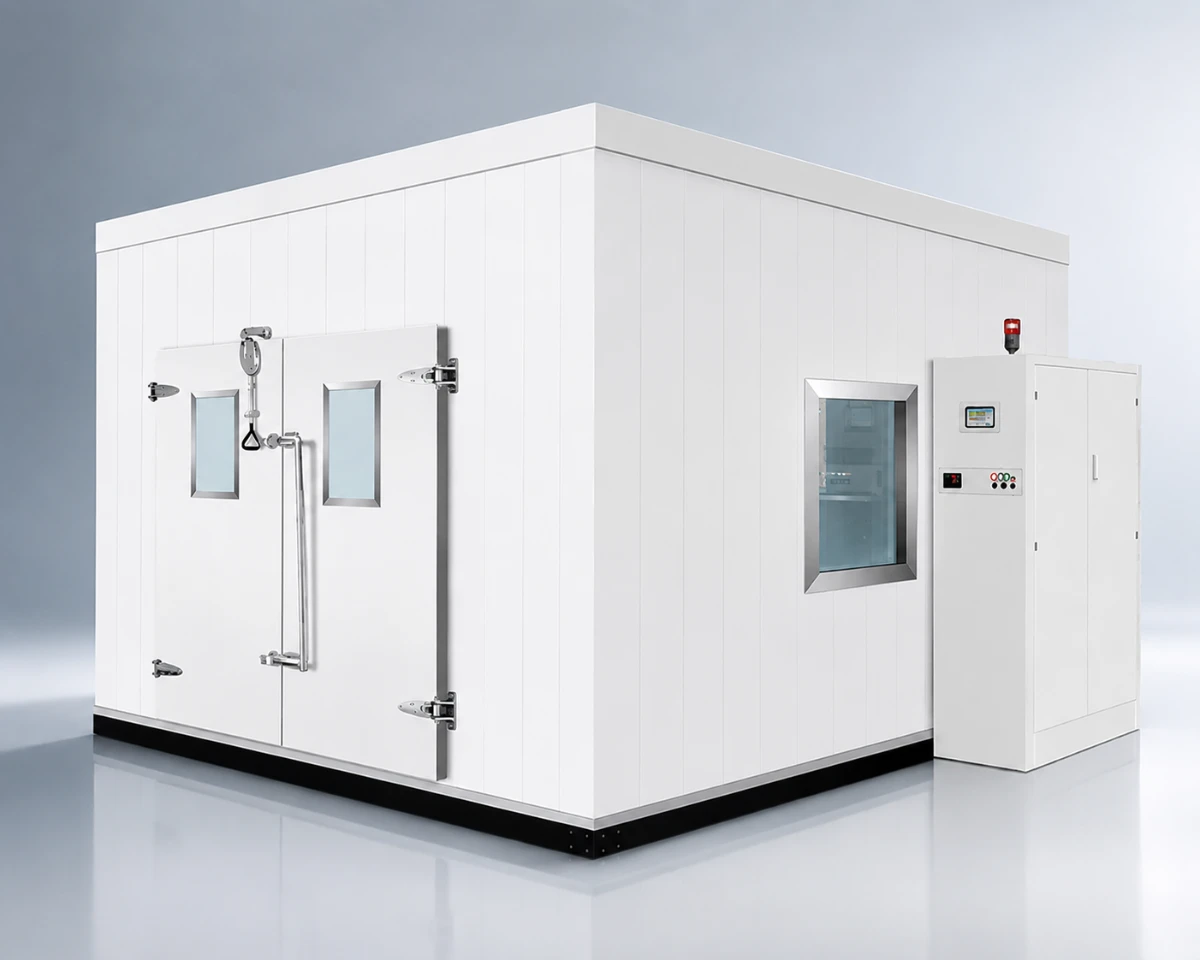
A modular cold room is a temperature-controlled room assembled from prefabricated polyurethane sandwich panels rather than cast concrete and sprayed insulation. The same panel system scales from a 2 m³ unit behind a café to a multi-chamber walk-in inside a steel warehouse — and even onto a trailer. Cold rooms are one of the fastest-growing parts of the 冷链 as supermarkets, convenience stores and online grocery push refrigerated capacity closer to the customer. The whole decision comes down to two things: the right panel, and the right format.
Start with the panel.
What makes a cold room modular — and efficient
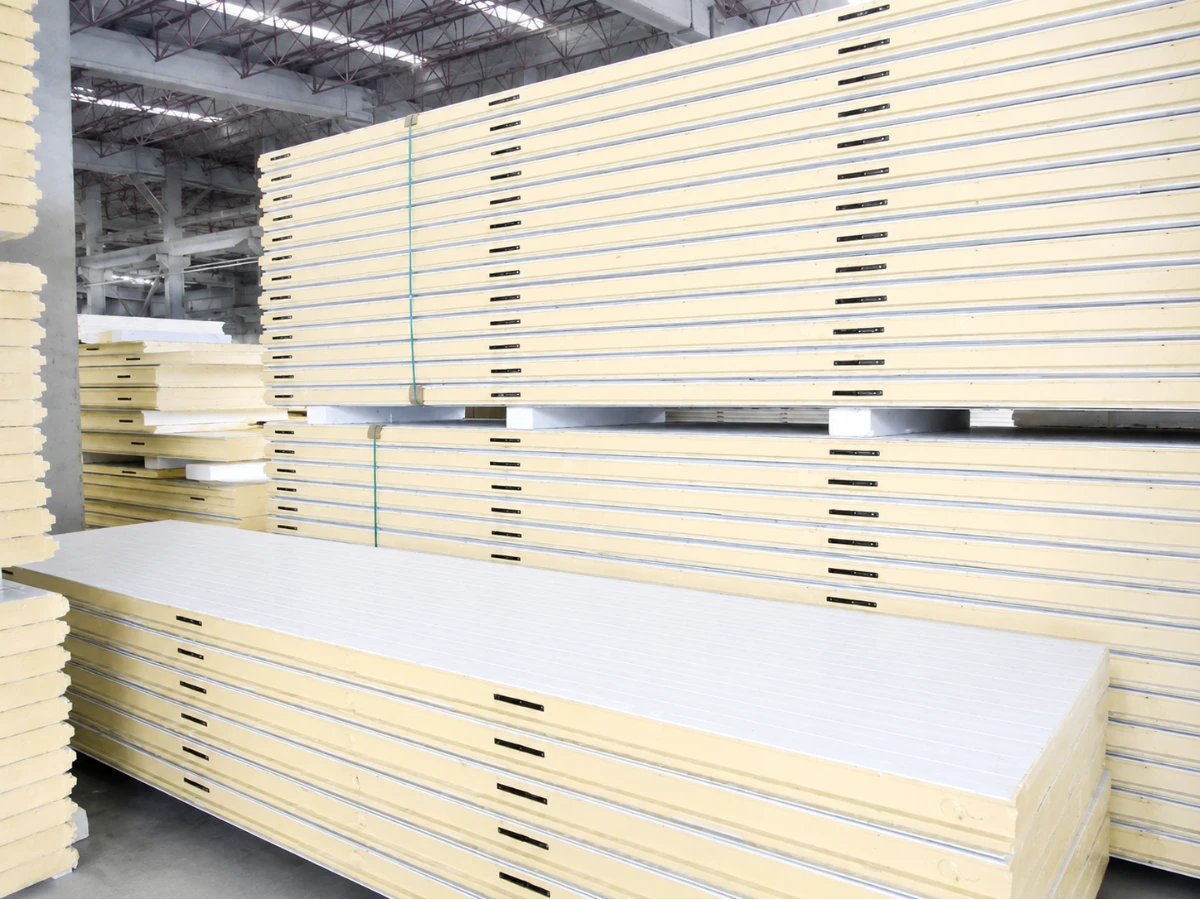
The reason a cold room can be prefabricated at all is the panel. Polyurethane cold storage panels bond a rigid PU or PIR foam core between two pre-painted steel skins. A high-quality core holds a closed-cell rate above 95%, which gives a thermal conductivity of roughly 0.018–0.024 W/(m·K) — against about 0.035–0.045 for rock wool or EPS. In practice that means a PU panel hits the same insulation with close to half the thickness, so you lose less internal volume to walls.
The other half is the joint. Panels use a tongue-and-groove edge with a built-in eccentric cam lock: you turn a key and the panels pull tight together, like building blocks. That continuous seal removes the cold bridges that leak energy at every join — for a roughly 1,000 m³ facility, good panels and tight joints cut annual electricity by about 20–30% versus ordinary insulation. It also means a room can be assembled without a specialist crew, which matters anywhere skilled refrigeration labor is scarce. A premium core runs a foaming density around 38–40 kg/m³, keeps water absorption under 1%, stays stable from −60 to +120 °C, and meets B1 or B2 fire ratings under China’s GB 8624.
Format one — mini.
Mini cold rooms: right-sizing for a small business
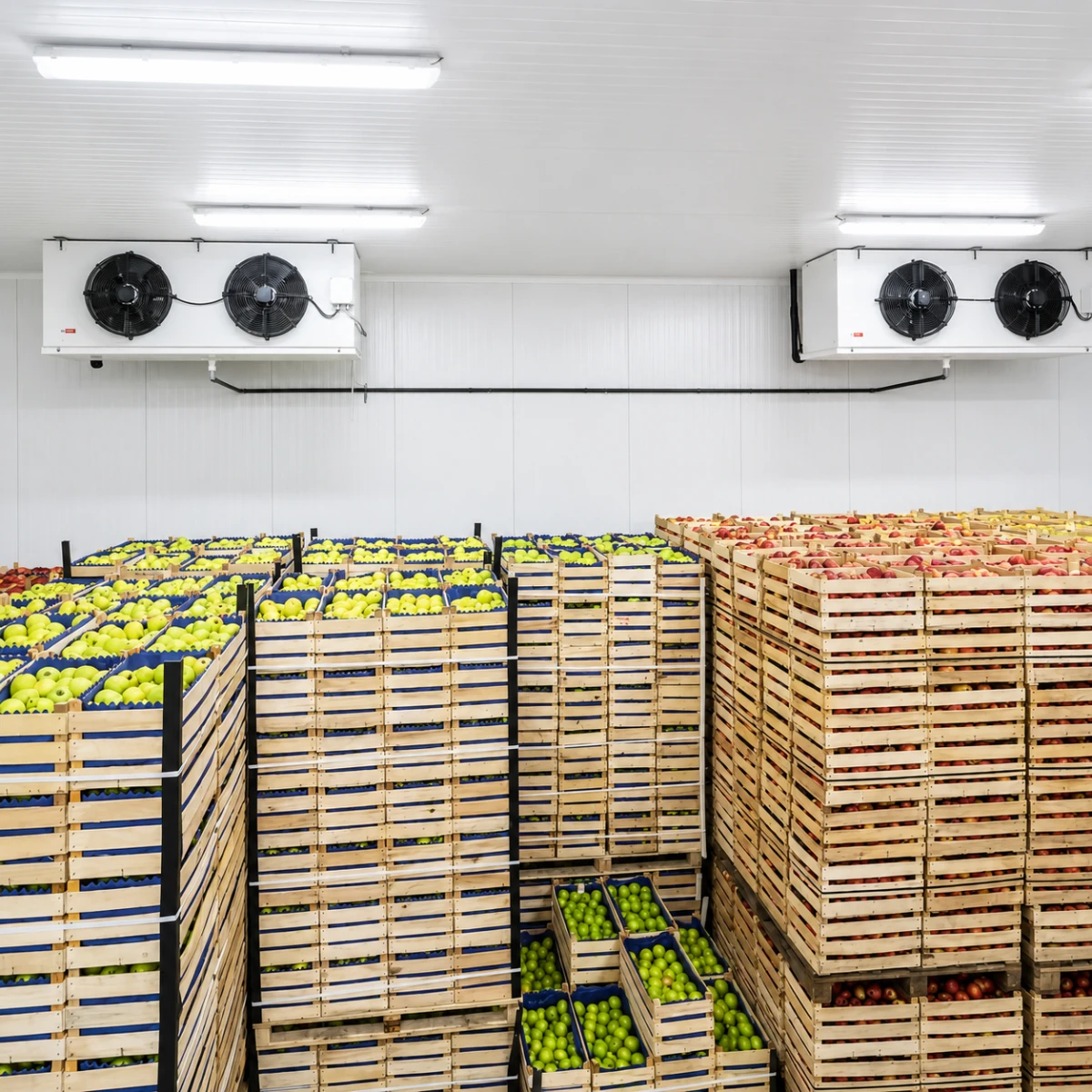
A mini cold room runs roughly 2 to 50 m³ — the bracket for cafés, butchers, florists, grocers, bakeries, labs and pharmacies. Configured for +2 to +8 °C for fresh goods or −18 to −22 °C for frozen, it does what a wall of domestic fridges can’t: store in bulk, hold temperature precisely, and keep stock organized.
The payoff is waste. Better airflow and proper shelving reduce spoilage by up to 30% against crowded upright units — often the difference between margin and loss for a small operator. Energy stays modest too: a unit under 10 m³ typically draws just 0.8–1.5 kW per day. And because the panels simply lock together, a mini room can be installed without a refrigeration specialist on site.
Format two — mobile.
Mobile cold rooms: capacity that moves with the work
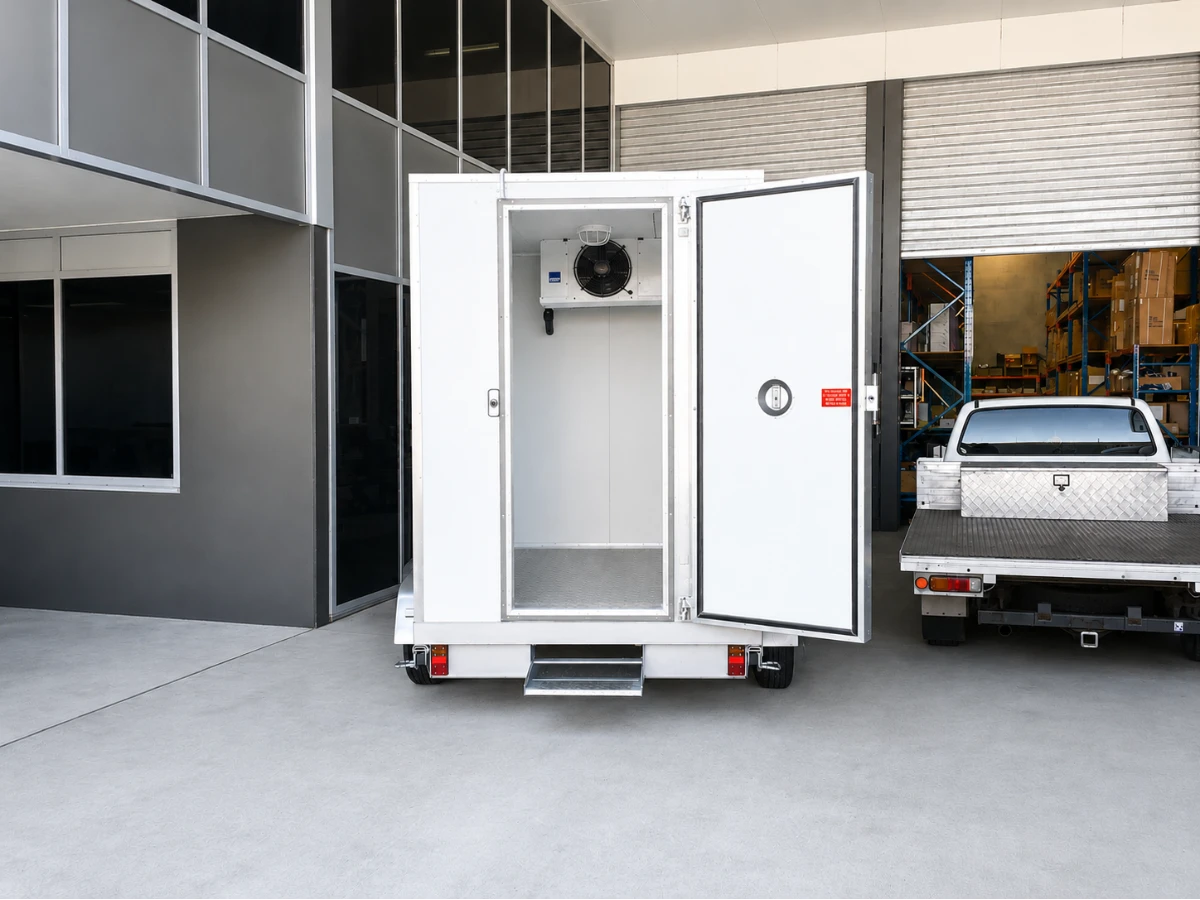
A mobile cold room takes the same panel system into a container or trailer format. It needs only a flat surface and a power source, and most units are running within hours — cutting deployment time by around 30% versus a fixed build. That suits demand that isn’t fixed in place: a meat processor’s summer peak, pre-cooling at the harvest field, seafood at the port, festivals and events, or emergency capacity after a breakdown.
Because they often run off variable-frequency compressors, mobile units cut energy by 15–25% against fixed-speed systems, drawing roughly 2.5–4.5 kWh per square metre a day; optional solar modules can carry three to six hours of off-grid operation for remote sites. Remote monitoring rounds it out — on connected cold-chain equipment it has been shown to cut fault response time by over 40%.
Format three — walk-in.
Walk-in & multi-chamber: permanent, but still modular
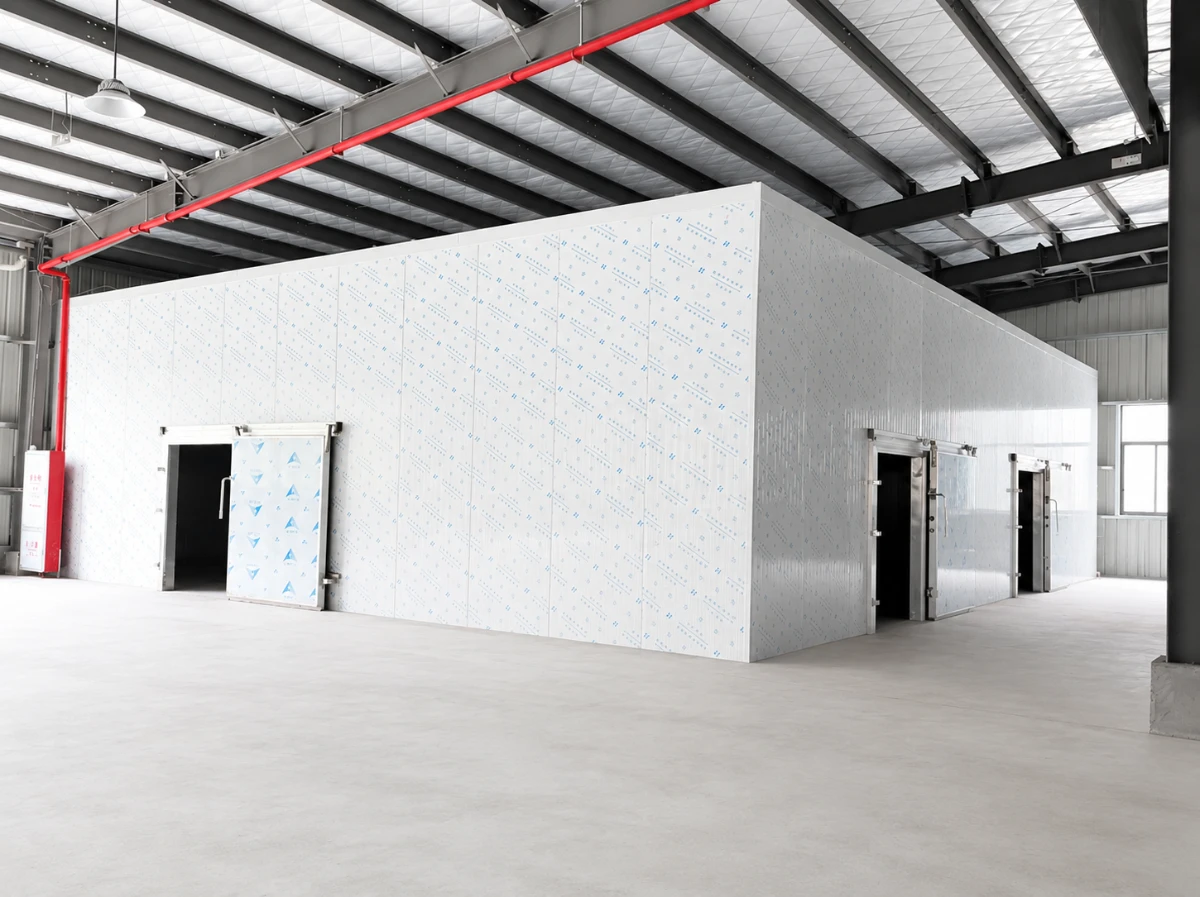
When the volume is large and permanent, the same panels build a walk-in — often several chambers under one roof, each held at its own temperature for chilled, frozen and processing zones, linked by insulated sliding doors and airlock vestibules. Because it’s still a panel system, a walk-in stays flexible: you can add chambers later, drop it inside an existing steel structure, or build it freestanding. You get the capacity of a fixed cold store without committing to the cost and rigidity of poured construction.
The shortcut.
Temperature sets the panel; use sets the format
Two questions size the whole project. First, how cold? The target temperature sets panel thickness — the colder the room, the thicker the core needed to hold it and keep the compressor from over-running.
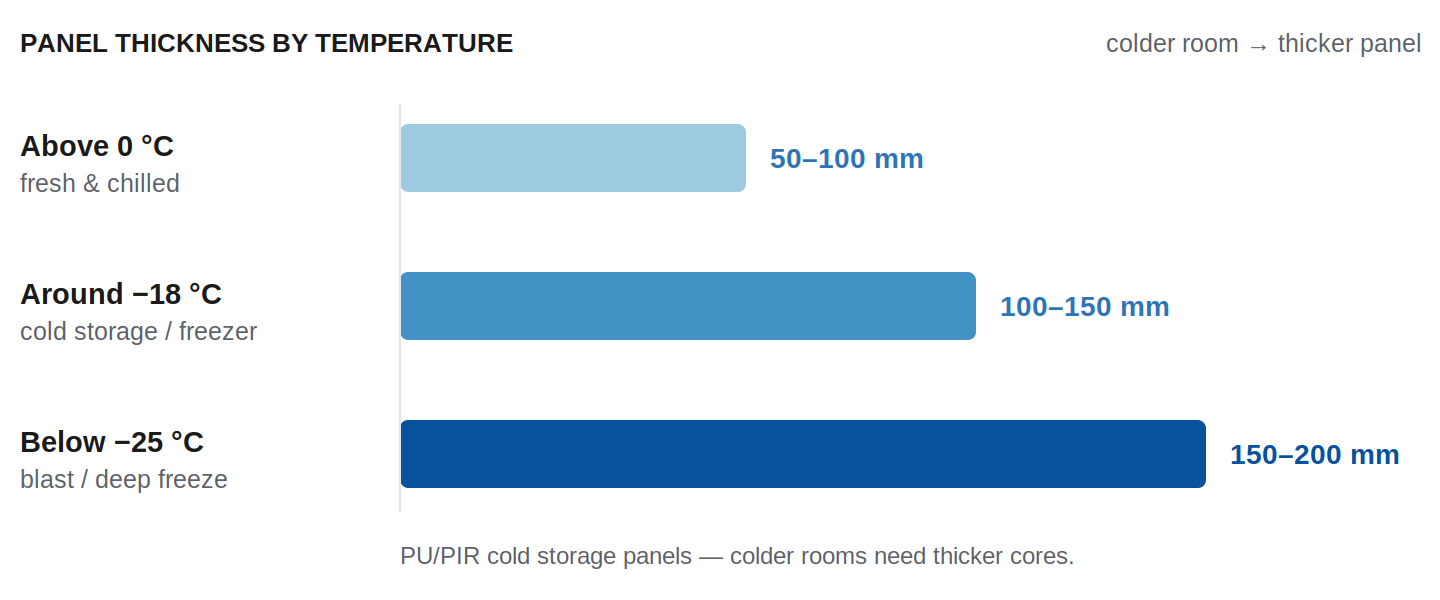
Second, fixed, movable or permanent? That picks the format. Match your answer to the table below.
| Format | Typical size | Best for | Mobility |
|---|---|---|---|
| Mini cold room | 2–50 m³ | Cafés, shops, labs, pharmacies, small producers | Fixed, compact |
| Mobile cold room | Container / trailer | Seasonal peaks, harvest, ports, events, remote sites | Relocatable |
| Walk-in / multi-chamber | Large, multi-zone | Distributors, processors, permanent cold stores | Fixed, expandable |
Ranges are typical; exact thickness, temperature and refrigeration are sized per project.
One supplier, from the panel to the finished cold room
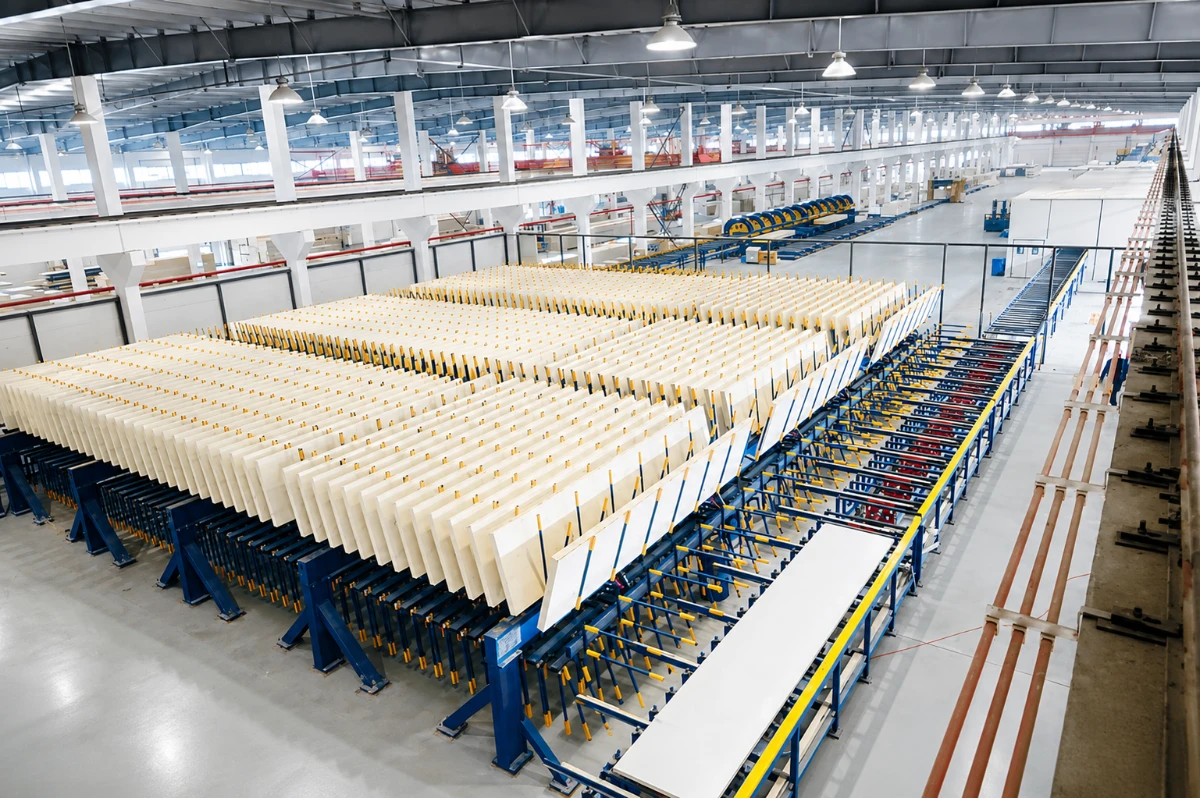
The advantage of a modular cold room is that every format — mini, mobile, walk-in — comes from the same panel. VIKKINS manufactures the PU/PIR cold storage panels and builds the modular cold room systems, so we can right-size the whole package to your temperature, volume and site rather than push you toward one product. Engineered in Canada, built in China and shipped as a modular kit to 90+ countries — tell us what you store and where, and we’ll spec the panel and the format that fit.
Let’s build something together
Tell us your project dimensions and use — we’ll send a preliminary design and quote within 24 hours. Service in English, Spanish, or French.