



Should you build your warehouse in steel structure vs concrete? It is one of the first big decisions in any project, and the honest answer is that neither is universally “better” — each wins in different situations. What matters is which one is better for your warehouse: your span, your timeline, your climate, your budget and whether you are building locally or importing. This guide compares the two fairly, across the factors that actually decide the outcome, and gives you a simple framework to see which side your project falls on. Where concrete is the stronger choice, we say so.
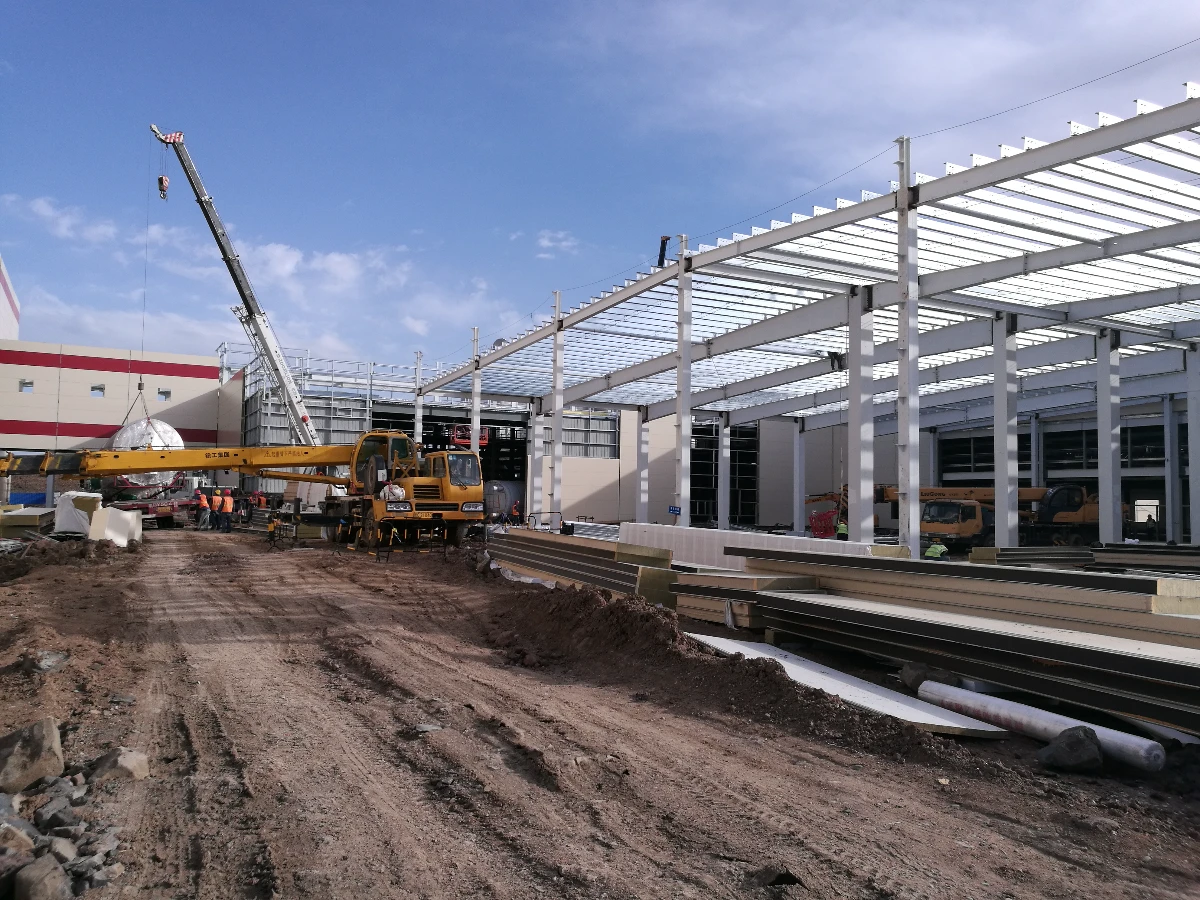
A steel structure warehouse. For most large-span storage buildings it wins on speed and space — but concrete still has its place.
Steel structure vs concrete at a glance
Here is the honest scorecard before the detail. Neither column is all green — that is the point.
| Factor | Steel structure | Concrete |
| Construction speed | Fast — prefabricated, bolted on site | Slower — forming, pouring, curing |
| Clear span (column-free) | Excellent — wide spans easily | Limited — needs more columns |
| Cost (most warehouses) | Usually lower for large spans | Can be lower where labour is cheap |
| Fire resistance | Needs protective coating | Naturally strong |
| Sound insulation / mass | Lower | Higher |
| Seismic performance | Excellent — light and ductile | Heavier, more brittle |
| Future expansion / modification | Easy — unbolt, extend, reuse | Difficult — hard to alter |
| Import / prefabrication | Yes — shipped worldwide | No — cast on site only |
Where steel structure wins for warehouses
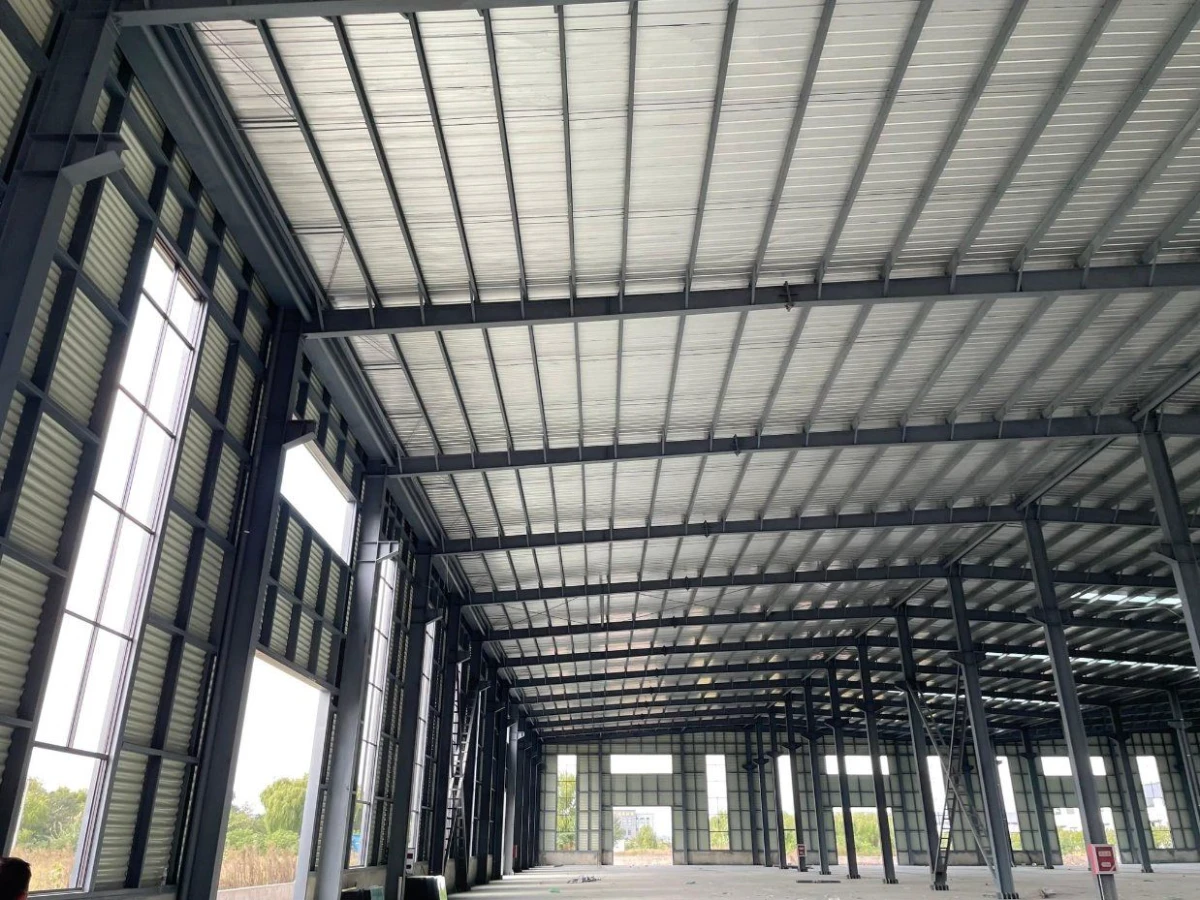
A prefabricated steel frame — fabricated in the factory, then bolted together on site.
For the large-span, single-storey buildings that most warehouses are, steel has real, practical advantages for the owner:
- Speed to operation. A steel frame is fabricated in the factory while the site is prepared, then bolted together on arrival. That can cut months off the schedule versus forming and curing concrete — and months saved is rent earned or product stored sooner.
- Column-free space. Steel spans wide distances without internal columns, giving you clear floor area for racking, forklifts and layout flexibility. Concrete usually needs more columns, which eat into usable space.
- Lighter, better in earthquakes. Steel is light and ductile, so it performs well under seismic loads — valuable in earthquake-prone regions where a heavy concrete frame is a liability.
- Easy to expand and adapt. Need to extend the building or add a door in three years? A bolted steel frame can be unbolted, extended and reused. Concrete is far harder to modify.
- Cost efficiency at scale. For wide spans and large footprints, steel usually delivers the space per dollar that concrete cannot match. (For how those numbers actually break down, see our guide to steel building cost.)
Where concrete is genuinely the better choice
Being fair matters, because it helps you decide correctly. Concrete is the stronger option in these cases, and if your project fits them you should give it serious thought:
- Fire and heat. Concrete is naturally fire-resistant and handles high heat without added protection. For certain high-risk storage or specific code requirements, that is a real advantage.
- Sound and mass. Concrete’s density gives better sound insulation and a solid, immovable feel — useful where noise or vibration matters.
- Very heavy static loads and abrasion. For some heavy-industrial floors and walls facing constant impact or abrasion, concrete’s mass earns its place.
- Low-cost local labour, no rush. In regions where labour is inexpensive and the schedule is relaxed, a locally cast concrete building can be cost-competitive.
The factor buyers forget: can it be imported?
Here is a point that matters enormously if you are sourcing from abroad, and that local builders never raise: concrete cannot be imported — it is cast on site, from local materials and local labour. A steel structure can be fully prefabricated in a factory and shipped anywhere in the world.
For you as a buyer, that is not a technical footnote — it is leverage. Choosing steel opens your project to global suppliers and factory-direct pricing, instead of tying you to whatever local concrete contractors quote. It means more competition for your order, more control over quality (you can inspect a fabricated frame before it ships), and often a lower landed cost. Concrete locks you into your local market; steel gives you the world.
See the difference on site
The clearest illustration of steel’s speed advantage is the erection itself. The video shows the steel being fabricated and prepared in the factory; the photographs then follow a real export warehouse from foundation to finished roof — dry, bolted assembly, no forming, no curing, no waiting.
Structural steel fabricated, coated and staged for export before shipment.
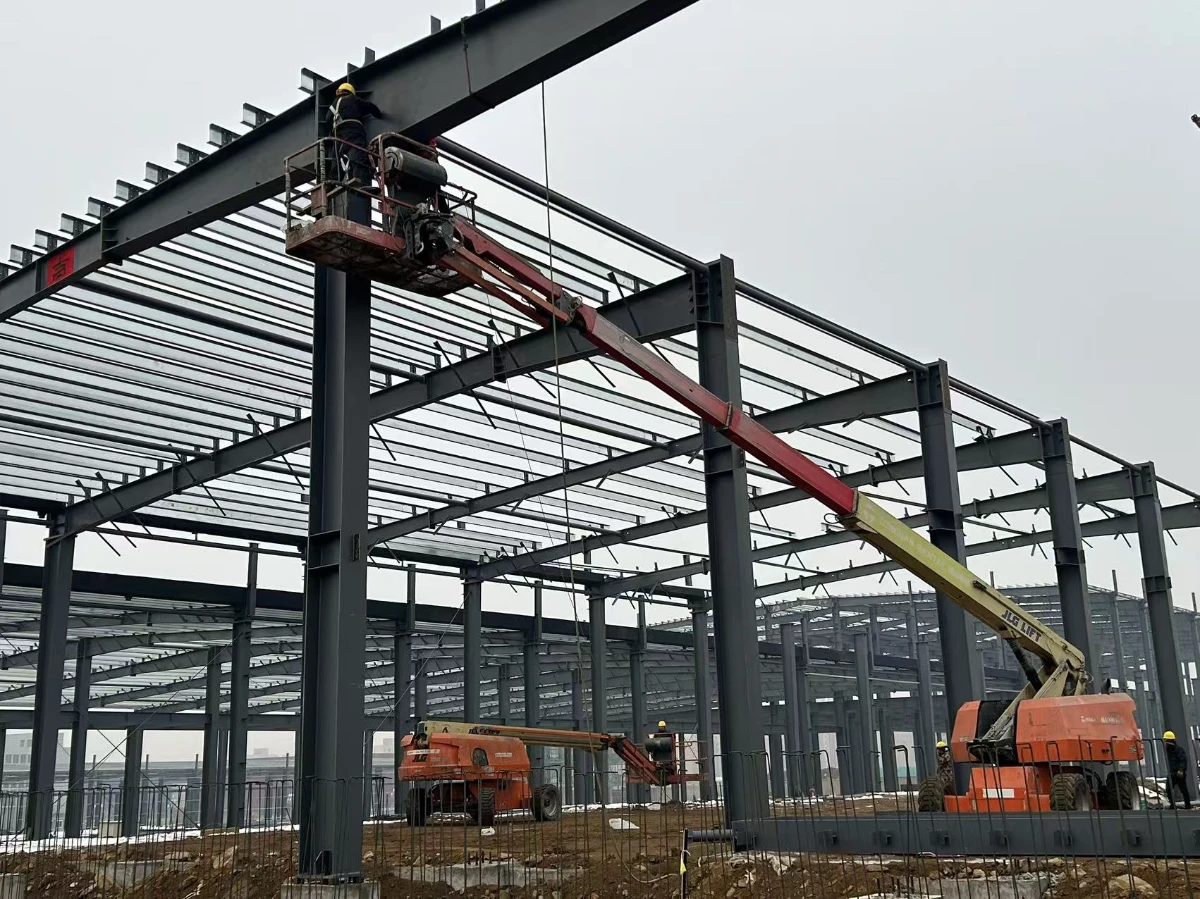
On site, columns and beams are simply bolted together — no forming, no pouring, no curing, no waiting.
How to decide: a simple framework
Rather than asking “which is better,” ask which description fits your project. Lean steel if most of these are true:
- You need wide, column-free space for storage and movement.
- You want to be operational quickly.
- You may expand or reconfigure the building later.
- You are in a seismic region.
- You are importing or want factory-direct pricing and global supplier choice.
Lean concrete if most of these are true instead:
- Fire resistance or sound insulation is a governing requirement.
- You face very heavy static loads or constant abrasion.
- Local labour is cheap and your timeline is relaxed.
- You are building locally with no intention to import or expand.
For the large majority of storage and logistics warehouses, the first list wins — which is why steel structure has become the default for modern warehousing. But the right answer is always the one that fits your project, not the one a supplier prefers.
Frequently asked questions
Is steel or concrete cheaper for a warehouse?
For most large-span warehouses, steel is usually more cost-effective because it spans wide distances with less material and goes up faster, saving on both structure and construction time. Concrete can be competitive where local labour is inexpensive and the schedule is not urgent. The honest comparison depends on span, size and location — see our steel building cost guide for how the numbers break down.
Is a steel structure warehouse strong enough compared to concrete?
Yes. Steel has a very high strength-to-weight ratio and, being light and ductile, often outperforms concrete under seismic loads. Concrete’s advantage is in fire resistance, mass and sound insulation rather than raw structural capacity for warehouse spans.
Which is faster to build, steel or concrete?
Steel, clearly. A steel frame is prefabricated in the factory while the site is prepared, then bolted together on arrival — no forming, pouring or curing. This can cut months off a concrete schedule and get the warehouse into use sooner.
Can I import a warehouse building?
You can import a steel structure warehouse — it is prefabricated and shipped in pieces, then assembled on site. A concrete building cannot be imported; it is cast on site from local materials. This is a major reason importers choose steel: it opens the project to global suppliers and factory-direct pricing.
How VIKKINS helps you choose
At VIKKINS we build steel structure warehouses for clients worldwide, but we would rather help you choose correctly than sell you the wrong building. If your project genuinely suits concrete, we will tell you. Where steel is the right call, we engineer it to your span, loads and climate, manufacture it in ISO 9001-certified facilities, and ship it worldwide with the option of full export logistics — coordinated through our Montréal office for North American accountability with factory-direct cost. To explore the product, see our steel structure system, or read our guide to steel building cost.
Let’s build something together
Tell us your warehouse size, location and use — we’ll help you weigh steel against concrete for your project and send a quote within 24 hours. Service in English, Spanish, or French.