






How to Safely Import Steel Structures From China: A Buyer’s Checklist
China builds more steel for export than anywhere on earth, and for most international buyers it is
where the best price and the fastest lead time live. But to import steel structures from
China safely, you have to know where the risk hides — in under-weight steel, missing
scope, a price quoted on the wrong Incoterm, panels crushed in transit, or a supplier who vanishes
after the deposit clears. None of that is bad luck; it is the predictable result of skipping a few
checks. Here is the checklist that separates a clean import from an expensive lesson.
Why Import Steel Structures From China — and Where It Goes Wrong
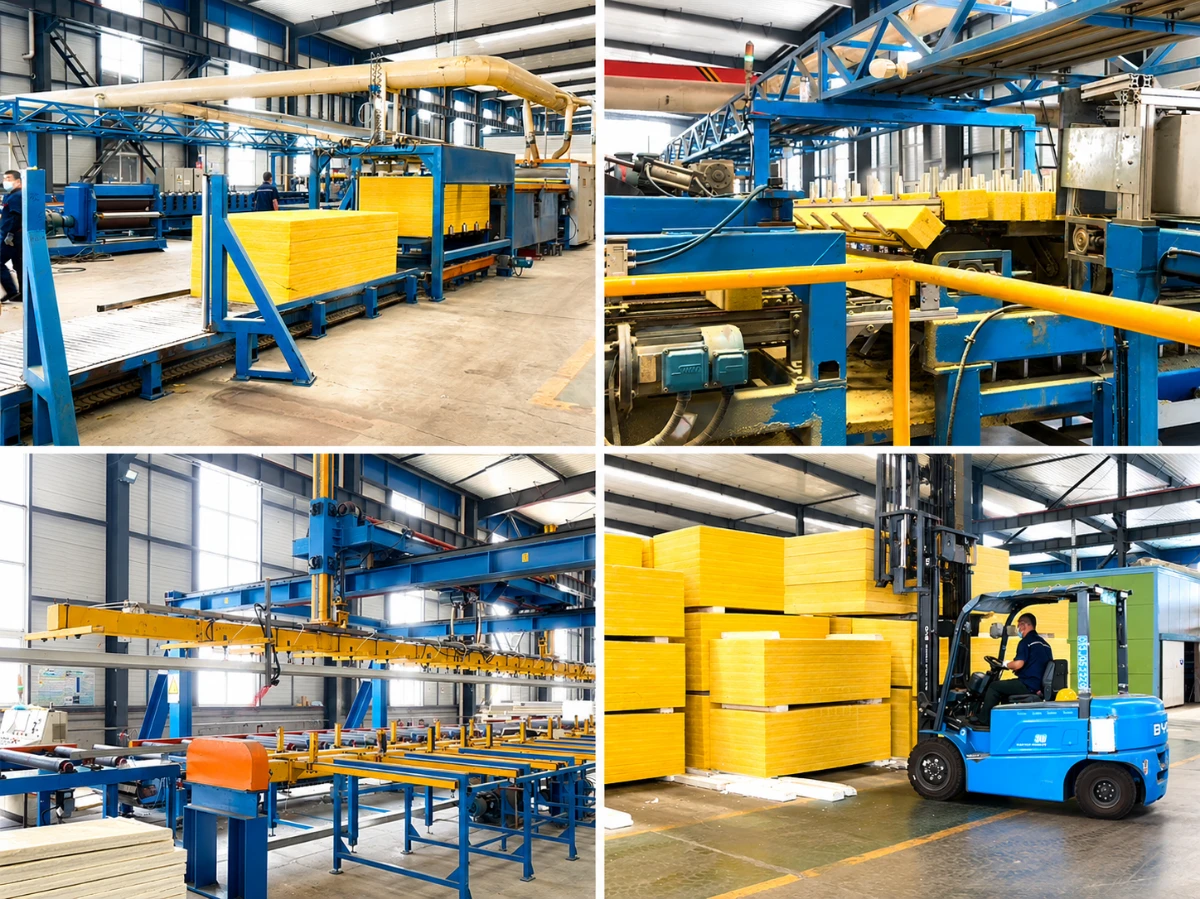
The appeal is obvious: competitive cost, large capacity and short lead times for everything from
warehouses and workshops to cold rooms and prefab housing. The danger is that, from a photo and a
quote, a serious engineered manufacturer looks identical to a trading company that has never made
a building. The most common ways an import goes wrong are steel cut under-weight to win the price,
scope quietly left out, an EXW or FOB number compared against a rival’s CIF, damage in transit, and
no drawings, certificates or after-sales when the containers arrive. Every one of those is
preventable with the checks below.
Quick red flags when you import steel structures from China:
- A lump-sum price with no steel weight, grade or itemised scope
- No structural calculations or shop drawings for your specific project
- Reluctance to allow a factory visit, video tour or third-party inspection
- A full payment demanded up front, with no milestone protection
- No clear answer on Incoterm, export packing or who you call after delivery
Start With Engineering, Not Price
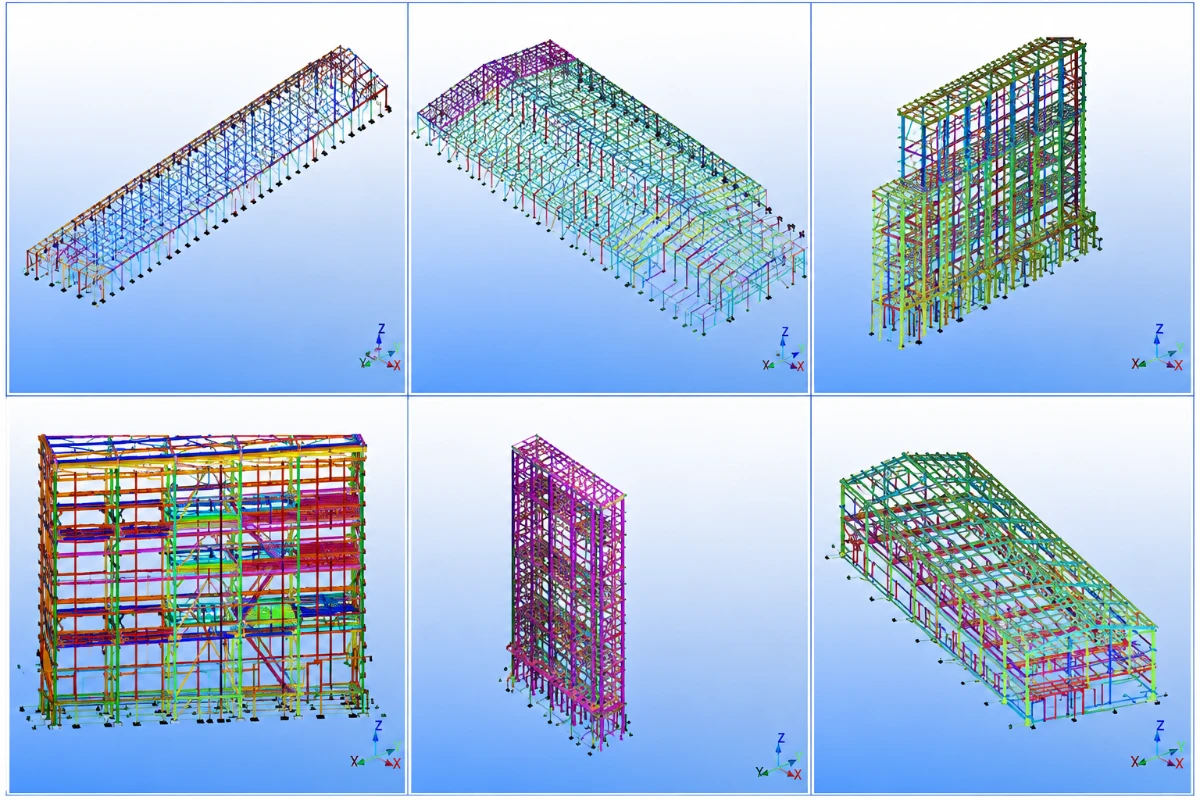
A trustworthy supplier engineers the building before pricing it. Ask for structural calculations
to the code that applies at your site — wind, snow and seismic loads matter, and a frame designed
for calm inland conditions can fail on a coast or in a quake zone — plus detailed shop and erection
drawings. The engineering is also where cost and safety are really decided: an optimised design
uses the right steel weight, while a vague quote with no calculations is hiding either corners cut
or rework to come. If a supplier can’t produce drawings and calculations for your specific job,
they are selling you a guess.
Audit the Factory and Its Capacity
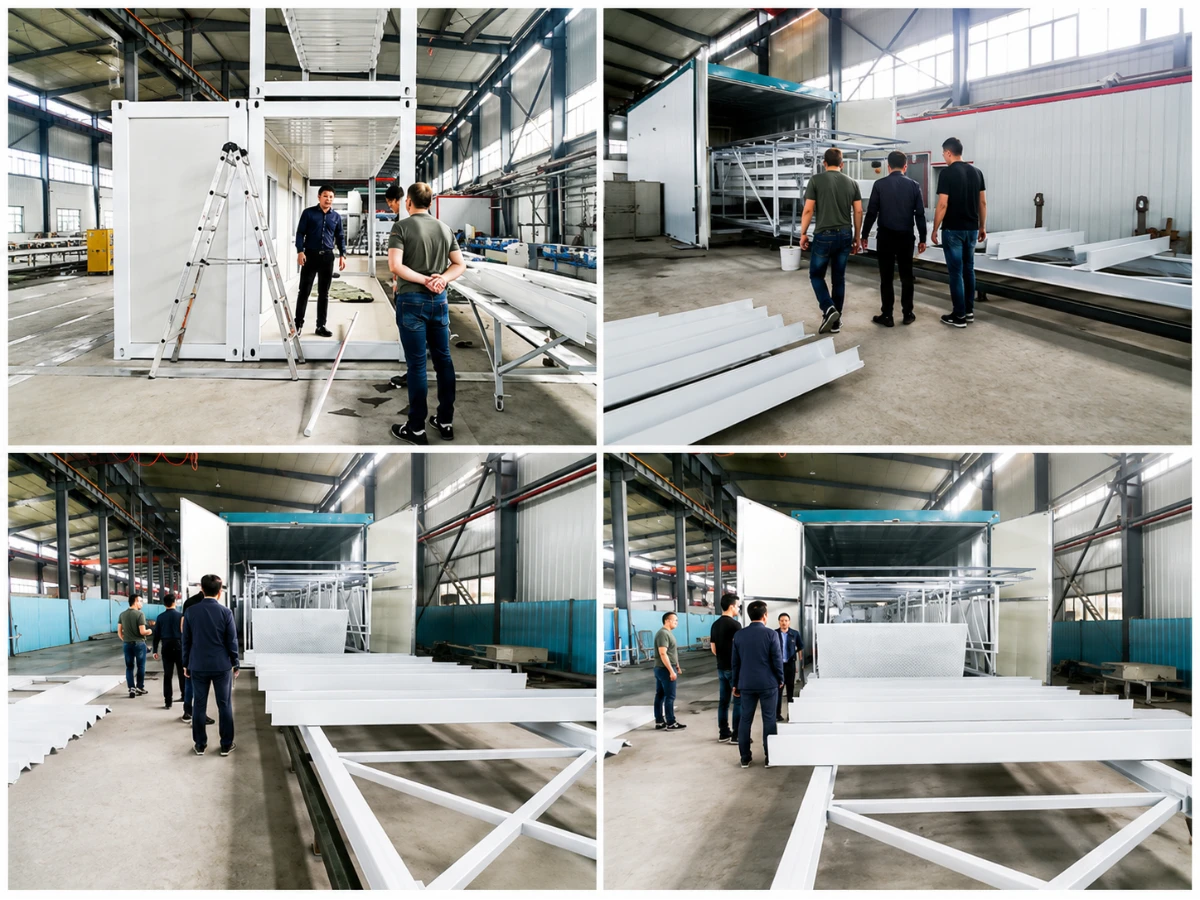
Make sure you are buying from a manufacturer, not a middleman. Confirm the factory exists and can
carry your project: ask for ISO 9001 (quality) and ISO 14001 (environmental) certificates
and the relevant contracting qualification, check the production capacity and current lead time
against your schedule, and request a live video walk-through of the line if you can’t visit. On
payment, protect yourself with staged terms tied to milestones rather than paying everything up
front — a deposit with the balance against a successful pre-shipment inspection, or a letter of
credit, are common safe structures. VIKKINS, for example, works on a 30% deposit with the balance
due before shipment, and typical lead times run about 4–8 weeks from order to dispatch. A confident manufacturer is transparent about all
of this; evasiveness is the warning sign.
Quality Control and Third-Party Inspection
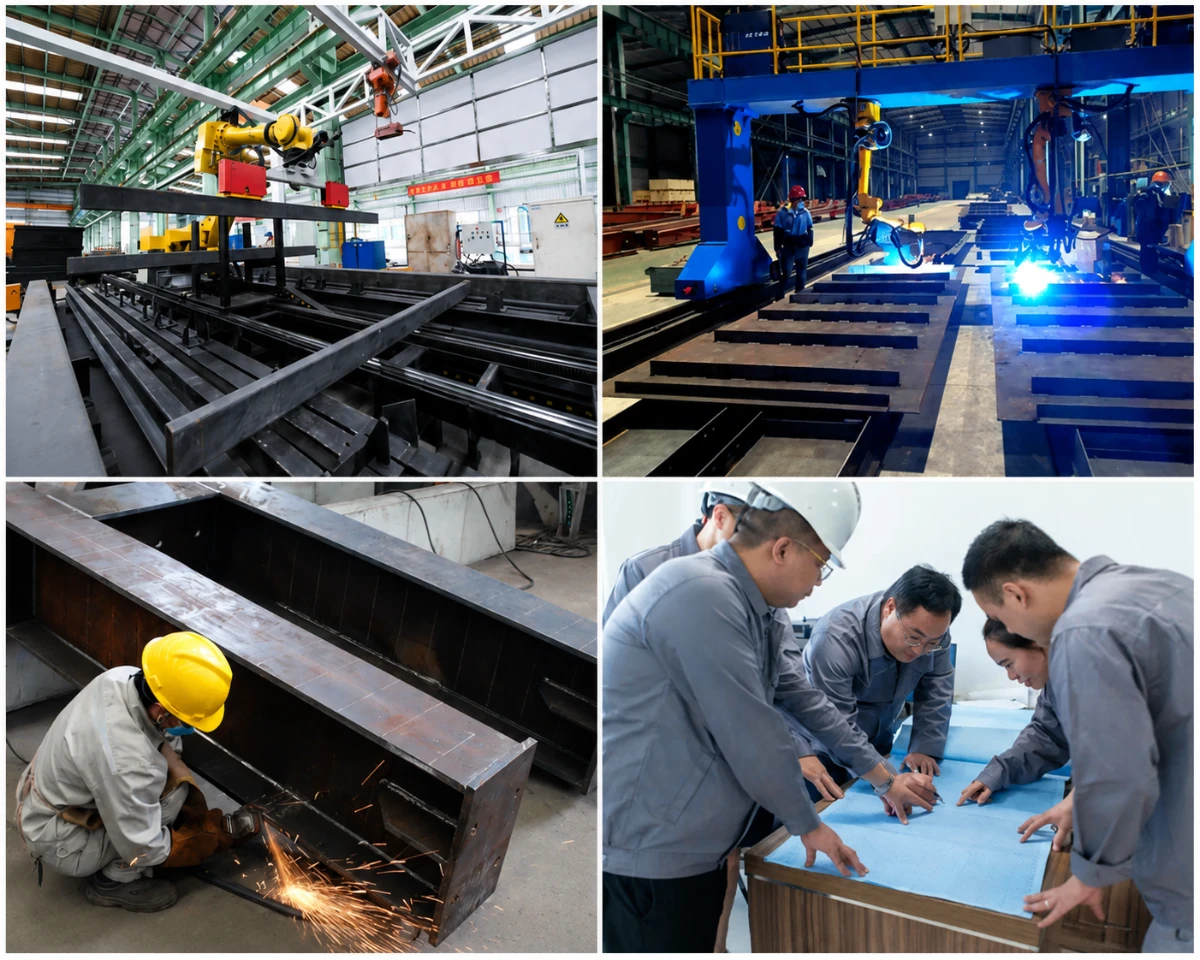
The cheapest mistake to avoid is finding the defects yourself, after the steel has crossed an
ocean. Insist on quality control inside the factory and a pre-shipment inspection before the
containers are sealed. Ask for mill test certificates (MTC) proving the steel grade, confirm the
coating method and thickness in microns against the specification, and check weld quality and
dimensions. A genuine manufacturer welcomes an independent inspector — SGS, Bureau Veritas or
similar — because they have nothing to hide. VIKKINS fully accommodates independent inspection,
including SGS and Bureau Veritas, and will help arrange it. The cost of an inspection is tiny next
to the cost of a container of unusable steel.
Packing, Shipping and the Incoterm Trap
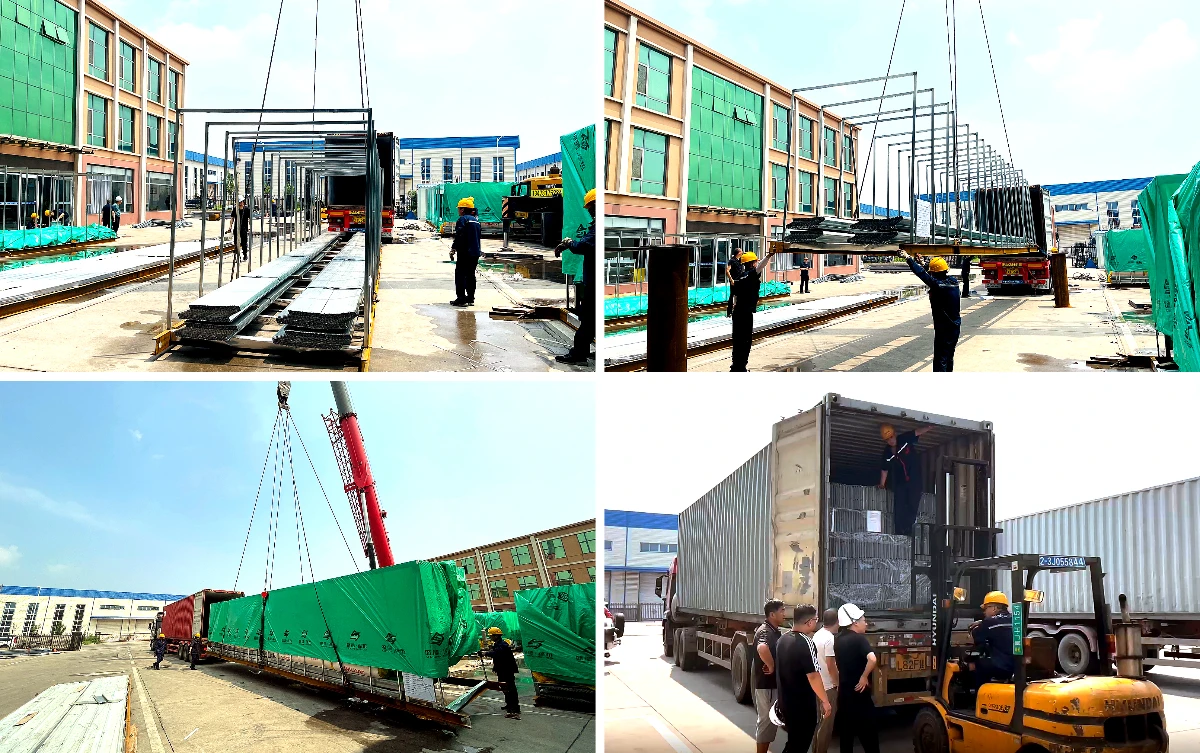
Two things sink budgets here: damage and Incoterms. Steel members and panel cam-lock edges crush
easily, so confirm seaworthy packing, bundling and container loading, with parts match-marked to
the erection drawings. Then align every quote on the same Incoterm before you compare prices: an EXW or FOB figure looks cheaper than a rival’s CIF or DAP only until ocean freight, insurance and clearance land on you. VIKKINS quotes on FOB or CIF so the basis is clear from the outset. Agree who handles export customs, who clears at destination, and exactly which documents — packing list, invoice, certificates, bill of lading —come with the shipment. A supplier with real export logistics removes most of this risk for you.
Installation, After-Sales — and a Partner You Can Actually Reach
The last risk is being left alone once the steel lands. Confirm what installation support comes
with the order — clear erection drawings, on-site supervision or remote engineering help, and a
fast process for any missing or damaged part. And ask the simplest question of all: who do I call,
in my language and time zone, if something goes wrong? This is exactly the gap VIKKINS was built to
close. We engineer and project-manage from our Montréal office while manufacturing in
ISO 9001 / ISO 14001-certified bases in China, so you get the cost of Chinese production
with North-American accountability — itemised quotes, real engineering, export-grade packing, and
design, supply and installation support in English, Spanish or French, delivered to 90+ countries.
(See how that works on a full build in our guide to
prefabricated steel structures.)
Tell us your project dimensions and use — we’ll send a preliminary design and quote within 24 hours. Service in English, Spanish, or French.
Nhận báo giá miễn phíHãy nhắn tin cho chúng tôi qua WhatsApp ngay bây giờ